Iran’s economy in tatters – but will latest hardships lead to another uprising?
Analyst to AIN: Regime is in a fight for its life and won’t give up so easily


The impact of the war and renewed sanctions imposed by America and other nations on the Islamic Republic are taking a dire toll on Iran’s economy, which appears to be nosediving at an accelerated pace.
Delayed pensions and salary payouts, along with shortages of electricity, gas and water, are fueling unrest and prompting scattered small-scale protests. Drivers and truckers who depend on fuel have also rallied in some areas around the country.
Iran International, a news outlet associated with the opposition, reported that residents of southern Tehran have been seen searching garbage bins for scraps of food while shoppers have been buying loaves of bread on credit because they cannot afford to pay in cash.
Many of Iran’s 93 million citizens are already forgoing meat to save money and soon they will face a cold winter without adequate heating fuel. Skyrocketing prices are also impacting decisions about childcare and medicine.
Inflation and the tanking rial drive up prices from one day to the next. In August, inflation was measured at 89%, while the annual rate so far has risen from 66 to 69.9%.
One video shows Iranians waiting in lines that seem to stretch for miles to fill up their car with gas. These fuel shortages are affecting shipping and delivery around the country, creating a ripple effect of scarcity.
In another video, Iranians showcase grocery bags containing the few items they could afford because of astronomical prices. They explain their cheerful disposition, saying that if they express dissatisfaction, they will be executed.
Prices in Iran have gotten so out of control that people can barely afford their daily necessities.
— Masih Alinejad (@AlinejadMasih) September 1, 2026
And if you speak out, you could be EXECUTED.
This video is from inside Iran. Watch it for yourself. This is the reality people are living under the Islamic Republic.#Iran… pic.twitter.com/VUxRzRVF4b
Robin Brooks, former chief economist at IIF and chief FX strategist at Goldman Sachs, observed that the blockade and sanctions imposed by U.S. President Donald Trump are taking their toll.
“The economic picture in Iran is deteriorating rapidly and the U.S. has easy ways to drastically ramp up Iran’s economic isolation,” Brooks wrote. “No regime stays in power forever and Iran’s won’t either. It’s on much shakier ground than most people think.”
Uprising on the horizon?
But will the deepening economic crisis be enough to spark another round of full-scale national demonstrations, especially so soon after the January protests that ended in a brutal and deadly suppression and killing of tens of thousands by the regime?
One analyst doesn’t think so: “Unfortunately.”
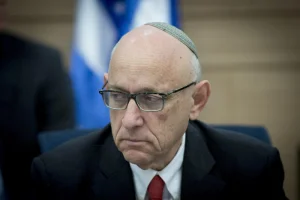
Sima Shine, senior researcher at the Institute for National Security Studies (INSS), noted that, “The situation is worse than it was before the war – and it was very bad before” — but Iranians also realize outside help is not on the way.
“I think the people in Iran understand, one, they cannot count on Trump. Two, they know the regime is fighting for its life and will do everything to stay in power,” Shine told ALL ISRAEL NEWS.
Shine said a few scattered demonstrations are occurring in different places but so far not in Tehran or other big cities – and not in large numbers. For now, she doesn't expect the situation to boil over unless the regime is further weakened.
“In order to have a real change, we do need to see cracks in the regime, not just the people on the street, and, I must admit – we don’t see it,” Shine said.
“At the end of the day, there are hundreds of thousands of people in Iran that are dependent on the regime – their salaries and their lives depend on the regime. Therefore, it’s difficult to see them going to the street again,” she explained.
Previous uprisings in 1999, 2009, 2019 and 2022 – whether triggered by economic worries, suspected election fraud or anger over government policies including women's rights and mandatory hijab laws—rose to a crescendo before being quashed by government forces each time.
Protests that began in December 2025 because of economic hardships turned into a full-on rebellion against the regime in January. The government embarked on a murderous crackdown on the demonstrators that lasted weeks before the U.S. fired the first shot in the 40-day war that began on Feb. 28.
Tens of thousands of Iranians were killed at the time, while arrests and executions of protestors continue to this day.
Regime showing signs of disagreement, not cracks
Shine noted that while Iran’s economy is in tatters, the political system remains “very resilient.”
“It’s a dictatorship. They don’t admit mistakes,” she said.
Shine believes the regime is relying too heavily on reported weapons shortages in the U.S. military and rising fuel prices that could spell defeat for Republicans and the Trump administration in the upcoming midterm elections in America.
“The problems are very acute, but at the same time they believe the U.S. has a lot of problems and doesn’t have enough resilience and enough political time to hold the closure (on the Strait of Hormuz) for long,” she said.
“Iran believes that it has a lot of assets on its end that will, at the end, bring the Americans to give up or to compromise,” Shine said.
But Trump, she said, will reject any agreement perceived as a success for the Iranians.
“The Iranians are mistaken in thinking that he will accept their terms just in order to finish the war,” Shine said.
The economic situation has exposed some domestic turmoil, however, specifically disagreements over how to handle the situation within the upper echelon of the Islamic Republic, Shine noted.
“You can see there is a split in the leadership between those who think that Iran should go for an agreement and have the cancellation of the sanctions and have economic capabilities to improve the situation. But they are not the decision makers,” she said. “I think the upper hand is very clearly in the hands of the more radical ones.”
Moderates such as President Masoud Pezeshkian appear to favor a solution that would ease the financial strain, lest people take to the streets again.
Recent appointments, however, show a doubling down on the hard-line position, including Mohsen Rezaei's appointment as secretary of the Supreme National Security Council and Hossein Taeb as head of the Basij, the police force that responds to domestic uprisings.
Even with this approach, it remains to be seen how much more suffering Iranians are willing to endure.
“The more difficult the situation gets, it might be that people will believe they don’t have anything to lose,” she said.
Support our independent, on-the-ground reporting from Israel. Become a $5/month Ally.
You might also like to read this: