IDF reactivates old Jordan border outposts amid new threats from the east



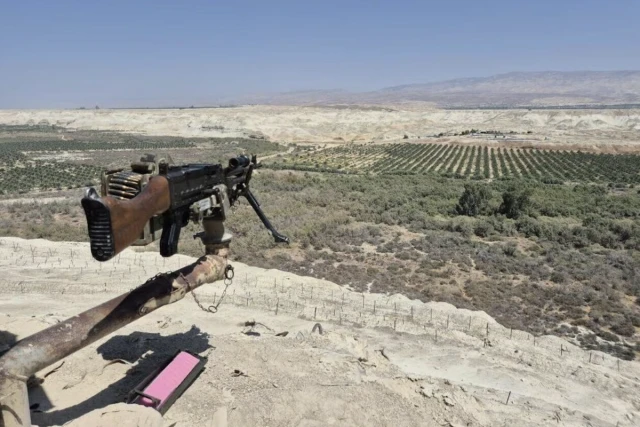
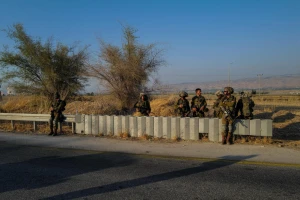
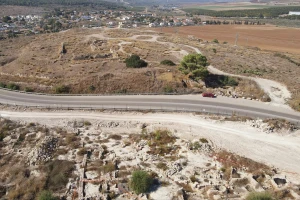
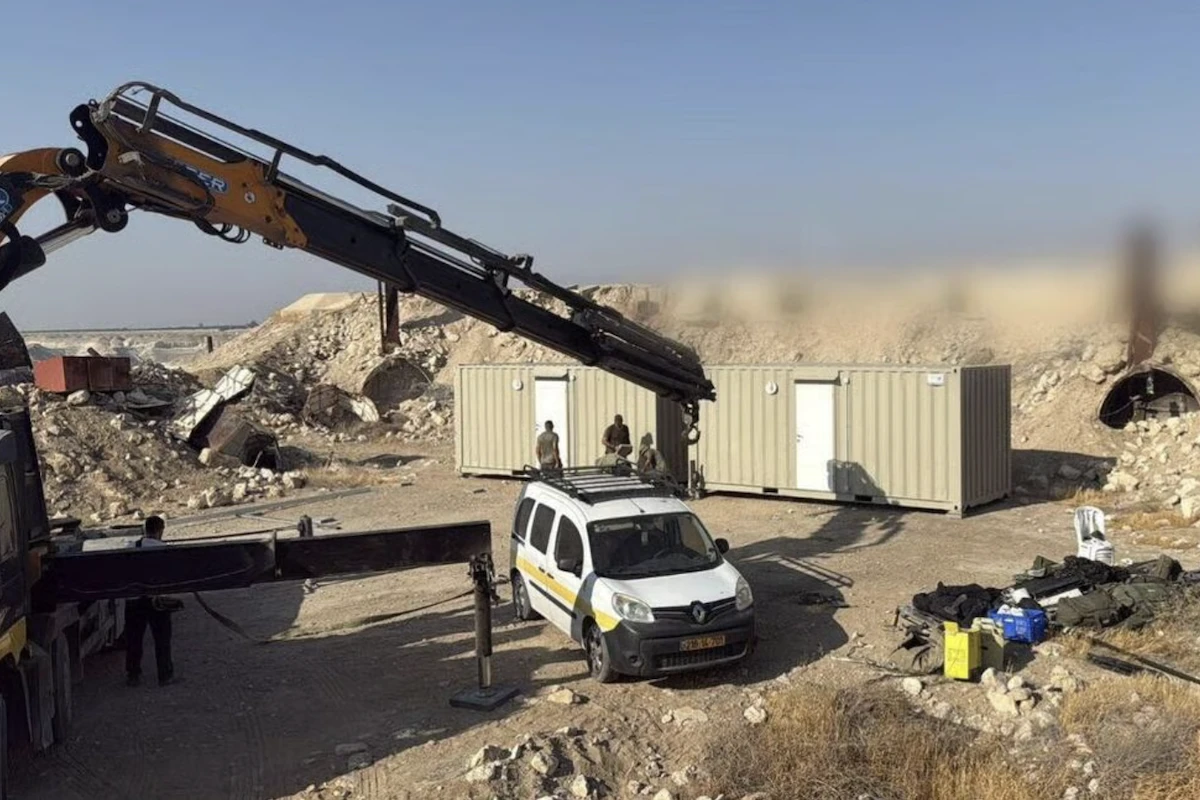
The Israeli military has begun upgrading and fortifying old outposts and bunkers along Israel’s border with Jordan.
Although the two countries signed a peace agreement in 1994, Israel is increasingly concerned about the potential for mass-infiltration from Jordanian territory in the east. Military assessments indicate that this risk has grown considerably since the Hamas massacre on Oct. 7, 2023.
The border outposts, reportedly built in the 1960s, are being reactivated for the first time since the 1970s in response to the escalating threat. The fortifications stretch for approximately 80 kilometers (50 miles), covering about 20% of the 400-kilometer (250-mile) border between Israel and the Hashemite Kingdom of Jordan.
The Israeli military’s Central Command, which oversees security in Judea and Samaria (internationally known as the West Bank) and the strategically important Jordan Valley border region, is increasing its readiness in response to potential “war tomorrow” threats along the eastern border with Jordan.
Israel’s eastern border with Jordan is marked by long distances between sparsely populated communities. Only six months after the Oct. 7 attack, residents of the eastern Arava Valley expressed concerns about a potential invasion from Jordanian territory. At the time, many locals felt that Israeli authorities, including the IDF, were underestimating the threat from the east.
Neta Turkletoyev, a resident of Be’er Ora, an Israeli community close to the Jordanian border, articulated concerns that are shared by many local Israelis.
"We're all lost. We don't understand what's happening. We often hear explosions without any sirens, only learning what it was about after the fact. We're afraid. It reminds us of the days before October 7, when we’ve done nothing about missiles being launched against us. We feel like something big will happen soon," Turkletoyev said in early 2024.
Dror Shmueli, the security chief of the local Hevel Eilot Regional Council, criticized at the time the insufficient number of Israeli troops along the eastern border.
“IDF forces are scarce in this area. The police are absent. Response time and distance are critical during an emergency. Most of our communities are close to the border fence. The government and the world are slowly beginning to understand what we’ve been saying out loud,” Shmueli stated.
However, Israeli authorities have increasingly recognized this security threat and have begun taking action. In September 2024, the IDF deployed a new unit tasked with strengthening security along the country’s long eastern border with Jordan. Known as the 96th Division, the unit mainly consists of volunteers aged 40 to 60.
The Israeli military is currently preparing for a scenario involving thousands of pro-Iranian terrorists and militias trying to invade the Jewish state from the east. The deployed Israeli troop units are designated as rapid response “lightning brigades.”
The Islamic Republic of Iran has invested in establishing a new terror front against Israel along the eastern border in Jordan. The ayatollah regime has also attempted to funnel weapons to anti-Israel terrorist cells in Judea and Samaria. In late 2024, the Israeli military uncovered a large Iranian-led operation aimed at smuggling arms into the region.
You might also like to read this: