Global diesel shortages hit Syria hard, fueling unrest





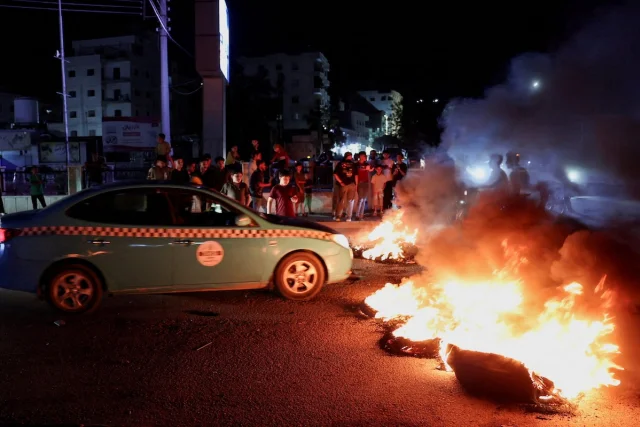
A sharp increase in fuel prices is fueling unrest across Syria, where protesters burned tires on roads linking major cities to the Turkish border this past week following a 40% spike in diesel prices and a 28% increase in the cost of gasoline.
Street protests have also occurred in Hama, Khan Sheikhoun and Maarat al-Numan as Syria grapples with fuel shortages that are worsening an already severe economic crisis. Tanker trucks carrying crude oil from fields in eastern Syria and northern Iraq to refineries closer to the coast were halted over safety concerns, a move likely to further exacerbate the shortages.
Syria’s Energy Ministry spokesperson Abdulhamid Salat described the price increases as a “temporary measure driven by higher global procurement costs.”
However, other officials in the Al-Jolani (al-Sharaa) regime said the country is experiencing its worst civil unrest since the overthrow of the Bashar al-Assad regime in December 2024. Residents of Aleppo, Damascus and other Syrian cities also told Western journalists they fear the unrest could eventually develop into a return to full-blown civil war.
The turmoil comes as Syria faces a major economic crisis that could have repercussions across the region and potentially slow the return of Syrian refugees from neighboring Turkey and elsewhere.
Syria’s domestic oil production currently stands at approximately 102,000 barrels a day, while the country consumes roughly 325,000 barrels of oil daily. The government has attempted to make up the shortfall through imports from Russia, but Moscow has recently been forced to curtail exports of crude and refined products, including diesel, kerosene and gasoline, following attacks on its energy infrastructure by Ukrainian forces.
The disruptions have also contributed to higher fuel prices for Israeli motorists, as Israel imports refined petroleum products from Russia.
The diesel shortage is not limited to Syria. Fuel costs have risen worldwide, including in the United States, where diesel prices have reached historic highs of $6 a gallon in some locations.
Those higher costs can ultimately be passed on to consumers. In a recent statement, GasBuddy said, “As diesel climbs, higher supply chain costs work their way into the price of groceries, household goods, deliveries, and countless other products families rely on every day, even for households that never fuel a diesel vehicle.”
Energy industry experts have also warned that the buffers and reserves intended to cushion supply shocks have been almost completely depleted over the past six months since the war with Iran began, resulting in a major slowdown in oil tanker traffic through the Strait of Hormuz.”
With this week’s shutdown of Saudi Arabia’s East-West pipeline following attacks by the Iranian-backed Houthi rebels in Yemen, global supplies are becoming increasingly tight and prices are approaching elevated levels.
“We've scaled back our estimate of a 12-month recession risk. We had that at about 30% back in March. We've got it at 15% now, but yeah, if we were to see another shock, we'd raise that again,” Jan Hatzius, Goldman Sachs chief economist, told Yahoo Finance this week.
Syria's fuel crisis is part of a broader tightening of global energy supplies, with disruptions from the war with Iran and attacks on regional energy infrastructure pushing fuel prices higher worldwide.
Fuel shortages are also being exacerbated by a three-month shutdown of the country’s largest refinery at Baniyas, near the coast.
Engineers who work at the refinery said the shutdown was necessary for long-overdue maintenance. When the refinery reopens, its daily refining capacity is expected to increase from 80,000 to 130,000 barrels a day.
The Al-Jolani regime faces an especially difficult challenge because of the country’s widespread poverty. The UN Development Programme estimates that almost 90% of the Syrian population lives below the poverty line, increasing the urgency of finding solutions to the country’s worsening fuel and economic crises.
You might also like to read this: