Former PM Bennett: AI will soon be ‘more important than nuclear weapons’ in global arms race





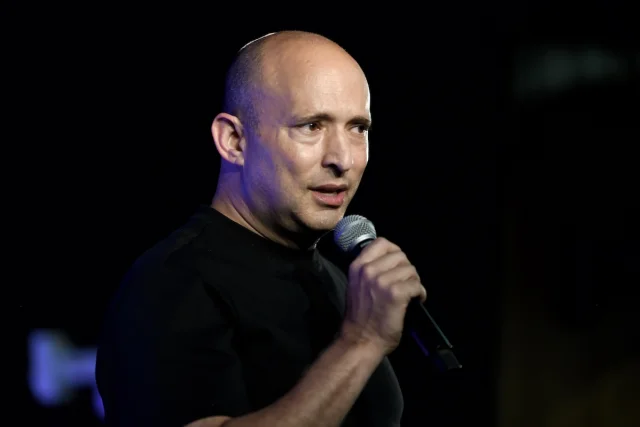
With Israel’s national election approaching, former Prime Minister Naftali Bennett outlined his security and foreign policy priorities on Wednesday, calling for major changes to Israel’s approach to Qatar, Iran, Turkey, artificial intelligence and the country’s growing problem of illegal weapons.
Bennett delivered the keynote address at a security and foreign policy conference hosted by the Together (B’Yachad )Party, which he leads. Among his proposals was a call to formally redefine Qatar as an enemy country and remove both Qatari and Turkish influence from the Gaza Strip while strengthening coordination with neighboring Egypt.
Bennett said he believes the time has come for Israel to make “serious and long overdue changes” to its security policies.
He also emphasized the growing importance of artificial intelligence in future warfare:
"In the not-too-distant future, AI capabilities will be even more important than nuclear weapons. Artificial intelligence is the next arms race of superpowers, and despite the current government's lag in the last four years, we will not let Israel fall behind.”
Turning to Israel’s regional security challenges, Bennett warned that attacks by Iran’s proxies would result in direct retaliation against Iran.
"If Hezbollah shoots at us, we will shoot at Iran. A strike by Iran's proxies within Israel's borders will result in retaliation within Iran's borders,” he said.
Bennett also called for Israel to treat the estimated 500,000 illegal weapons held inside the country as a national security threat rather than solely a criminal problem.
He proposed that the IDF and Shin Bet (Israel Security Agency) declare areas known to contain large quantities of illegal weapons as closed military zones until the weapons can be collected.
Such a policy could impose high economic costs on communities and businesses in affected areas. However, Bennett argued that the scale of the illegal weapons problem requires more aggressive action.
The Together Party was formed as a coalition between Bennett’s political base and the center-left Yesh Atid Party, led by former Prime Minister Yair Lapid. The alliance generally occupies the center-to-center-right of Israel’s political spectrum and seeks to bring together voters from different parts of the political opposition.
The Jewish Virtual Library describes the party as "generally characterized as a centrist to center-right alliance", seeking to unify "Lapid’s liberal, secular-oriented base with Bennett’s right-leaning, nationalist supporters."
It also describes the alliance as an effort to bring together various elements of the political opposition to the status quo represented by incumbent Prime Minister Benjamin Netanyahu "by uniting leaders with differing political backgrounds under a single electoral framework".
The party’s platform includes reforms to the education system aimed at equalizing the quality of public and private schools, as well as increasing competition in the grocery and retail sectors to lower consumer prices.
Together also supports drafting a constitution based on the principles of Israel’s Declaration of Independence, imposing term limits on lawmakers, including the prime minister, and addressing long-standing governance issues involving the Knesset, the judiciary, the civil service and the government bureaucracy.
The party also plans to address the issue of ultra-Orthodox (haredi) non-participation in the military, economy and workforce, while strengthening security ties with regional and global partners and confronting the rise of antisemitism around the world.
Israelis will head to the polls on Oct. 27.
You might also like to read this: