For only the 2nd time, women to take Chief Rabbinate exams in Israel
High Court ruling since last year requires Chief Rabbinate to offer exams to women



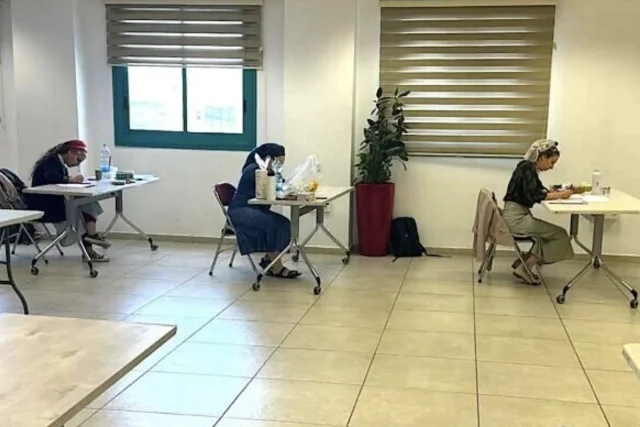
One year after the High Court of Justice ruled that women must be allowed to take Chief Rabbinate qualification exams, a second group of seven women is set to sit for the exams on Wednesday.
The women will follow the first group of three who took the exams last April.
The ITIM Jewish Life Advocacy Center filed a petition last week with the High Court against the Chief Rabbinate Council and its Examinations and Accreditation Department, demanding clarification on how the exams would be administered. The petition followed reports that the first group of women experienced a delay of several hours before being allowed to take the exams.
ITIM founder Rabbi Seth Farber criticized the need to file the petition.
“The Chief Rabbinate is a state public body that is obligated to act in accordance with the law and the rules of proper administration,” he said. “It is not possible that less than a week before the date of the exams and the examinees are still in complete uncertainty regarding the test conditions and accommodations to which they are entitled to the point of necessitating legal intervention.”
ITIM, which advocates reform of the state rabbinate, alleges that the Chief Rabbinate is deliberately acting in violation of the High Court ruling that opened the exams to women.
In May, the Chief Rabbinate canceled a round of exams rather than guarantee accommodations for women. It had also canceled exams in the fall of 2025, shortly after the High Court’s ruling, rather than open them to women.
In September, ITIM sent a letter demanding that the Chief Rabbinate ensure the women’s exams begin and end on time, and are conducted under the same conditions as those for men. The letter followed the publication of exam dates and two testing locations by the Chief Rabbinate.
ITIM said it was not demanding that women sit in the same exam room as male candidates, provided they receive the same accommodations.
Candidates must pass six out of seven exams to receive rabbinic certification from the Chief Rabbinate. The tests cover major areas of Jewish law, including marriage, kashrut, ritual purity, Sabbath observance, and mourning.
The High Court ruling does not grant women Orthodox ordination, which remains unavailable to women within Orthodox Judaism. Women do serve as rabbis in Conservative and Reform Judaism, but Israel’s state rabbinate operates according to Orthodox Jewish law.
Since 2018, the Chief Rabbinate’s exams have been recognized as equivalent to a bachelor’s degree for certain public-sector jobs requiring higher education. Passing the exams is also a prerequisite for some teaching positions.
You might also like to read this: