EU seeks to strengthen Lebanon’s military amid efforts to disarm Hezbollah



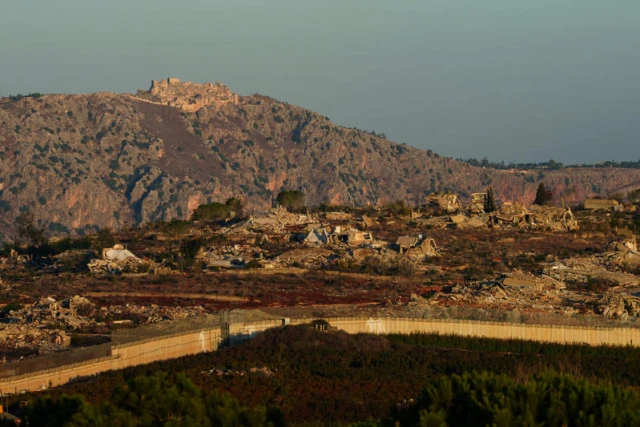
The European Union (EU) is considering options to strengthen Lebanon’s international security forces amid Beirut’s efforts to disarm the Iranian-backed militia Hezbollah, Reuters reported. According to a document seen by Reuters, the EU could potentially “focus on advice, training, and capacity-building.”
However, the EU does not seek to replace the UN peacekeeping force, UNIFIL, which is based in southern Lebanon. Instead, the document indicates that the EU “could contribute to the gradual transfer of internal security tasks” from the Lebanese Armed Forces to the Internal Security Forces. This would allow the Lebanese military to focus on the challenging task of disarming Hezbollah, which remains more powerful than Lebanon’s regular army.
“Through a combination of advice, training and possibly the provision of certain equipment, the overall objective would be to enable the Police and the Gendarmerie to fulfill their mandates in cities and rural areas across the country,” the European External Action Service stated. The EU reportedly also wants to help Lebanon to secure its land border with Syria, which has been a major route for arms transfers to Hezbollah.
The document has reportedly been shared with the 27 EU member states. If implemented, the EU plan would take effect in early 2026. Senior EU and Lebanese officials are scheduled to meet in Brussels on December 15 to discuss Lebanon’s future and how to stabilize the ceasefire between Hezbollah and Israel.
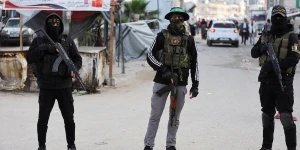
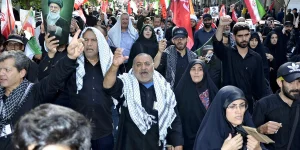
Hezbollah, which openly calls for Israel’s destruction, initiated an unprovoked attack on northern Israel on Oct. 8, 2023, the day after Hamas massacred 1,200 Israelis and kidnapped 250 people in southern Israel. Dozens of Israelis were killed, and tens of thousands of northern Israel residents were displaced, as a result of the Hezbollah aggression, which lasted for over a year. Israel responded by severely degrading Hezbollah’s military capabilities, eliminating thousands of Hezbollah terrorists and decapitating the terror militia’s leadership including the elimination of its top leader Hassan Nasrallah.
In November 2024, a severely weakened Hezbollah agreed to an American-brokered ceasefire with Israel. The ceasefire stipulates that Hezbollah must withdraw all its operatives north of the Litani River and disarm its forces. However, Hezbollah has so far refused to disarm and seeks to rearm and regroup with Iranian assistance.
The United States and Israel have pressured the Lebanese government to fulfill its ceasefire obligation by disarming Hezbollah and asserting control over Lebanon's entire territory. However, it is unclear whether the weak Lebanese state is capable of disarming Hezbollah on its own.
Meanwhile, the French special envoy to Lebanon, Jean-Yves Le Drian, visited Beirut on Monday with the reported purpose of assessing the Hezbollah disarmament process. Lebanon, which was a French protectorate up to its independence in 1943, has close ties with Paris.
When asked whether Beirut would accept French and U.S. forces in Lebanon as part of the verification mechanism to ensure the ceasefire, Lebanon’s Prime Minister Nawaf Salam replied “of course.”
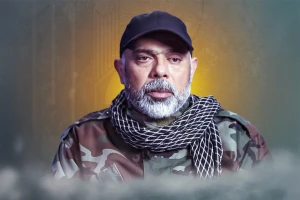
Last month, Israel eliminated Hezbollah’s top military commander Haytham Ali Tabatabai in an aerial strike on an apartment in southern Beirut where Hezbollah’s power base is concentrated.
Israeli Prime Minister Benjamin Netanyahu confirmed the strike, describing Tabatabai as the person “who had been leading the terrorist organization's buildup and rearmament” in violation of the ceasefire terms.
You might also like to read this: