Elon Musk’s Starlink begins satellite internet service in Israel
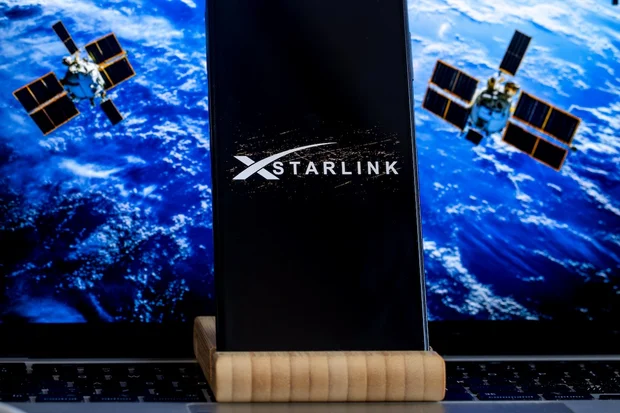
Elon Musk’s satellite internet service, Starlink, became operational this week in Israel. While it expands the country’s already extensive internet coverage, the service is significantly more expensive than average. Despite the geographical proximity, coverage does not extend to Gaza or Judea and Samaria, internationally known as the West Bank.
Starlink operates some 8,000 low-earth orbit satellites and enables access to low-to-moderate internet speeds between 40 to 220 megabits per second. By comparison, conventional internet services offer connectivity speeds up to 5 gigabits per second. Starlink’s main advantage is that it provides internet access to almost any location on the planet, including deserts, rainforests, open sea and regions affected by emergencies or political restrictions.
In early 2024, Israeli Communications Minister Shlomi Karhi approved a license for Starlink to extend its internet services to the Jewish state.
"Local authorities, emergency response teams, government bodies and others will be able to continue accessing advanced broadband communication services, even in the event of wired and cellular communication failures," Karhi said at the time.

Last July, the Israeli government began to view Starlink as a vital backup for the nation in the event of an all-out war with Hezbollah, the Iranian-backed militia based in Lebanon. Officials feared such a conflict could disrupt internet services in Israel, as Hezbollah’s arsenal of over 100,000 rockets and missiles posed a serious threat to critical infrastructure, particularly in Haifa.
“The ambition is that every operation room in a government office will have the backing of Starlink to ensure functional continuity in an emergency,” an informed source told Israel's business tech news outlet Calcalist.
This worst-case scenario never occurred, and a ceasefire was reached in December.
Unlike Israel, war-torn Gaza increasingly lacks stable internet services. While Starlink appeared to be an acceptable solution, Israeli authorities initially feared that Hamas would exploit the service in its war against the Jewish state. In July 2024, however, Musk announced that Starlink satellites had been activated at a Gaza hospital with assistance from Israel and the United Arab Emirates.
The coordination with Starlink followed the destruction of many hospitals in Gaza, amid claims that Hamas had used hospitals, schools, mosques, and residential buildings for military activities, in violation of international law.
During the 12-day Israel-Iran war in June, Starlink began providing internet in Iran to prevent the regime from cutting its people off from the outside world. After the war, Tehran banned the service, calling it “foreign interference in national communications infrastructure.”
Popular article:

interview Easter message of resurrection hope amid war at Jerusalem's Garden Tomb

biblical commentary Let my people go: a Passover message for today

4 IDF soldiers killed, 2 wounded in fighting in southern Lebanon, as Israel eliminates dozens of Hezbollah terrorists

Receive latest news & updates
A message from All Israel News
Help us educate Christians on a daily basis about what is happening in Israel & the Middle East and why it matters.
For as little as $10, you can support ALL ISRAEL NEWS, a non-profit media organization that is supported by readers like you.
Latest articles:

Israel's Christian ambassador warns against support for Muslim Brotherhood candidates

Eisenkot slams Likud for ‘malicious attempt to deny election results’ amid foreign interference probe

Maronite community forgives vandals who targeted historic church in Nahariya

‘Change Bloc’ in disarray: Liberman refuses Eisenkot endorsement as Pres Herzog weighs first candidate to establish new gov’t

IDF expands academic benefits for reservists, career soldiers after years of wartime service