








Elections 2026 Eisenkot, opposition bloc gain in latest polls as Israel’s October election field is finalized
No major merger between Eisenkot and Bennett; Gantz will run alone despite bad polling numbers
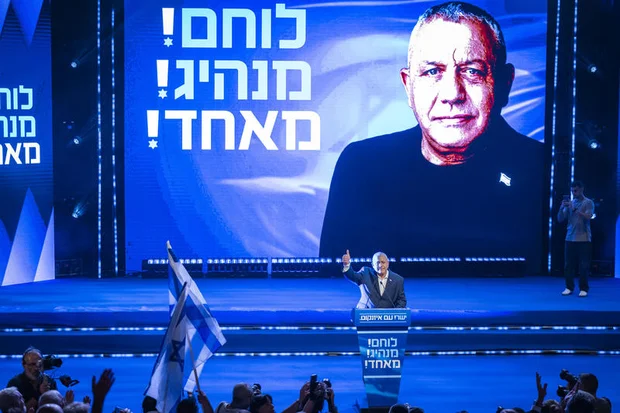
The opposition bloc led by Yashar party leader Gadi Eisenkot is rising in the most recent polls, as the field of parties competing in Israel’s October elections was finalized on Tuesday, the deadline for party registration and candidate list submissions.
The deadline saw several last-minute moves between and among the parties, though the larger picture did not change significantly. Eisenkot’s Yashar did not merge with Naftali Bennett and Yair Lapid’s Together party, despite ongoing talks.
Benny Gantz also declined to merge with other parties after months-long negotiations and will run alone with the Blue and White party despite poor polling numbers, while Gilad Erdan and Yuli Edelstein’s new Unity party already threw in the towel and will not compete in the elections after all.
Under 3.25% electoral threshold✂️✂️✂️
— Israel Elects (@israel_elects) September 8, 2026
🔵Winter: 2.8%
🟣B&W: 1.3%
🟡Noam: 0.6%
🟡Haredi Community Party: 0.4%
The latest major poll published on Tuesday by Lazar Research/Ma'ariv, projects a possible 61-seat Knesset majority for the opposition, even without the Arab parties.
This scenario could emerge if the new joint slate formed by The Reservists’ Yoaz Hendel and Yaron Zelekha’s Economic party adds its four projected seats to the current opposition bloc, which is widely viewed as plausible.
The Hendel/Zelekha joint slate was among the major developments of the last few days. Hendel had originally merged his Reservists’ party with former Blue and White lawmaker Chili Tropper. After the alliance failed to make an impact in the polls, and didn’t cross the election threshold in most surveys, Tropper left Hendel and joined Eisenkot’s Yashar at the last minute, taking the sixth spot on its candidate list.
Under 3.25% electoral threshold✂️✂️✂️
— Israel Elects (@israel_elects) September 7, 2026
🟣Reservists-Economic: 2.7%
🟡Haredi Community Party: 1.1%
🟣Blue & White: 1%
🔵Noam: 0.2%
🟡Place for Us All: 0.1%
Hendel and Zelekha were also joined by Einat Wilf, who had attempted to run with her own Oz party but failed to make a significant impact in the polls.
On the coalition side, the most significant development was the establishment of the new People of Israel party. Initial polls had shown that the new hawkish right-wing party led by religiously observant retired general Ofer Winter would sink Bezalel Smotrich's Religious Zionism party, potentially wasting its nearly four projected mandates.
RZP-Zehut's candidate list.
— Israel Elects (@israel_elects) September 8, 2026
It's brutal for MK Ohad Tal, who finished 4th in RZP's primaries but fell all the way to 12th on the final list and probably won't make it back to the Knesset.
Meanwhile, MK Tzvi Sukkot, who pipped Tal by a single (!) vote in the primary, is 7th. pic.twitter.com/x3gOmG4B8I
Finance Minister Smotrich subsequently announced a merger with former Likud stalwart Moshe Feiglin and his religious/libertarian Zehut party. According to the Ma'ariv polls, along with a Channel 12 survey, this has lifted Religious Zionism/Zehut above the threshold, although People of Israel is now in danger of falling under it.
Despite the maneuvering on the right, most polls still project the Netanyahu bloc to be well short of a majority. According to the Ma'ariv poll, the bloc would win 47 seats, compared with 57 for the opposition, even without the four seats projected for the yet-to-be-named Hendel-Zelekha party.
Prime Minister Benjamin Netanyahu has recently focused much of his effort on securing the right to appoint reserved candidates to the Likud list, hoping to bring in popular figures who could refresh the slate after a difficult four years in office.
This move has paid off only partially; Netanyahu reportedly faced numerous rejections from potential candidates. Tech entrepreneur Oren Dobronsky even announced he would give back his seat after initially agreeing to take one of the reserved slots, although he was reportedly promised a ministerial portfolio instead.
Today's Midgam/Chan12 poll has an undecided rate of 11.5% .
— Israel Elects (@israel_elects) September 7, 2026
🟥~3% are undecided within the Anti-Netanyahu bloc
🟦1% are undecided within the Bibi Bloc
🟪~1% are undecided between the blocs
⬜️3-4% are undecided between other parties
Eventually, seven new candidates were announced on Tuesday, including Channel 14 pundit Jacob Bardugo; David Peter, a lawyer who has represented the government and defended the need for judicial reforms; former Labor Knesset Member Eli Goldschmidt; IDF reservist Elisha Madan; Talik Gvili, the mother of the last Israeli hostage to return from Gaza, Ran Gvili; and Itzik Bonzel, whose son Amit was killed fighting in Gaza.
In addition, retired Brig.-Gen. Amir Avivi, founder of the Israel Defense and Security Forum (IDSF), was reportedly also promised a ministerial post but was not placed on the candidate list.
Netanyahu also managed to offload firebrand lawmaker Tally Gotliv, who has vocally criticized him in recent months. Under an agreement between the parties, she will run as a candidate for National Security Minister Itamar Ben Gvir’s Jewish Power party.
The latest polls were conducted before the final candidate lists were submitted on Tuesday. While the overall political picture could still change significantly, the field of parties and candidates is now finalized, allowing voters to assess their options ahead of the Oct. 27 elections.
According to Channel 12’s latest poll, more than 11% of voters remain undecided about whom they will support.
Popular article:
interview Easter message of resurrection hope amid war at Jerusalem's Garden Tomb

biblical commentary Let my people go: a Passover message for today

4 IDF soldiers killed, 2 wounded in fighting in southern Lebanon, as Israel eliminates dozens of Hezbollah terrorists

Receive latest news & updates
A message from All Israel News
Help us educate Christians on a daily basis about what is happening in Israel & the Middle East and why it matters.
For as little as $10, you can support ALL ISRAEL NEWS, a non-profit media organization that is supported by readers like you.
Latest articles:
Elections 2026 Iran allegedly steps up assassination plots against US officials amid regional tensions
Elections 2026 IDF launches counterterrorism operation in Hebron after two soldiers killed

Elections 2026 Ahead of Israel's elections, President Herzog's 'Voice of the People' shows how unity can begin with a conversation
Elections 2026 From Oct 7 to Michigan: One Israeli-American's mission to stop Abdul El-Sayed

Elections 2026 Hezbollah steps up recruitment of convicted criminals in Latin America for attacks on Jews