all israel edu The rise and fall of Arab socialism: How Islamism filled the vacuum left by secular nationalism
A look at how the Middle East shifted from Moscow to Mecca
Anyone old enough to remember the 1970s may remember how Israel’s most notorious terrorist enemies were mostly secular, not Islamist. The terror organizations behind the Entebbe hijacking and the Munich massacre were not Islamist movements. They came from the world of secular Palestinian nationalism and the revolutionary left. The PLO itself was a secular nationalist umbrella, not an Islamist organization.
In fact, the intellectual founder and ideologue of the secular Ba’ath Party, which would lead to the rule of Assad in Syria and Saddam Hussein in Iraq, was Christian (Michel Aflaq, 1910-1989).
So what happened? Why did secular nationalism, once so dominant among Israel’s enemies and across the Arab world, lose so much ground to Islamism?
That’s what I want to explore in this article.
Once you start looking, you can see this struggle between secular nationalism and political Islam running through conflict after conflict across the Middle East. It was in the Iran-Iraq War; it was in the Syrian Civil War; it was in the Iranian Revolution; it’s in Egypt’s brutal suppression of the Muslim Brotherhood, and it’s in the wars between the PLO and Hamas.
To understand where this comes from, we need to go back to the pivotal traumatic event that still shapes the Middle East to this day: the fall of the Ottoman Empire.
After World War I, the entire Muslim and Arab world asked itself, “How could this happen? Why are we so much weaker than Europe?” Broadly speaking, two competing answers emerged. In Turkey, Mustafa Kemal Atatürk’s diagnosis: too much Islam. The solution? European-style secularism. And he did it aggressively. He even abolished the caliphate in 1924, sending shockwaves through the Islamic world. A nearly 1,300-year tradition of caliphal leadership claiming succession to Muhammad came to an abrupt end. Imagine if the new Italian Republic had not merely stripped the pope of political power, but formally abolished the papacy itself. The comparison is imperfect – the caliph was never an Islamic pope – but it gives some sense of the symbolic rupture.
Four years later, in 1928, Hassan al-Banna founded the Muslim Brotherhood in Egypt, offering the opposite answer. His diagnosis: not enough Islam. The solution? Islam as a complete system for society and government, not merely a private faith. His movement and ideology grew and inspired many people, but they were not able to grab political power.
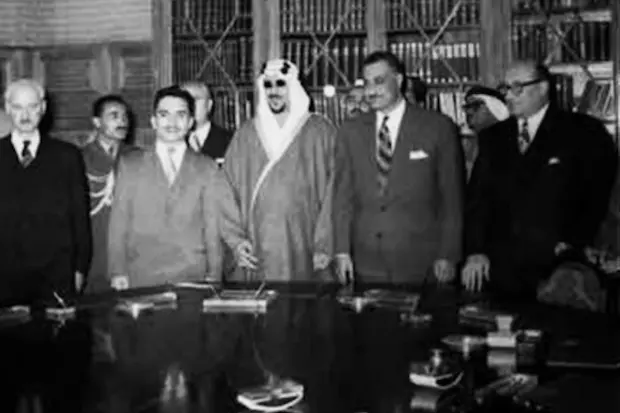
As the Europeans mostly left after World War II, Atatürk’s idea of modernization, nationalism and secularism inspired many other nations to follow suit. David Ben-Gurion was Israel’s Atatürk in some respects: a forceful nation-builder attempting to forge a modern national identity. Reza Shah of Iran had already consciously modeled many of his secular reforms on Atatürk by the 30s. But in the Arab world, this was also connected to pan-Arab nationalism, and in Egypt, Syria, and Iraq, these socialist Arab republics emerged in the 1950s and 60s, with Abdel Nasser in Egypt and the Ba’ath party in Syria and Iraq.
This type of Arab nationalism was tremendously attractive to Arab Christians, because it allowed them to take part and be just as “Arab” as a Muslim. The aforementioned Michel Aflaq himself was a Christian Arab nationalist and saw Muhammad and Islam as central parts of Arab civilization.
Egypt, Syria, and Iraq were all different branches of the same revolutionary tree in this era. They all preached a version of secular socialism, pan-Arabism and anti-colonialism, and Nasser became a regional hero after nationalizing the Suez Canal and successfully navigating Egypt out of the Suez crisis in 1956 with the canal in Egyptian hands.
Arab socialism was, however, not equal to Soviet communism. Economically, it shared some features: land reform, nationalization, a huge public sector and expansive state welfare. In Nasser’s Egypt, university graduates were even guaranteed government employment. Politically, these systems also became authoritarian, with censorship, one-party rule and imprisonment of opponents. But it was not the same as Soviet communism. Unlike Marxists, Arab socialists generally subordinated class struggle to national unity. Active communists in their countries were actually often jailed or executed – while the governments still accepted Soviet arms and economic aid with the other hand.
At the same time, Algeria successfully expelled France, which became enormously influential. Algeria's victory seemed to prove that even a much weaker movement could use guerrilla warfare, terrorism and international pressure to defeat a stronger Western power, and the Algerian model profoundly influenced subsequent Palestinian terrorist organizations.
A glaring exception to this Arab socialism was the traditional monarchies that managed to avoid revolution: Saudi Arabia, Jordan, and the Gulf monarchies. Saudi Arabia in particular presented itself as the champion of pan-Islamism against Nasser’s pan-Arabism. During the 1950s and 60s, it offered refuge to Muslim Brotherhood members fleeing Nasser’s persecution, employing some as teachers and religious scholars. In 1962, Crown Prince Faisal helped establish the Muslim World League to promote Islamic solidarity as an alternative to secular Arab nationalism. The Saudis were not themselves Muslim Brotherhood revolutionaries, but supporting these Islamist opponents was a useful way to counter Nasser. Ironically, the Saudi monarchy helped preserve and spread ideas that would later challenge monarchies as well.
By 1967, secular Arab nationalism seemed near its high-water mark. The regimes in Cairo and Damascus promised restored Arab dignity, anti-colonial independence and modern military strength.
And then they lost against Israel in six days.
The image of strength and might shattered overnight. This was the beginning of the end for the secular nationalist hegemony of Arab politics. The humiliating defeat against Israel removed one of the chief pillars of legitimacy they were standing on, and their claim to competence and military modernization suffered a catastrophic blow. Islamist critics effectively answered: “We told you so.” To them, the defeat could be interpreted not merely as military failure, but as a divine humiliation of regimes that had abandoned Islam for foreign ideologies.
When Nasser died in 1970, his successor, Anwar Sadat, chose a different path. Rather than pan-Arabism, he focused on Egypt’s national interests. By attacking Israel in 1973 and crossing the Suez Canal, he restored some of the Egyptian pride that had been lost in 1967, and this gave him the political standing to pursue diplomacy. His peace with Israel broke the ultimate taboo, but secured the return of Sinai and completed Egypt’s shift from the Soviet camp toward the United States. It also dealt another devastating blow to pan-Arabism, as Egypt, the most populous Arab nation, was suspended from the Arab League.
Throughout the 1970s, the terrorism Israel dealt with was still largely secular and Marxist. The Islamists were still on the margins. But then, in 1979, two huge events occurred: the Iranian Revolution and the Soviet invasion of Afghanistan.
Before 1979, political Islam was associated mostly with monarchies and opposition movements. Iran now created something new: a revolutionary Islamist republic. Even though they were Shia, unlike the Sunni Muslim Brotherhood, they still proved to the Middle East that it was possible for a revolutionary Islamic movement to topple a powerful Western-backed secularizing monarchy. Interestingly, the Islamists in Iran came to power partly with the help of socialist radicals, some of whom they persecuted and imprisoned once they reached power. But there was also a fusion. One important intellectual influence on the 1979 revolution was Ali Shariati, who, before his death in 1977, had developed a striking synthesis of Shiite revolutionary thought with ideas borrowed from Marxism, existentialism and anti-colonial leftism, reframing class oppression and revolutionary justice in Islamic terms.
The following year, this ideological clash also became a full-scale war when Saddam Hussein’s secular Ba’athist Iraq invaded Khomeini’s new Islamic Republic. The Iran-Iraq War was about far more than secularism versus Islamism – territory, regime security, Arab-Persian rivalry and fear of Iran exporting its revolution all mattered – but the contrast was unmistakable: revolutionary Islam on one side and Arab nationalist Ba’athism on the other. Yet as the war dragged on, even Saddam began borrowing the religious language of his enemy – a development we will return to later.
The Soviet invasion of Afghanistan created a situation where the Soviet Union, the big sponsor of the secular and nationalist governments of the Middle East, actively fought a war against the mujahedin Islamists. The mujahedin got support from Saudi Arabia and Pakistan, and even the United States. Cold War containment repeatedly led Washington to support anti-communist forces whose ideology it otherwise would not have embraced. The mood even reached Hollywood: in Rambo III, released in 1988, Rambo fights alongside Afghan mujahideen against the Soviets, and the film ends by dedicating itself to “the gallant people of Afghanistan.”
The Afghan War also attracted thousands of Muslim volunteers from across the world, particularly the Arab countries. The Palestinian Islamist Abdullah Azzam became an important figure in recruiting them, alongside a young Saudi named Osama bin Laden. The foreign volunteers played a relatively small role in actually defeating the Soviet forces, but their experience in Afghanistan created something far more consequential: international networks of militant Islamists who would eventually take their struggle to other parts of the world. Al-Qaeda itself emerged from this environment.
The Soviet Union withdrew in 1989, after 10 years, and then dissolved only two years later. This was a huge win for Islamist public relations. They could now declare that faith-driven resistance had defeated a superpower. 1991 also removed the Soviet Union as the great external patron and ideological model of many secular Arab regimes and movements. While the U.S. and Europe saw 1991 as a tremendous victory for worldwide democracy, many Islamists saw an incredible opportunity.
During the 1970s and 80s, this struggle between secular nationalism and Islamism was playing out among the Palestinians as well. The PLO and Marxist Palestinian factions were then Israel’s chief enemies, so Israel tolerated – and at times encouraged – Islamist organizations as a counterweight. In Gaza, Sheikh Ahmed Yassin’s Mujama, a Palestinian branch of the Muslim Brotherhood, received official recognition and was allowed to build mosques, charities and social institutions while Israel concentrated on suppressing the secular PLO.
Israel was not alone in making this calculation. In Egypt, Anwar Sadat released Muslim Brotherhood activists from prison and gave Islamists more room to organize, partly to weaken the Nasserists and Marxists who opposed his economic reforms, his move away from the Soviet Union, and eventually his peace deal with Israel.
This was an important reason Islamist movements grew stronger; not merely by opposing secular governments but also by building schools, clinics, charities and welfare networks, often providing services that struggling governments failed to deliver. In Egypt, the Muslim Brotherhood gradually expanded its influence through universities, professional associations and charitable institutions. In Gaza, Yassin’s movement followed a similar pattern. These organizations were building something that political slogans alone could never provide: relationships with ordinary people and the trust of communities that increasingly depended on them.
Both Israel’s and Egypt’s governments were preparing for yesterday’s enemy while grossly underestimating the new one growing right under their noses.
By the 1980s, the danger had shifted. Sadat was assassinated in 1981 by radical Islamists, albeit not from the Muslim Brotherhood. In Gaza, Yassin’s movement gradually moved from social Islamization toward militancy and eventually turned into a new organization during the 1987 First Intifada – Hamas.
In the early 90s, Israel reversed its calculation. Hamas was becoming the rising threat, while the old enemy – the PLO – was weak and isolated. It had been defeated in 1982 in Lebanon, been isolated because of its support for Saddam Hussein during the 1991 Gulf War, and its Soviet patron had collapsed. This was the world in which the Oslo Accords became possible. One element of Israel’s security logic at the time was simple: empower the PLO and let them police Hamas instead of Israel doing it directly.
The old secular nationalist movement, weakened but still internationally recognized as the representative of the Palestinians, was brought back from Tunis and given institutions, territory and armed police partly to contain the Islamist movement that had grown in its shadow.
So where are we today?
Over the past several decades, until 2023, Hamas grew from a marginal Islamist challenger into a movement capable of eclipsing the Fatah faction in Gaza and competing with it for leadership of the Palestinian movement. In Syria, an Islamist organization that emerged from the al-Qaeda environment eventually overthrew the Assad regime and now leads the country under Ahmed al-Sharaa. Even Turkey, once the great bastion of Atatürk’s aggressive secularism, has moved in a much more religious direction under Recep Tayyip Erdoğan and his Islamist-rooted AKP. And the extraordinary rise of ISIS in Syria and Iraq demonstrated how much political space had opened for movements that would once have seemed impossibly radical.
But something else happened as secular nationalism and Islamism competed: they began to borrow from each other.
Saddam Hussein initially fought revolutionary Iran using the language of secular Ba’athism and Arab nationalism. But as the Iran-Iraq War dragged on, he increasingly invoked jihad, called Iraqi soldiers mujahideen, and portrayed the conflict as a new version of the ancient Arab-Muslim conquest of Persia. In 1991, he went even further and added “Allahu Akbar” to the Iraqi flag.
The borrowing also went the other direction. Many Islamist movements that once emerged from transnational Islamic ideologies became increasingly focused on particular nations and territories. Hamas is thoroughly Palestinian nationalist as well as Islamist. Hay'at Tahrir al-Sham (HTS) evolved from the world of global jihad toward an explicitly Syrian political project. Erdoğan combines Islamic political language with fierce Turkish nationalism.
The secularists learned they could not ignore Islam. The Islamists learned they could not ignore nationalism.
So what happened to the secular Middle East of the 1970s?
Arab socialism promised unity, dignity, modernization and military strength, but failed to deliver enough of them. The defeat of 1967 damaged its prestige. Authoritarianism and economic failures weakened it further, and the collapse of the Soviet Union removed its great international patron. Political Islam stepped into the vacuum, strengthened by the Iranian Revolution, the Afghan jihad and decades of grassroots organization.
The Middle East moved from Moscow to Mecca.
That change also altered who could belong at the ideological center. A Christian like Michel Aflaq could help create Ba’athism because Arab nationalism defined belonging primarily through language, history and culture. An explicitly Islamist movement could never offer quite the same role to an Arab Christian.
But Islamism did not simply replace nationalism. Hamas is Palestinian, HTS became Syrian, and Erdoğan’s Islamism remained fiercely Turkish. Meanwhile, secular rulers increasingly borrowed Islamic language themselves.
The secular revolution lost. Arab socialism lost its dominance. But their nationalism still survived inside the Islamist movements that replaced it.
Popular article:

interview Easter message of resurrection hope amid war at Jerusalem's Garden Tomb

biblical commentary Let my people go: a Passover message for today

4 IDF soldiers killed, 2 wounded in fighting in southern Lebanon, as Israel eliminates dozens of Hezbollah terrorists

Receive latest news & updates
A message from All Israel News
Help us educate Christians on a daily basis about what is happening in Israel & the Middle East and why it matters.
For as little as $10, you can support ALL ISRAEL NEWS, a non-profit media organization that is supported by readers like you.
Latest articles:
Iran’s IRGC signals plans for missiles beyond 2,000 km, vows to 'demonstrate' capabilities

President Herzog gives mandate for forming next government to Eisenkot

Holocaust survivor returns to Berlin on Kristallnacht anniversary, urges Germany to fight antisemitism

Israel is losing America – new statistics reveal a political earthquake

Trump confirms US military carried out 'minor strikes' on Iran's Qeshm Island