Despite boycott pressure, soccer game between Ireland, Israel to proceed after last-minute vote


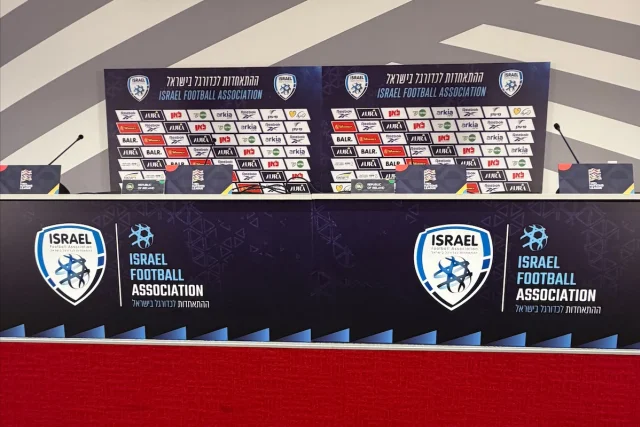
Ireland’s national soccer team will proceed with its scheduled UEFA Nations League match against Israel on Sunday evening after players voted to play following weeks of intense pressure to boycott the game.
One goalkeeper, Gavin Bazunu, refused to participate and quit the squad rather than take the field against Israel.
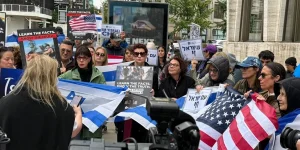
The match, technically an Israeli home game, will be played at Nagyerdei Stadium in Debrecen, Hungary, after calls from Irish fans, civil society groups, prominent sports and entertainment personalities and elected officials for the Irish team to refuse to play.
The decision came after hours of discussions that reportedly disrupted the team’s training schedule and, at times, escalated into heated arguments.
The Football Association of Ireland announced Saturday that the players had voted to play the match despite the boycott campaign. However, Bazunu decided not to participate, prompting further discussions among the squad before the team ultimately reaffirmed its decision to take the field.
UEFA had warned the Irish national team that refusing to play a scheduled match would result in severe financial penalties and could damage Ireland’s position ahead of upcoming international tournaments, potentially including the 2028 European Championship, which Ireland is slated to co-host with England, Scotland and Wales.
Israeli soccer officials told YNet that Shino Zoaretz, president of the Israel Football Association and a member of UEFA’s Executive Committee, was instrumental in convincing European soccer’s governing body that action was needed as rumors of an Irish boycott intensified Saturday.
Israeli officials also expressed concern that if the FAI were able to boycott the match without serious consequences, it could set in motion a process that might eventually result in Israel being ejected from European soccer, similar to Russia’s suspension by UEFA and FIFA following the Kremlin’s “special military operation” to invade neighboring Ukraine in February 2022.
“It could have become a rolling event that ended with us being thrown out of Europe,” one Israeli soccer official told Ynet. “We were extremely lucky.”
FAI chief executive David Courell said Saturday that the team had decided to play the match after the controversy and boycott calls. Bazunu’s decision to withdraw from the squad, however, led other players to request additional discussions about whether to try to persuade him to change his mind or reconsider the team’s decision to play.
Despite agreeing to participate, the Irish players have indicated that they intend to signal their opposition to the match. They will wear black armbands and will not take part in some pregame ceremonies. Several players have also asked to be excused from customary media obligations surrounding the game.
The players have said they do not want to shake hands with their Israeli opponents after the match, exchange pennants or pose for a group photograph. They have also discussed the possibility of wearing shirts with a pro-Palestinian message or turning their backs during the playing of the Israeli national anthem.
Such actions would traditionally be viewed as a serious breach of protocol and sportsmanship, but no formal condemnation has been announced ahead of Sunday’s match.
In the lead-up to the game, Ireland coach Heimir Hallgrimsson declared that his team was “not playing WITH genocide but against genocide,” prompting the Israel Football Association to accuse him of “stupidity, ignorance and hypocrisy.”
The game on Sunday will be played in an almost empty stadium, with no Irish fans permitted to attend and only a small number of Israeli fans allowed inside.
The teams will meet again on Oct. 4 in Bačka Topola, Serbia. That match will also be played without fans in the stadium, as it is officially an Irish home game and the FAI requested that it be held without spectators.
You might also like to read this: