Iran would recognize Israel, join Abraham Accords & end nuclear weapons program under his leadership, says Reza Pahlavi
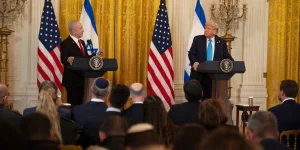
President Trump expresses skepticism regarding Pahlavi: ‘Seems nice, don’t know if his country would accept him’







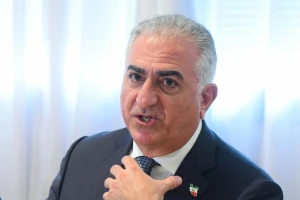
Exiled Crown Prince Reza Pahlavi said on Wednesday, in a post to social media, that a post–Islamic Republic of Iran under his leadership would renew ties with the United States and Israel.
In the video message, Pahlavi said that “Iran is identified in your minds with terrorism, extremism, and poverty.”
“The real Iran is a different Iran. A beautiful, peace-loving, and flourishing Iran,” he said, revealing details of how a free Iran, which he said would end its threatening nuclear weapons program, would act toward its neighbors.
“Support for terrorist groups will cease immediately. A free Iran will work with regional and global partners to confront terrorism, organized crime, drug trafficking, and extremist Islamism.”
To all of our friends around the world,
— Reza Pahlavi (@PahlaviReza) January 15, 2026
Under the yoke of the Islamic Republic, Iran is identified in your minds with terrorism, extremism, and poverty. The real Iran is a different Iran. A beautiful, peace-loving, and flourishing Iran.
It is the Iran that existed before the… pic.twitter.com/IhK6ZRYDY0
Pahlavi also promised that “relations with the United States will be normalized and our friendship with America and her people will be restored.”
He promised a similar change regarding Israel, stating, “We will pursue the expansion of the Abraham Accords into the Cyrus Accords, bringing together a free Iran, Israel, and the Arab world.”
The video by the crown prince is one of his first since the start of the protests to specifically address the potential future after the collapse of the Islamic Republic’s regime.
Promising a return to open relations with the rest of the world, Pahlavi called for increased support for the protesters.
“To achieve this, now is the time to stand with the Iranian people,” he stated. “The fall of the Islamic Republic and the establishment of a secular, democratic government in Iran will not only restore dignity to my people, it will benefit the region and the world.”
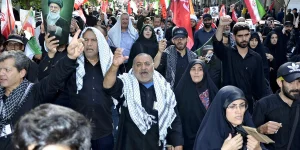
Despite Pahlavi's apparent new popularity within Iran, where footage has shown protesters chanting his name, U.S. President Donald Trump on Wednesday raised doubts about the former crown prince's support within Iran.
"He seems very nice, but I don't know how he'd play within his own country," Trump said during an interview with Reuters. "And we really aren't up to that point yet,” he continued, indicating that the U.S. is not considering any moves towards regime change in Iran.
“I don't know whether or not his country would accept his leadership, and certainly if they would, that would be fine with me,” the president stated.
Trump indicated that the government in Tehran could fall due to the protests, but said, "any regime can fail."
"Whether or not it falls or not, it's going to be an interesting period of time," he noted.
Trump’s comments to Reuters come just a week after telling reporters that he had no plans to meet with Pahlavi. While special envoy Steve Witkoff did meet privately with Pahlavi over the weekend, no official readout of the meeting was given.
Pahlavi, now 65, has lived outside Iran since the year before his father was deposed in the 1979 Islamic Revolution. He was proclaimed as "Reza Shah II" after his father's death in 1980.
While he has become a prominent voice in support of the protests, the Iranian opposition is fragmented into various rival groups and ideological factions.
Critics of Pahlavi among the Iranian opposition also question whether the exiled crown prince has broad backing within the country of Iran. Karim Emile Bitar, a research associate on the Middle East at the Paris Institute for International and Strategic Relations (IRIS), suggested that Pahlavi’s visibility during the current protests is largely due to “the vacuum that characterizes the current Iranian opposition.”
“With no opposition, either inside or outside Iran, capable of proposing a credible and viable alternative to the Islamic Republic, Pahlavi is establishing himself as a potential figure who could ensure a transition,” Bitar told El País.
Bitar is only one voice among several who say that the oppression by the Islamic Republic’s regime is leading to a sense of nostalgia for the former monarchy among a population that was not alive to experience it.
With the nation of Iran largely cut off from the outside world as part of the Islamic regime’s crackdown on the protests, judging the true level of support for Pahlavi remains a difficult task.
You might also like to read this: