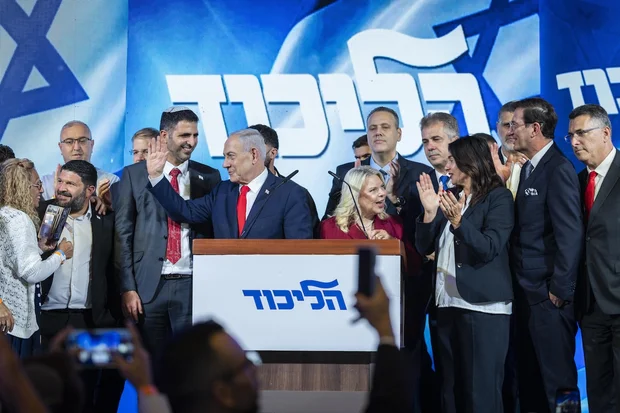
‘Change Bloc’ in disarray: Liberman refuses Eisenkot endorsement as Pres Herzog weighs first candidate to establish new gov’t
Liberman also said to oppose change bloc candidate as new Knesset speaker
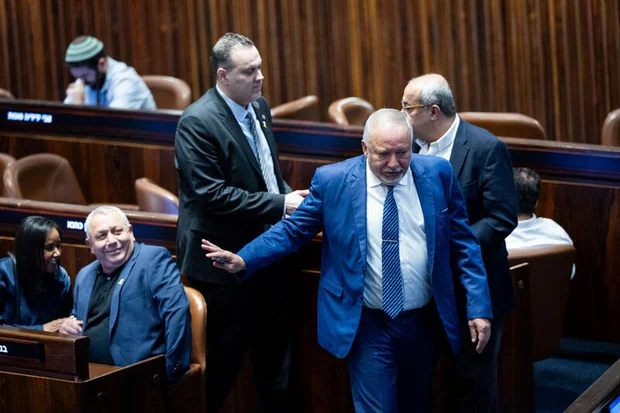
With the start of the president’s consultations with party leaders about whom they endorse as a future prime minister fast approaching, the self-declared “Change Bloc,” based on Gadi Eisenkot’s Yashar party, is riven by internal tensions.
Yashar only garnered a disappointing 21 seats and the bloc won 48 overall in last week’s elections, falling well short of the necessary 61-seat majority and dashing the hopes of establishing a new government outright.
Now, Yashar is discussing a minority government with outside help from the Arab parties, or even one of the ultra-Orthodox parties, though disunity within the bloc threatens to derail this plan as well.
Yisrael Beytenu chairman Avigdor Liberman reportedly refused to endorse Eisenkot as the bloc leader and prime ministerial candidate, which could potentially render attempts at a minority government as futile.
President Isaac Herzog announced that he will begin consultations with the party leaders on Wednesday, during which they will recommend candidates for prime minister. The candidate who receives the most recommendations will be tasked by the president with the first attempt to form a new government.
🔵Netanyahu Bloc: 53 (-11) 🔴Opposition Bloc: 48 (+2) 🟢Arab Parties: 19 (+9) +/- 2022 elections https://t.co/c5YFh5xNO4
— Israel Elects (@israel_elects) October 30, 2026
Herzog has called on all party leaders to “climb down” from their pre-election promises and face the reality of the political deadlock, urging them to avoid new elections.
“I have already said that I hope the representatives will come with open minds, and I add that they should come with open hearts, to listen and share ideas and find creative solutions to prevent another election,” he said.
It appears that the only scenario in which Eisenkot could become prime minister is a minority government with outside support. For this, Eisenkot needs the change bloc to express unified support for him as its candidate; however, Liberman has emerged as a major obstacle to his efforts and, until now, has refused to endorse Eisenkot.
In addition, Liberman has ruled out joining a government with direct or indirect support from either of the Arab parties.
On Saturday, the two leaders met for the first time since the elections. According to Ynet News, Liberman accused Eisenkot of undermining the bloc by campaigning against his allies ahead of the elections and also seeking to form a minority government with the support of Arab parties.
Liberman reportedly criticized plans to replace the current Knesset speaker, Amir Ohana, as soon as the new parliament is sworn in, which is a core component of the bloc’s post-election strategy – allowing it to begin legislating new laws.
However, Liberman reportedly believes Eisenkot’s Yashar party lacks sufficiently qualified candidates for the position, according to Ynet.
Kan News reported that Liberman wants Oded Forer, his own party member, to become Knesset speaker, but said the Arab parties would oppose it, further harming chances for a minority government. On the other hand, the bloc’s other members fear alienating Liberman even further.
The Likud party, led by Prime Minister Benjamin Netanyahu, has also tried to prevent Ohana from being replaced. According to Kan, Netanyahu warned Eisenkot that such a plan would immediately end any efforts to negotiate for a unity government.
Not being able to establish a unity government could trigger new elections, which analysts see as likely to produce an even better outcome for the Netanyahu bloc.
Ynet cited closed-door discussions about a potential unity government with a rotating prime minister, with Netanyahu reportedly saying, “We are examining everything. I am not completely ruling out any option.”
However, sources close to Netanyahu noted that “no proposal to form a unity government has been made yet.”
Meanwhile, Naftali Bennett and Yair Lapid’s "Together" (B'Yachad) party officially announced on Sunday evening that it will recommend that President Herzog nominate Gadi Eisenkot as the first candidate tasked with forming a government
The fourth change bloc partner, "The Democrats" party's Yair Golan, has reportedly already met with Eisenkot and is widely expected to endorse him ahead of Wednesday’s consultations.
“Former Prime Minister Bennett made clear throughout the entire election campaign that he would respect the voters’ decision, and that is what he is doing,” B'Yachad stated.
Bennett had also ruled out cooperating with Arab parties while stressing that he wants to form a “Zionist government.”
Nevertheless, change bloc officials and popular supporters in the media have discussed cooperating with the Arab parties – Joint List and Ra’am – who secured a record combined 19 seats.
On Saturday, Eisenkot reiterated his four conditions for joining his proposed coalition: Recognition of Israel as a Jewish, democratic, liberal, and egalitarian state; a commitment to the values of the Declaration of Independence; mandatory military, national, or civilian service for all citizens; and recognition of Hamas as a terrorist organization, which includes support to destroy its military and governing power in the Gaza Strip.
According to Ynet, Eisenkot has authorized an examination of a possible coalition arrangement in which the ultra-Orthodox United Torah Judaism (UTJ) and Ra’am party would abstain, while Ra’am’s No. 2, Jewish former police officer Yoav Segalovitz, would vote in favor.
Eisenkot's camp reportedly does not want to negotiate with the Arab Joint List, fearing a public backlash. However, its leaders have been signaling their readiness to support any coalition that would replace Netanyahu.
In a Guardian interview published Monday, Joint List leader Yousef Jabareen said this was a “historic moment.”
“In order to use our political power to get rid of the extreme Netanyahu government, we said that we will consider the possibility of supporting from outside. This is an opportunity to change policies, to change attitudes, including toward the Arab community and toward the Palestinian people.”
Regarding Eisenkot’s four conditions, Jabareen argued that they “are more relevant for parties who would be in the coalition. We are not planning to be in the coalition… for very clear reason… As long as the occupation of our people in the West Bank continues, we cannot be part of a government.”

Please take a moment and join others who are praying for Israel at this very moment by adding your light on the live prayer map with a simple click at prayforisrael.live.
Popular article:

interview Easter message of resurrection hope amid war at Jerusalem's Garden Tomb

biblical commentary Let my people go: a Passover message for today

4 IDF soldiers killed, 2 wounded in fighting in southern Lebanon, as Israel eliminates dozens of Hezbollah terrorists

Receive latest news & updates
A message from All Israel News
Help us educate Christians on a daily basis about what is happening in Israel & the Middle East and why it matters.
For as little as $10, you can support ALL ISRAEL NEWS, a non-profit media organization that is supported by readers like you.
Latest articles:

IDF expands academic benefits for reservists, career soldiers after years of wartime service
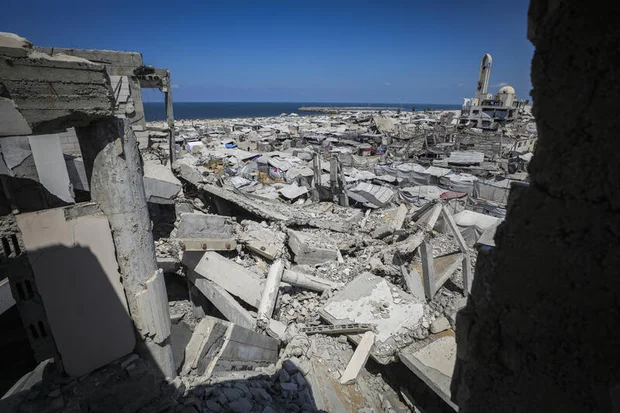
Israel grants ‘immunity’ to Hamas political officials, targeted strikes continue in Gaza

Case against 3 Ra’am activists suspected of election bribery stagnates as court rejects police request to extend detention
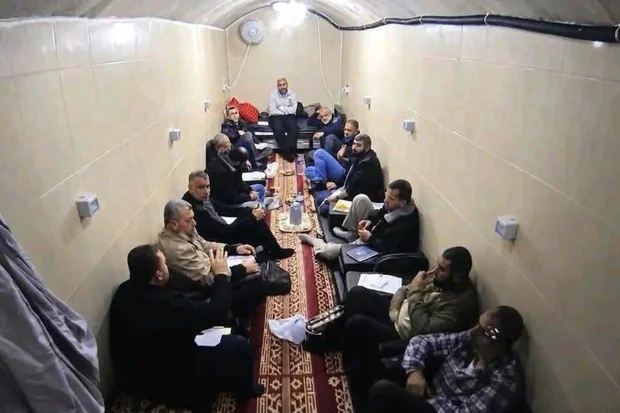
Al Jazeera airs unseen footage of Hamas' senior military leaders before Oct. 7 massacre
US, Israeli flags trampled and burned during French protests