Zionism, political subject or prophetic reality?


More than ever, the question of Zionism and the legitimacy of a Jewish state with Jerusalem as its capital divides the Christian world. This division is not new: it has run through the history of the Church since its earliest centuries, in connection with certain controversial interpretations of the Fathers of the Church. Very early on, replacement theology penetrated Christian reflection, carried by an allegorical reading of the Scriptures, to the detriment of their literal and historical meaning.
The pastor Martin Luther King (1929–1968) summed up the issue with remarkable clarity in his Letter to an Anti-Zionist Friend:
"... You declare, my friend, that you do not hate Jews, that you are only anti-Zionist. To this I reply that truth sounds from the top of the high mountain and its echoes resound in the green valleys of the land of God: when people criticize Zionism, they think Jews, and this is God’s very truth ... »
This analysis tragically resonates with current events. The pogrom of October 7, 2023 unleashed a wave of anti-Zionist hatred that quickly turned into overt antisemitism, spreading to the most remote regions of the world.
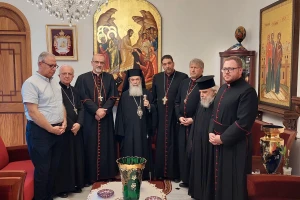
Twenty years after the 2006 Declaration (LINK), a new declaration of the Patriarchs and Heads of the Churches of Jerusalem (LINK), published around January 17, 2026, has revived the debate. It again denounces Christian Zionism as a harmful political ideology, accused of dividing local Christian communities and interfering in church life:
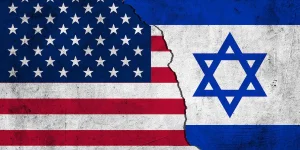
"We categorically reject the doctrines of Christian Zionism as erroneous teaching, which corrupts the biblical message of love, justice and reconciliation. We also reject the contemporary alliance of Christian Zionist leaders and organizations with certain elements of the governments of Israel and the United States, which are currently imposing unilateral borders and preemptive domination over Palestine... »
In response, Jürgen Bühler, president of the ICEJ (International Christian Embassy of Jerusalem), stressed – in essence – that it is regrettable that these issues are addressed through press releases rather than genuine dialogue. According to him and others, Christian Zionism "does not pose a threat to anyone but instead seeks to be a blessing." Christian Zionists have largely provided concrete humanitarian aid and regularly pray for peace.
What has been the position of the Churches since the establishment of the State of Israel?
Regarding the return of Jews to the Land of Israel:
• The Evangelicals: mostly perceived as biblically significant. Several European evangelical alliances do not dispute Jerusalem as the capital of Israel but refrain from officially affirming it out of diplomatic or ecumenical caution, or fear of political assimilation.
• The Catholics: a major historical event but not considered a prophetic fulfillment.
• The Orthodox: a modern political fact, without particular theological significance.
Demographically, Catholics are the largest Christian group (about 1.3 billion). Evangelicals represent a significant part of world Protestantism (more than 600 million), or nearly a quarter of all Christians. The Orthodox number fewer than 300 million people.
It is estimated that about 20 to 30 percent of the world's Christians support Israel while explicitly or implicitly rejecting replacement theology, or 500 to 700 million people.
Regarding the State of Israel:
• Evangelicals: legitimacy widely recognized, strong support for the right to exist.
• Catholics: progressive diplomatic recognition, accompanied by theological prudence.
• Orthodox: a position that is often reserved or critical.
Concerning Jerusalem:
• Evangelicals: for many, Jerusalem is the biblical capital of Israel – past, present and future.
• Catholics: Jerusalem is perceived as a universal city, with a special international status.
• Orthodox: Jerusalem is first and foremost a Christian holy site, more than a Jewish national capital.
Thus, for Evangelicals, Israel remains Israel in God’s plan, and its return to the land has biblical and prophetic significance. For Catholics, Israel is honored as the root, but without a current national prophetic role; the Church is seen as the fulfillment. For the Orthodox, the Church is the true spiritual Israel, and the modern State of Israel has no theological significance. In these last two traditions, Israel is unfortunately often referred to as the "Holy Land".
The Bible should remain the ultimate arbiter of Christian debates. The fundamental question is: are the Scriptures the inspired Word of God or a text subject to human reinterpretation? A literal and historical reading of the Scriptures, as opposed to the allegorical reading dear to St. Augustine, leads to the recognition of the enduring validity of the promises made to Israel. To question these promises is to weaken the biblical foundation itself, and consequently the foundation of the Christian faith. It is time for the Church to provide a clear, honest and biblically rooted answer.
A Call for Peace and Truth
Affirming Israel's vocation in God's plan does not mean denying the suffering of the Palestinians, justifying violence, or sanctifying political choices. Similarly, the search for peace cannot be achieved at the cost of biblical truth. Authentic peace is born neither from the erasure of divine promises nor from their ideological manipulation, but from God’s faithfulness to His word.
To take Israel seriously is also to take seriously the God of the covenant, the One who keeps His commitments despite human failure. The Church is called not to choose between truth and peace, but to walk in both: a peace rooted in justice, and a justice grounded in God’s faithfulness. May dialogue replace anathema, may prayer overcome hatred, and may the peace of God, which surpasses all understanding, guard the hearts of all those who sincerely seek His will.
You might also like to read this: