As second phase of Gaza peace deal moves forward, Hamas leaders could leave Strip
Hamas leaders in exile reject reports leaders will leave, as questions remain about terror group’s disarmament




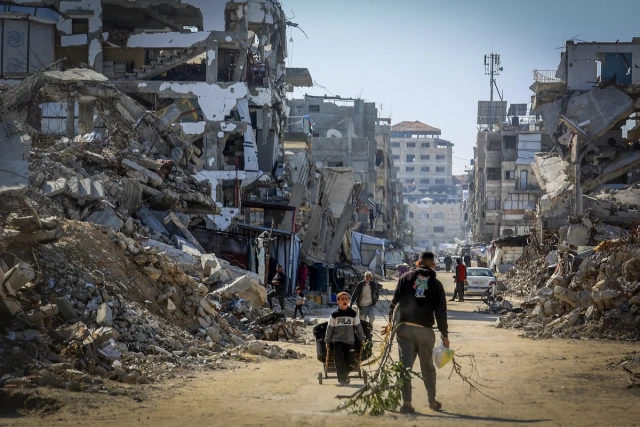
Senior Hamas commanders in Gaza are preparing to leave the enclave as part of the transition to the second phase of the Gaza peace plan, Saudi Arabia news site Asharq al-Awsat reported last week.
Quoting three Hamas sources, the report stated that “several prominent political and military leaders” who survived the war would be allowed to leave the territory as part of the transition to the second phase of the Gaza peace plan. Turkey, which currently hosts some political leadership of Hamas, has been suggested as a possible destination. However, one of the sources said that Hamas military leaders have refused to leave.
The Saudi news site reported senior Hamas leaders outside of Gaza denying the claims.
It is believed that the Israeli government would approve such a deal, as Prime Minister Benjamin Netanyahu told Fox News in September that the Jewish state was considering allowing certain Hamas leaders safe passage out of Gaza with the condition that they not return.
The original Asharq al-Awsat report made no mention of whether such a departure would be tied to the terror group surrendering its weapons, which the Gaza peace plan calls for. However, on Sunday, the Saudi news site posted an update, saying Israel was seeking to link safe passage for Hamas leaders to a commitment to complete disarmament and the dismantling of the group’s militant wing.
These conditions are not likely to be accepted by Hamas leaders, who have publicly rejected any calls for the group to be disarmed.
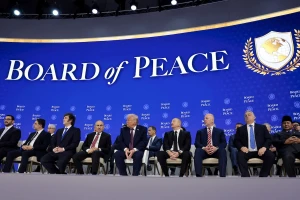
According to a Gaza reconstruction plan shared by Trump advisor Jared Kushner at the World Economic Forum in Davos, Switzerland, last Thursday, some Hamas militants and political bureau members could receive pardons in exchange for handing over their weapons and submitting to Israeli security screening.
Channel 12 News reported that Israel is seeking to condition any withdrawal from current IDF positions in Gaza on Hamas’ disarmament, while Kushner acknowledged that reconstruction in the enclave cannot proceed without the group handing over its weapons.
The U.S.-brokered ceasefire stipulates that Hamas must disarm and relinquish political control in the Gaza Strip; however, the group has so far refused to do so.
Netanyahu met with U.S. envoys Steve Witkoff and Kushner over the weekend to discuss moving forward with the next phase of the peace plan.
Turkish Foreign Minister Hakan Fidan met with a Hamas delegation in Turkey on Monday to discuss the situation in Gaza and the move to the second phase of the peace deal. The Turkish Foreign Ministry posted images from the meeting but did not provide details on what was discussed.
However, Turkey has publicly stated its commitment to disarming Hamas as part of the Gaza peace plan, although it supports letting Hamas fighters keep personal weapons, a stance Israel sharply opposes.
Following the discovery and return of the remains of deceased hostage Ran Gvili on Monday, U.S. President Donald Trump stated, “Now we have to disarm Hamas like they promised.”
Currently, options being discussed to disarm Hamas face serious obstacles, particularly the unwillingness of any nation other than Israel to confront the Islamic terror organization. However, the Israel Defense Forces, exhausted after a two-year-long war, needs time to rest and reorganize. Any new ground offensive would likely carry a heavy political cost.
One option under consideration in Israel is strengthening anti-Hamas militias in Gaza, which option Israel has supported during the ceasefire. Speaking in Davos, Kushner said such militias would later either be dismantled or “integrated into NCAG [the Palestinian technocratic committee meant to oversee civil affairs in Gaza].”
Want to help more people find our reporting from Israel? Leave a quick Google review of our website HERE .
You might also like to read this: