








opinion The Isaiah Scroll - A sign for our generation
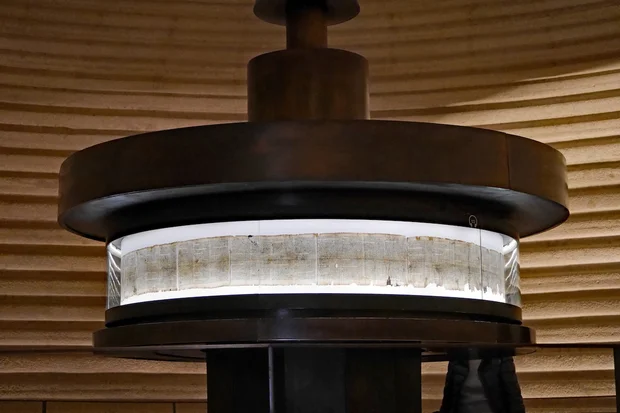
There are moments when history seems to stop. We have just experienced one of these moments by contemplating with our own eyes the authentic scroll of the prophet Isaiah. This scroll was discovered in the Qumran caves in 1947 and exceptionally exhibited to the public. Since the inauguration of the Israel Museum in 1965, this manuscript, one of humanity's most precious treasures, has hardly left the vaults where it is kept in order to be protected from light and time. In front of this more-than-2000-year-old parchment, while young students compare the ancient text with their own copy of the Megillat Yeshayahu, a deep emotion grips us. We are not only facing archaeology, but a silent witness to God's faithfulness.
A discovery at a time when Israel is being reborn
The date of this discovery is, in itself, incredible. In the autumn of 1947, just a few months before the proclamation of the Jewish state on May 14, 1948, a young Bedouin shepherd threw a stone into a cave in Qumran; the sound of a broken jar changed the course of biblical archaeology. The Dead Sea Scrolls had just resurfaced after nearly 20 centuries. As if, at the moment when Israel was about to be reborn among the nations, God was also bringing up from the depths of history the written testimony of His Word. The people return to their land, the Word returns to the light.
Among all the manuscripts found, the complete Isaiah scroll occupies a unique place. How can we not think of the words of the prophet? "Is a country born in one day? Is a nation brought forth in a single moment?" (Isaiah 66:8). On May 14, 1948, against all odds, Israel was officially reborn after nearly 2,000 years of exile. What seemed impossible to men became a reality before the eyes of the nations. For believers, this rebirth echoes the promises announced centuries ago by the prophets.
God watches over His Word
The manuscript of Isaiah silenced the skeptics. Critics claimed that the Bible had been modified over the centuries. The discovery at Qumran upset these claims. The Isaiah scroll is dated to about 150 years before the Common Era. However, when compared to the Hebrew (Masoretic) text transmitted to our modern Bibles, the fidelity is simply remarkable. There are a few variations of spelling, some differences in copying, as in any ancient manuscript. But the message, the prophecies, the promises—everything remains. What other ancient book can claim the remarkable fidelity of transmission of Scripture over more than two millennia?
The prophet Isaiah wrote, "The grass diminishes, the flower fades, but the word of our God stands forever" (Isaiah 40:8). For 2,000 years, this scroll remained hidden in a jar in the heart of the Judean desert. Empires have followed one another, Rome has disappeared, kingdoms have fallen. But God's Word was biding its time because God watches over His Word. At the chosen time, it came out intact.
A sign for our generation
Contemplating this parchment of more than 7 meters, we see the testimony of the One who keeps His promises and leads History. The discovery of the Isaiah scroll on the eve of Israel's rebirth offers the believer a striking picture. As Israel regained its place among the nations, the world also regained one of the oldest witnesses of the truthfulness of the Scriptures.
For those of us who have had the privilege of seeing this exceptional manuscript with our own eyes, we believe that if God has preserved His Word for 20 centuries, He will also fulfill all that He has promised. And the Isaiah scroll, silent for more than 2,000 years, will continue to proclaim this truth to the end.
"I am God, and there is no other; I am God, and there is none like me. I make known the end from the beginning, from ancient times, what is still to come." - Isaiah 46:9–10
.jpeg/8173455016a6f2a80d983a0b72edd0a6/whatsapp-image-2026-08-05-at-11.12.15-(1).webp)

Support our independent, on-the-ground reporting from Israel. Become a $5/month Ally.
Popular article:
interview Easter message of resurrection hope amid war at Jerusalem's Garden Tomb

biblical commentary Let my people go: a Passover message for today
4 IDF soldiers killed, 2 wounded in fighting in southern Lebanon, as Israel eliminates dozens of Hezbollah terrorists

Receive latest news & updates
A message from All Israel News
Help us educate Christians on a daily basis about what is happening in Israel & the Middle East and why it matters.
For as little as $10, you can support ALL ISRAEL NEWS, a non-profit media organization that is supported by readers like you.
Latest articles:

opinion North American Jewish organizations to recruit 100 professionals to combat antisemitism

opinion ‘No need’ for pre-election Iran strike, IDF chief says as gov’t, opposition trade blame for potential escalation – report
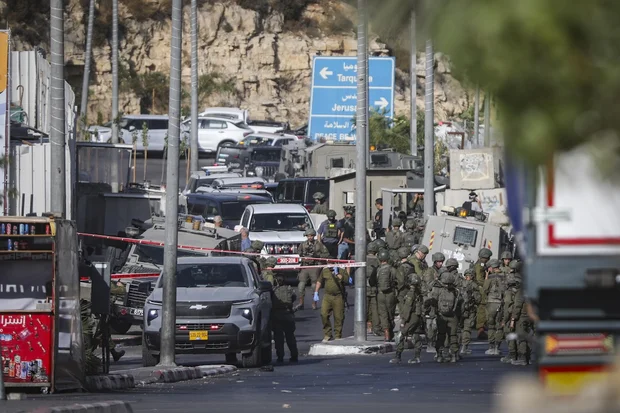
terror attack 2 Israelis critically wounded, 2 terrorists killed in Hebron shooting; IDF says larger attack was prevented
analysis A people dwelling securely? Israel’s strategic standing, 3 years after Oct 7

opinion Hamas on wheels: What I found in Dearborn reveals a troubling history and a battle over Israel