








Judea and Samaria explodes in violence after Jewish settler, IDF reservist killed during confrontation with Palestinians
Settlers set fire to several mosques, homes, and vehicles as part of ‘revenge’ campaign
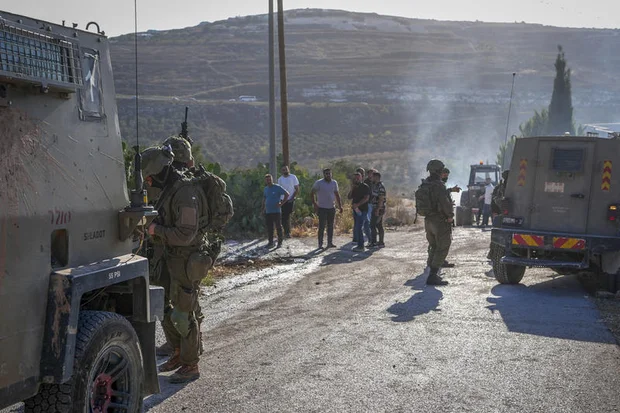
Jewish settlers and rioters carried out revenge attacks in Judea and Samaria over the weekend, setting fires to mosques, homes, and vehicles, after a settler and a reservist were killed on Friday morning.
Reports in Hebrew media said that over 30 incidents of nationalistic crime were reported over the weekend involving Israeli Jews attacking Palestinian sites throughout the territories, including incidents of illegal road blockades, stone-throwing, and vandalism of property and vehicles.
In the village of Kur, south of Tulkarm, rioters set fire to a mosque, spray-painting the phrase “Jewish blood is not in vain” on the wall.
Qatari news outlet Al-Arabi reported that Jewish rioters set fire to a house in the officers' neighborhood, in eastern Nablus. Rioters also attacked a house in Beit Furik, leaving graffiti which read, “Jews, wake up.”
A Palestinian family's home was set on fire by Israeli settler terrorists in the village of Urif in the West Bank, in an attempt to burn the family alive inside.
— Ihab Hassan (@IhabHassane) July 24, 2026
Miraculously, neighbors managed to rescue them and extinguish the flames before it was too late. pic.twitter.com/ubB6kYV6Di
At the same time, attackers set fire to a mosque in the village of Qusra, near Nablus, writing the words "Benayahu's revenge" on the wall, a reference to the settler Benayahu Mellet, a member of the Havat Gilad [Gilad Farm] emergency response team who was killed on Friday in a confrontation between settlers and Palestinians.
IDF soldiers arrived at the scene, but said the suspects had fled before their arrival. Palestinians have repeatedly claimed that the IDF only arrives at the scenes of such attacks after the settlers have left, and that those Palestinians who talk to the military are often treated as suspects.
On Friday, Benayahu Mellet, 32, a father of two daughters, and Major Yuval Ezra, 27, from Herzliya, a commander in the Artillery Corps, were killed after a confrontation between Jews and Arabs broke out in Samaria.
The attack began when a group of settlers, including many children and youth, arrived outside the Palestinian village of Tell, without prior coordination with the IDF. Palestinians came out from the village to confront the settlers and to prevent them from entering the village, leading to a confrontation.
The Havat Gilad police chief rushed to the scene, along with Mellet, a member of the emergency alert squad. At some point in the confrontation, a Palestinian seized Mellet's weapon and opened fire on the Jewish settlers, killing Mellet, and Ezra.
An IDF officer killed the Palestinian who took the weapon, which was recovered by the soldiers. At least four Palestinians were killed in the confrontation.
Mellet was buried later on Friday, in a funeral attended by many coalition ministers from the settlement bloc. During the funeral, there were repeated calls for revenge and for increasing the number of illegal settlements within Judea and Samaria.
Today's deadly clash in the West Bank began when about 30 settlers, including armed men and minors, entered Tell, a Palestinian village that Israelis are not allowed to enter, using a "hike" as cover. They did not coordinate with the IDF, even though it is required. The incident… pic.twitter.com/LhHxRXowuw
— Eli Kowaz - איליי קואז (@elikowaz) July 24, 2026
Meir Ettinger, a convicted extremist, and the grandson of extremist rabbi, Meir Kahane, who was barred from Israeli politics before his death for support for Jewish terror, praised Mellet at the funeral, saying, “He was never satisfied with recognized roads and fences, and strived continuously to conquer the region.”
Ettinger said that Mellet did not “make a distinction between Areas C and B” in Judea and Samaria, a reference to the zones of control set up under the Oslo Accords.
Elisha Yered, another leader in the illegal settler outpost movement, said that Mellet, “worked to establish settlement outposts in these territories.”
Yered promised to establish more illegal outposts in Mellet’s honor.
Essam Saifi, a leader in the Fatah party who lives in Tell, told Reuters that the incident started after about 25 to 30 Israeli settlers entered the eastern area of Tell and tried to break into houses there.
Saifi said that residents came out to confront the settlers, and that the settlers opened fire during the confrontation.
The military said it dispatched additional forces to Judea and Samaria to prevent further confrontations, while also imposing a closure order on the village of Tell and the city of Nablus.
IDF and border patrol forces entered several Palestinian towns and cities on Friday evening, in an attempt to apprehend those involved in the deadly confrontation, detaining around 20 people.
Also that same evening, extremist settlers set up at least four new illegal outposts in Judea and Samaria following the confrontation, including one next to the town of Tell, where the incident took place.
Three additional illegal outposts were set up next to the nearby towns of Awarta, Qusra and Jabal Ubayd.
All four outposts were constructed from tents, or temporary shelters.
On Saturday, the military said it apprehended over 70 wanted Palestinians following the deadly incident on Friday and questioned over one hundred other Palestinians.
Earlier on Saturday, a second group of Jewish settlers arranged another “tour” through the village of Tell, again without security coordination or permission from the IDF. There were no reported incidents during the event.
Several other confrontations between Jewish settlers and Palestinians were reported on Saturday, including incidents of stone throwing. In one incident near Susya, in southern Judea, a settler’s weapon was stolen by a Palestinian during the confrontation. However, there were no shots fired.
The military set up roadblocks in the surrounding area to look for the person who took the weapon. On Saturday evening, the IDF said it located the weapon, which had been discarded in a nearby field.
A video shared on social media Saturday night, showed a group of Jewish Israelis stopping cars traveling along the road between Salfit and Qalqilya, preventing them from passing.
اعتداءات لا تتوقف.. مستوطنون يهاجمون مركبات الفلسطينيين على طريق "وادي قانا" بين مدينتي سلفيت وقلقيلية. pic.twitter.com/x1tv5BXqLA
— شبكة قدس الإخبارية (@qudsn) July 25, 2026
Ayman Odeh, leader of the Hadash-Ta'al joint list of Arab parties, posted a message on 𝕏 criticizing the attacks.
Noting the attacks on several mosques, Odeh wrote, “Settlers, under the protection of the army and with the encouragement of the government, set fire yesterday to a mosque in Kafr Qassra. They also sprayed on its walls the inscription: ‘Revenge. We will adorn the Land of Israel with blood.’”
“Blood does not adorn the land,” Odeh wrote, quoting Numbers 35:32, “for blood pollutes the land.”
“They want the situation in the West Bank to explode, intentionally so that such an explosion will strengthen the death cult, the Netanyahu-Ben Gvir-Smotrich government,” Odeh said, adding, “We must not let them. We must stop them.”
Meanwhile Culture and Sports Minister Miki Zohar posted a message of his own to social media, saying, “Every Jew has the right to travel anywhere in the Land of Israel whenever his heart desires. A Palestinian raising his hand against a Jew does so with his own blood on his head.”
Zohar blasted those in Israel who have criticized the recent wave of Jewish violence against Arabs in Judea and Samaria, saying, “It is sad and shocking that after everything we've been through, there are still those in the people of Israel who try to justify the massacre of Jews in the name of hatred for the settlers.”
Opposition leader Yair Lapid criticized Prime Minister Benjamin Netanyahu for not stopping the violent incidents in Judea and Samaria.
“They are causing us tremendous damage,” Lapid said. “We need to stop the settler violence, if these are fringe youth as Netanyahu claims - then why doesn't he stop them?”

Please take a moment and join others who are praying for Israel at this very moment by adding your light on the live prayer map with a simple click at prayforisrael.live.
Popular article:
interview Easter message of resurrection hope amid war at Jerusalem's Garden Tomb
biblical commentary Let my people go: a Passover message for today
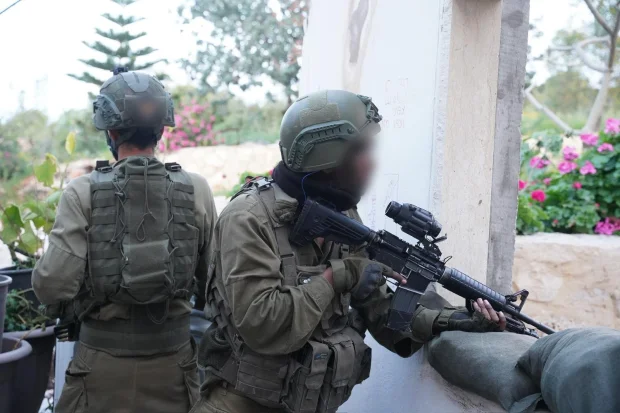
4 IDF soldiers killed, 2 wounded in fighting in southern Lebanon, as Israel eliminates dozens of Hezbollah terrorists

Receive latest news & updates
A message from All Israel News
Help us educate Christians on a daily basis about what is happening in Israel & the Middle East and why it matters.
For as little as $10, you can support ALL ISRAEL NEWS, a non-profit media organization that is supported by readers like you.
Latest articles:
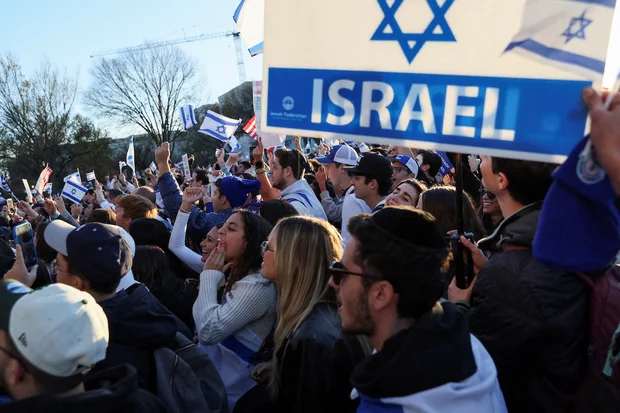
North American Jewish organizations to recruit 100 professionals to combat antisemitism
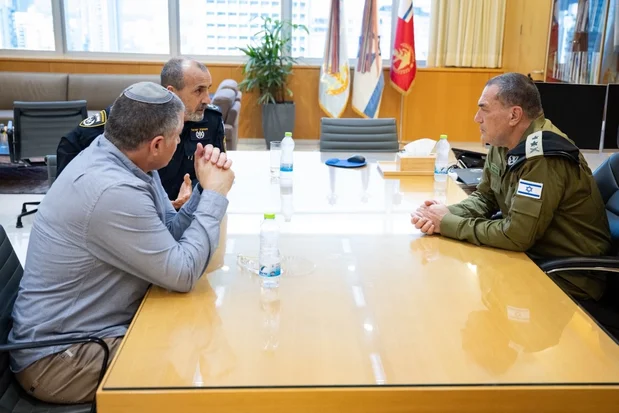
‘No need’ for pre-election Iran strike, IDF chief says as gov’t, opposition trade blame for potential escalation – report
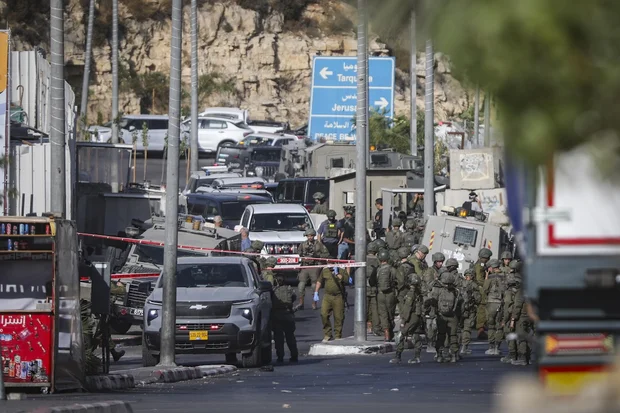
terror attack 2 Israeli soldiers killed, 2 terrorists eliminated in Hebron shooting; IDF says much larger attack was prevented
analysis A people dwelling securely? Israel’s strategic standing, 3 years after Oct 7
Hamas on wheels: What I found in Dearborn reveals a troubling history and a battle over Israel