opinion At the Jordan, Jesus was ordained priest-king
The sinless Messiah entered Israel’s river not to seek cleansing, but to be publicly anointed for a priestly mission whose altar would be the cross.
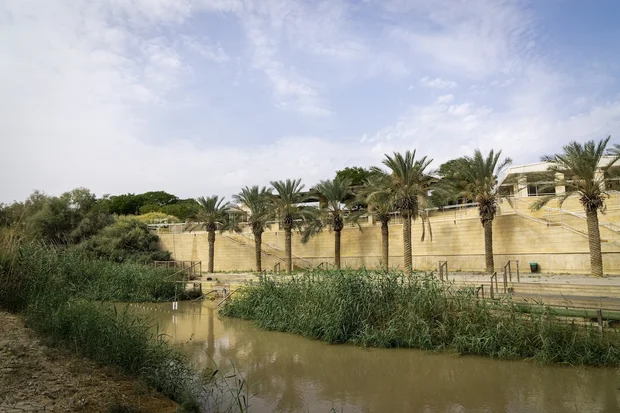
Israel is preparing to mark the 2,000th anniversary of Jesus’ baptism in 2030. Pilgrims may debate the precise stretch of river where he stood. Matthew presses a deeper question: Why did Israel’s sinless Messiah enter the water with people summoned to repent? John voices the astonishment: “I need to be baptized by you, and do you come to me?” (Matthew 3:14).
John’s baptism was no generic purification rite. It was a prophetic summons for Israel to repent because God’s kingdom had drawn near (Matthew 3:2). Jesus needed no confession; the New Testament says he was without sin (Hebrews 4:15; 1 Peter 2:22). Yet he does not watch Israel’s return to God from a safe bank. He descends into the water.
Jesus tells John they must do this to fulfill all righteousness (Matthew 3:15). His answer is not confession; it is commission. He enters Israel’s moment of return to represent his people faithfully. The sinless Messiah does not come to receive cleansing, but to be set apart for the work of bringing sinners home.
The Torah’s ordination of Aaron offers a striking pattern: priests are washed with water, clothed for service and consecrated; Aaron is anointed (Exodus 29:4–7; Leviticus 8:6–12). Jesus’ baptism is not a reenactment of that Levitical rite: he wears no priestly garments and comes from Judah, not Levi. Yet as Jesus rises from the Jordan, the Spirit descends, and the Father publicly names Jesus his beloved Son (Matthew 3:16–17). Peter places Jesus’ ministry after John’s baptism and says God anointed him with the Holy Spirit and power (Acts 10:37–38). Luke notes that Jesus began his work at about thirty, the age for Levitical service (Luke 3:23; Numbers 4:3)—a suggestive echo, not proof of Levitical descent. Taken together, the signs mark a public consecration: the inauguration of Jesus’ priestly mission.
The Jordan is therefore not simply a public start date. Jesus enters Israel’s water as the sinless representative who will bear the people’s sin before God. His solidarity with the penitent is not an alternative to priestly ordination; it is the shape of the priesthood inaugurated there.
But what priesthood could belong to a son of Judah? Psalm 110 supplies the answer: God swears, “You are a priest forever, in the order of Melchizedek” (Psalm 110:4). Genesis presents Melchizedek as both king of Salem and priest of God Most High, blessing Abraham centuries before Sinai and Levi (Genesis 14:18–20). This is not a secondhand priesthood inherited through Aaron. It rests on God’s own oath.
Hebrews presses the point: Abraham, Levi’s ancestor, gives Melchizedek a tenth and receives his blessing; the greater blesses the lesser (Hebrews 7:4–10). The argument is not that Israel’s Levitical priesthood was a mistake. It is that Israel’s own Scriptures point to a priest-king whose authority is older than Levi and whose appointment rests on God’s oath.
Here the baptism’s words become decisive. The Father names Jesus his Son, echoing Psalm 2. Hebrews 5 joins that same royal psalm to Psalm 110: Christ did not appoint himself high priest; God appointed him, saying both, “You are my Son” and “You are a priest forever, in the order of Melchizedek” (Hebrews 5:4–6). Hebrews then explains why: Jesus is from Judah, yet God’s oath establishes a permanent priesthood beyond Levitical descent (Hebrews 7:11–17, 20–28). The New Testament itself binds the Son’s royal identity to his priestly appointment.
To be precise, Scripture does not say God recited Psalm 110 at the Jordan. The oath defines Jesus’ office; the river publicly manifests his calling. The Gospels show the Spirit’s anointing and the Father’s declaration as Jesus’ mission begins; Acts names that ministry as God’s anointing; Hebrews identifies the Son as priest forever. That is why the baptism can rightly be called his public ordination—not a hidden Levitical ceremony, but the inauguration of the priesthood God appointed.
That priesthood is superior not because Aaron’s was false, but because it reaches what repeated sacrifices could not. Levitical priests died and had to be replaced; Jesus lives forever, holds his priesthood permanently and saves completely those who draw near to God through him (Hebrews 7:23–25). His mission moves from the Jordan toward its altar at Golgotha. The sinless one who stood among the penitent gives himself for them. Hebrews declares that he entered the holy place once for all and, by one sacrifice, perfected his people (Hebrews 9:12; 10:10–14).
This is why a Third Temple cannot be treated as the answer to sin. Hebrews says repeated sacrifices could not bring final cleansing. If a restored altar is presented as necessary for atonement, it contradicts the sufficiency of Messiah’s once-for-all offering. A building by itself is not the issue. The theological fault would be to resume sacrifices as though the cross had left sin unpaid.
For Messianic Jews, this is a challenge to Orthodox Judaism rooted in Israel’s own Scriptures, not contempt for Jewish hope. Genesis places a priest-king before Levi; Psalm 110 promises one whose priesthood rests on God’s oath. Hebrews identifies Jesus as that Messiah. A Jewish reader who does not accept the New Testament will not be persuaded by Hebrews’ authority alone; the case turns on whether Jesus fulfills the promise. It should be argued candidly, without caricaturing those who reject its conclusion.
Jesus’ priesthood does not erase Israel’s story. He enters it as Israel’s Messiah, and through him the blessing reaches the nations. Paul warns Gentile believers not to boast over the branches: “It is not you who support the root, but the root that supports you” (Romans 11:18). The nations are welcomed into Israel’s hope, not invited to replace or despise the people through whom it came.
When pilgrims reach the Jordan, the river will direct them beyond a contested coordinate to the question that matters: Who is Jesus? The beloved Son went down into the water, was anointed for his priestly calling, and went on to offer himself at Golgotha. He rose, and his priesthood endures. The Jordan was threshold, not destination. Through Israel’s Messiah, hope still flows to the nations.

Support our independent, on-the-ground reporting from Israel. Become a $5/month Ally.
Popular article:

interview Easter message of resurrection hope amid war at Jerusalem's Garden Tomb

biblical commentary Let my people go: a Passover message for today

4 IDF soldiers killed, 2 wounded in fighting in southern Lebanon, as Israel eliminates dozens of Hezbollah terrorists

Receive latest news & updates
A message from All Israel News
Help us educate Christians on a daily basis about what is happening in Israel & the Middle East and why it matters.
For as little as $10, you can support ALL ISRAEL NEWS, a non-profit media organization that is supported by readers like you.
Latest articles:

Elections 2026 Final round of polls predicts Israel to enter new political stalemate, no bloc close to 61-seat majority

opinion Netanyahu posts political message with image of atomic bomb exploding over Tel Aviv

opinion $1 billion to protect US houses of worship: Jewish leader reveals Speaker Mike Johnson’s surprising response to security bill

Elections 2026 Israeli election primer: Who is who in the Netanyahu-led coalition bloc
opinion Greek-Israeli naval drill highlights growing defense partnership as tensions with Turkey rise