Elections 2026 Election primer party overview Part 1: The coalition bloc

With the election looming, a total of 38 parties are officially running in this year’s election, all jockeying for a place in the next Knesset.
But only 13 of them are estimated to meet or surpass the 3.25% threshold when the vote is counted after polls close on Oct. 27.
Most Israelis have already made up their minds who they will vote for. A recent survey by Channel 12 News shows that only about 8% of voters are undecided and, of them, just 0.2% are unsure which bloc they prefer. Only 3.1% do not know who to vote for at all.
Even so, polls show a deadlock between the two major blocs. And if neither bloc manages to assemble a majority, Israel could be returning to another vote in a few months.
This ALL ISRAEL NEWS election primer provides an overview of the major parties, their important players and preferred coalitions.
Part 1 begins with the “Netanyahu bloc”—parties that generally favor the prime minister and the continuation of his coalition government, including his own.
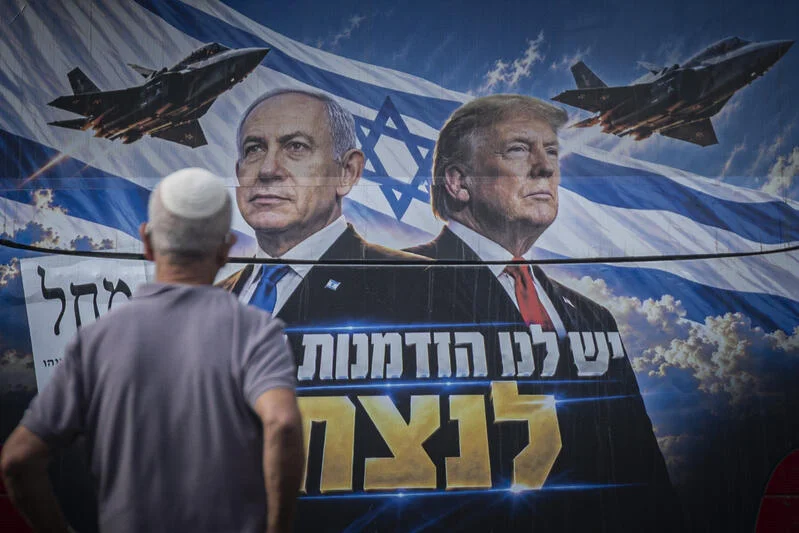
Likud
For decades, Likud has been the largest right-wing party and its chairman Benjamin Netanyahu the undisputed leader of the bloc. This time is no different.
While most polls put Likud as the No. 2 behind the Yashar party, polls by right-leaning outlets Channel 14 and i24 News have consistently projected the current government to win and even garner enough votes to establish a coalition. According to several right-wing journalists, Netanyahu is also convinced of his victory.
This could explain his recent relentless attacks on Ofer Winter and his People of Israel party, which could potentially “steal” 4 to 6 mandates from the bloc.
Netanyahu seems to be betting that keeping Winter out entirely is better (and risk "wasting" these right-wing votes beneath the threshold) than dealing with an empowered, six-mandate strong general who could demand a unity government without the ultra-Orthodox, or even defect to Yashar leader Gadi Eisenkot or cooperate with Yisrael Beitenu's Avigdor Liberman.
The Likud party's performance is heavily dependent on voter turnout. To that end, Netanyahu ruthlessly weeded out the party’s candidate list, using his political acumen and raw power to push populists, extremists and rebels down the list—or throw them out altogether.
He also recruited several new, popular faces to re-energize the list, which, nevertheless, is still largely dominated by veteran lawmakers in the current government.
In the final days of campaigning, the leading coalition party appears to be trying to syphon off votes from the other parties in its bloc. While this could sink the People of Israel party, it could also strengthen the Likud’s case to lead a potential unity government, it none of the blocs wins outright.
Likud is expected to receive between 20 to 25 mandates.
People of Israel
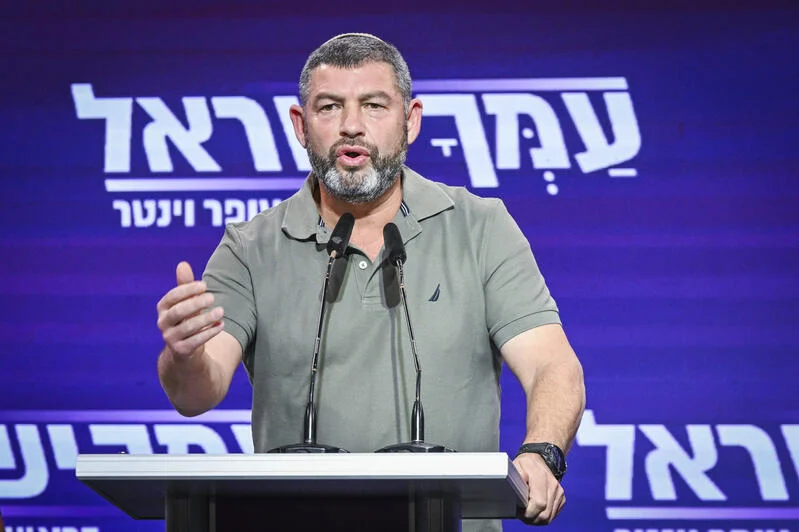
Amcha Yisrael, or People of Israel, is considered the upstart party in the right-wing bloc. Led by kippah-wearing ret. Brig.-Gen. Ofer Winter, it is one of two new parties hovering at the threshold and whose performance could swing the entire election.
The new party combines security-focused and slightly religious hard-right positions, including mandatory military service for all, in direct opposition to Netanyahu’s ultra-Orthodox coalition members.
The party is also concerned with raising Israel’s international image. This explains the inclusion of the party’s No. 2, Christian Arab Yousef Haddad, and Fleur Hassan-Nahum, a former deputy mayor of Jerusalem, both of whom have become prominent voices in the foreign press, defending Israeli positions particularly in the wake of Gaza war.
Currently, People of Israel finds itself Likud’s biggest campaign target. Even with a low number of seats, People of Israel would be in a strong position to make demands during coalition negotiations.
Winter has repeatedly vowed to support Netanyahu for prime minister while stressing he isn’t “owned” by anybody, keeping his options open.
He has also ruled out joining a government with either Netanyahu's usual partners, the ultra-Orthodox, and the prime minister's opponents, the far-left Democrats.
The party has hovered around the election threshold in many recent polls despite strong early performances.
Jewish Power
Despite domestic and international criticism of his hard-line positions, National Security Minister Itamar Ben Gvir and his Jewish Power (Otzma Yehudit) party is projected to contribute a significant number of seats to Netanyahu’s bloc.
Rooted in the settler movement and the religious-nationalist right, the party has since broadened its voter base. In the aftermath of the Oct. 7, 2023 Hamas attacks and ongoing social and political tensions since then, Ben Gvir’s confrontational political style appears to have resonated with a broader segment of right-wing voters.
His hard-line policies, including calls for the death penalty and public executions for convicted terrorists, have appealed to some Israelis seeking a tougher response to security threats.
Meanwhile, despite rising crime, including a sharp increase in homicides in Arab communities under his watch as national security minister, there is no indication that has weakened his standing.
Although a coalition partner, Ben Gvir has vocally criticized Netanyahu during the campaign, arguing that he helps “keep him honest” and prevents him from “going soft” on right-wing issues.
The party also snagged Tally Gotliv, an outspoken, non-religious former attorney who was let go by the Likud, placing her as Ben Gvir’s No. 2. Jewish Power said it will seek the Defense Ministry for Ben Gvir and the Justice Ministry for Gotliv in post-election coalition negotiations.
One of Ben Gvir's main concerns appears to be the possibility of a unity government that excludes Jewish Power, which is reflected in his criticism of the right-wing People of Israel party. Netanyahu could exploit such a scenario by presenting himself as moving away from the “extremism” of Ben Gvir.
Ben Gvir even claimed that Netanyahu promised “European officials” that Jewish Power would be excluded from the next government, a claim Likud has denied.

The ultra-Orthodox parties: Shas and United Torah Judaism
Going into the election, a dark cloud has been looming over the Haredi (ultra-Orthodox) parties: the protracted dispute over military service for all, which the opposition has vowed to enforce if it wins.
Rather than energize ultra-Orthodox voters, the issue has exposed serious internal conflict and put a damper on the campaigning. Rabbis and rank-and-file voters are frustrated that party leadership failed to enshrine permanent service exemptions into law despite four years in a “full” right-wing government.
The Sephardic Shas party enters the race under its longtime chairman, Aryeh Deri. However, some within the party reportedly hold him responsible for failing to pass ultra-Orthodox military exemptions despite his close relationship with Netanyahu.
Both ultra-Orthodox parties have distanced themselves from the prime minister during the campaign. Deri declared that Shas, the Sephardic ultra-Orthodox party, won’t support or participate in a future government “without us regulating the status of yeshiva students.”
Shas’ spiritual leader, Rabbi Yitzhak Yosef, has even openly floated the possibility of Shas joining Eisenkot, who he called “a good person, a warm-hearted Jew, and [one who] loves those who study Torah.”
The draft issue has alienated some voters within Shas, whose base, unlike United Torah Judaism (UTJ), includes some traditional, non-Haredi families whose children serve in the military. Concerned of a potential split, Yosef declared it forbidden to vote for Ben Gvir, citing his support for ascending the Temple Mount, something that ultra-Orthodox rabbis have long banned.
Despite a growing voter base, polls show Shas dropping to seven or eight seats from 11.
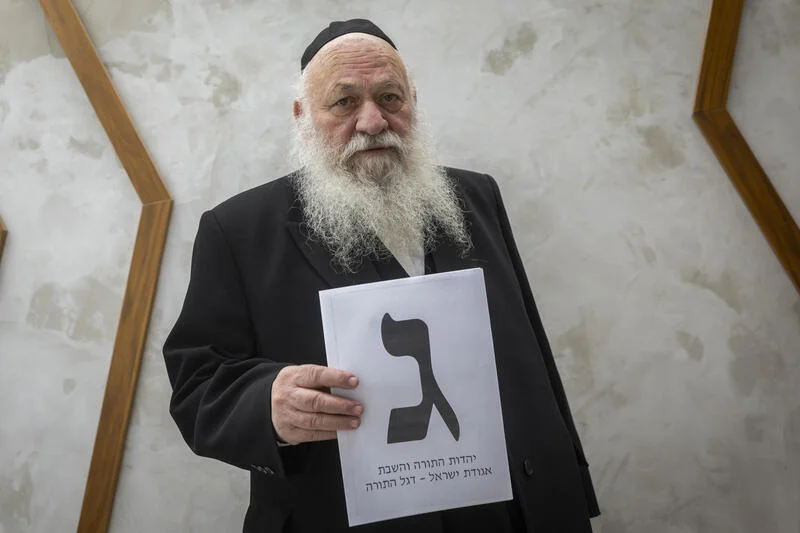
The mood might be even worse among the Ashkenazi UTJ party, comprised of the Degel HaTorah faction, representing the Lithuanian community, and the Hasidic Agudat Yisrael.
Less than two months before the elections, Degel HaTorah’s rabbinic leadership axed its chairman Moshe Gafni and Knesset Member Uri Maklev, two veteran lawmakers respected within the party.
Meanwhile, Agudat Yisrael retained its leader but is mired in another internal conflict, as two other longtime lawmakers established a separate faction, prompting mutual threats to withhold tens of thousands of votes in revenge. Clashes between other senior rabbis have also seriously hampered the election campaign, which traditionally relies on newspapers affiliated with different streams.
The sour atmosphere has enabled the creation of no less than three new ultra-Orthodox parties, which, if they resist the pressure to quit, could cost UTJ and Shas – and therefore the Netanyahu bloc – tens, if not hundreds of thousands of votes.
Most recent polls have UTJ holding at seven seats. Party figures told Channel 12 recently that winning eight seats would amount to a miracle, and they would not be surprised if the party won just six.
Religious Zionism/Zehut
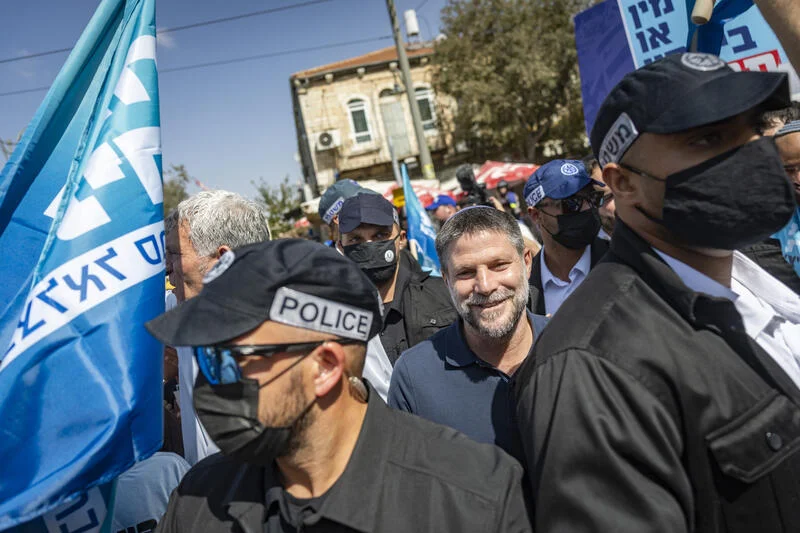
Religious Zionism, the right-wing settler party led by Finance Minister Bezalel Smotrich, is running together with Zehut, the religious libertarian party led by Moshe Feiglin.
Once plotting to overthrow Netanyahu within the Likud, Feiglin will now probably return to the Knesset after narrowly missing the threshold with Zehut in 2019.
Several months ago, the prospects appeared bleak for Religious Zionism. Most polls projected the party would fail to cross the threshold as Smotrich made weekly headlines in the international press, considered alongside Ben Gvir among Israel’s chief radicals.
However, some in the right wing applaud Smotrich’s performance as finance minister and his party’s influence on the settlements, seen as less talk and more change on the ground—the opposite of Jewish Power.
During Smotrich’s tenure, some authority in Judea and Samaria was transferred from the IDF Civil Administration to a civilian-led administration within the defense ministry, resulting in the recognition of over 100 new Jewish communities.
The merger with Zehut gave Religious Zionism a significant boost and nearly all polls now project a respectable showing of around seven seats.
However, Feiglin may have a toxic effect after repeatedly calling for annexing the Gaza Strip and encouraging Palestinian emigration, including that of babies in the enclave, whom he has described as “enemies.”
Popular article:

interview Easter message of resurrection hope amid war at Jerusalem's Garden Tomb

biblical commentary Let my people go: a Passover message for today

4 IDF soldiers killed, 2 wounded in fighting in southern Lebanon, as Israel eliminates dozens of Hezbollah terrorists

Receive latest news & updates
A message from All Israel News
Help us educate Christians on a daily basis about what is happening in Israel & the Middle East and why it matters.
For as little as $10, you can support ALL ISRAEL NEWS, a non-profit media organization that is supported by readers like you.
Latest articles:
Elections 2026 $1 billion to protect US houses of worship: Jewish leader reveals Speaker Mike Johnson’s surprising response to security bill

Elections 2026 Greek-Israeli naval drill highlights growing defense partnership as tensions with Turkey rise

Elections 2026 IDF conducts broad counter-terror operation in Judea & Samaria following Hebron attack
Elections 2026 October Council holds massive rally in Tel Aviv's Hostages Square ahead of elections

Elections 2026 Political storm after Netanyahu suggests cryptocurrency could help circumvent sanctions