opinion Arab voters showed up. Will Israel’s leaders meet them halfway?
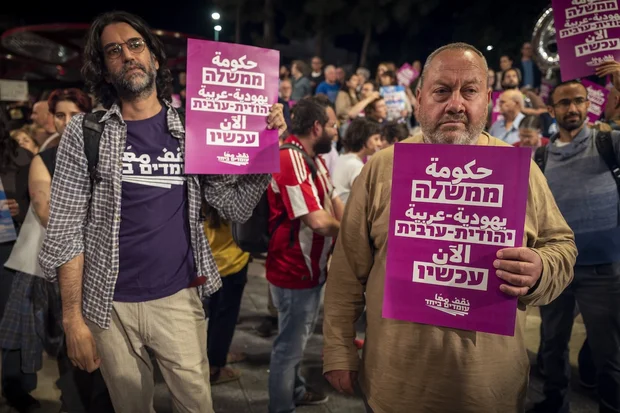
In my previous article, I predicted that Arab voter turnout would surpass 60%. Making an election prediction in only my second published article was perhaps a little presumptuous.
Thank God I was right. My career as a political commentator could otherwise have been remarkably short.
But even I did not anticipate the scale of the response. Early estimates put Arab turnout at around 80%, compared with 53.2% in 2022. The estimate still requires confirmation through a full breakdown of voting patterns, but it would represent an extraordinary increase of almost 27 percentage points.
The question now is what that participation means.
Some look at the gains of Arab parties and see a public moving further away from Israel. As an Arab Israeli, I see something more complicated, and, potentially, more hopeful.
Start by looking beyond the combined seat count.
In 2020, the Joint List won 15 seats with all four major Arab parties, including Ra’am, running together. Ra’am subsequently ran independently, winning four seats in 2021 and five in 2022. This time, it won eight. The remaining Joint List won eleven. These are distinct political projects, and treating their voters as one undifferentiated bloc obscures an important part of the result.
Mansour Abbas has made participation in government central to Ra’am’s approach. His party already crossed that threshold by joining the governing coalition in 2021. This election, its second candidate was Yoav Segalovitz: a Jewish former police major general and former deputy public security minister.
Consider what that choice offered voters. An Arab Islamist party placed a senior Jewish former police officer near the top of its list, then asked for a stronger mandate to work within Israel’s political institutions.
It received one.
That does not establish why every Ra’am voter chose the party. Elections are not surveys of individual motives. But it makes the claim that Arab political participation amounts to a rejection of Israel considerably harder to sustain.
Nor does it require pretending that Ra’am has abandoned every controversial position. Its Palestinian national demands remain part of its politics. The meaningful distinction is its willingness to pursue practical cooperation and accept the responsibilities of governing despite those disagreements.
My reading is that many Arab citizens want a greater stake in this country’s future. They want political participation to deliver something tangible.
To understand the urgency, start with the violence.
In March, the Abraham Initiatives reported that only 20 of 240 killings in Arab society during 2025, excluding police-caused killings, had been solved by early 2026, a clearance rate of 8.3%.
Pause over what that means for a family.
Someone is murdered. The funeral ends. Relatives return to their homes knowing that whoever committed the crime may still be free. Neighbors learn to watch what they say. Witnesses weigh the danger of speaking. Children absorb the lesson that violence can happen close to home and go unanswered.
Under those conditions voting becomes a demand that the state perform its most basic duty.
There is an opening here for any government serious about integration.
By integration, I mean full participation in our shared civic life, with rights and responsibilities. Arabs should be able to contribute to Israel without being expected to erase their language, faith, or identity.
Arab leaders have responsibilities too. They must confront criminal organizations, reject political violence, and answer for rhetoric that deepens distrust. Calls for prisoner releases require distinctions between cases and offenses. Slogans about “liberating Jerusalem” require scrutiny about what, precisely, their speakers mean. A Palestinian identity does not excuse irresponsible leadership.
But the Israeli far right cannot keep treating Arab participation as inherently threatening and then express surprise when alienation grows.
When pragmatic cooperation is met with the same suspicion as confrontation, what incentive does that create? What argument does it leave the Arab politician who tells his community that partnership can work?
My concern is that this approach strengthens those who insist that partnership will never be possible.
We have already seen how much that conclusion overlooks.
On and after October 7, Arab medical professionals worked alongside Jewish colleagues to treat wounded civilians and soldiers. Some did so while facing suspicion and racist abuse themselves. Their contribution was part of Israel’s response to its darkest hours.
Awad Darawshe, a 23-year-old Arab Muslim paramedic, was killed while treating victims at the Nova festival. He remained to help when he could have tried to leave.
These people belong in any honest account of Arab citizens after October 7.
In December 2024, Reuters reported that almost 30 Israelis arrested in a wave of suspected Iranian espionage cases were mostly Jewish!
The next government should make cooperation credible: protect threatened witnesses, pursue criminal organizations, invest in functioning local services, and judge potential partners by their conduct and commitments.
The state has the authority and resources to take those steps. Its responsibility to protect citizens cannot depend on whether it likes their representatives.
I predicted that more Arabs would vote because I believed the desire to live without fear would overcome some of their political exhaustion.
Now comes the harder question: what happens when they vote, and still find the door closed?
Popular article:

interview Easter message of resurrection hope amid war at Jerusalem's Garden Tomb

biblical commentary Let my people go: a Passover message for today

4 IDF soldiers killed, 2 wounded in fighting in southern Lebanon, as Israel eliminates dozens of Hezbollah terrorists

Receive latest news & updates
A message from All Israel News
Help us educate Christians on a daily basis about what is happening in Israel & the Middle East and why it matters.
For as little as $10, you can support ALL ISRAEL NEWS, a non-profit media organization that is supported by readers like you.
Latest articles:

Israeli startups make up nearly half of Fortune 2027 Cyber 60 list

God’s Middle East peace plan in Isaiah 19 and the people living it out today
Israeli opposition moves to replace Speaker Ohana, gain control of Knesset leadership
Hamas seeks to overturn Australia's designation of the group as a terrorist organization
Democratic Socialists threaten to withdraw endorsement of LA mayoral candidate unless she backs BDS against Israel