Arab Israeli parties barred from elections in decision expected to be struck down in court, as deadlock continues
Election panel rejects petitions to ban Ben Gvir, Smotrich and Yair Golan's parties



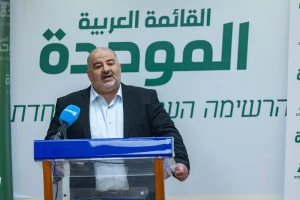
With most polls continuing to project a close deadlock between Israel’s major party blocs, the Central Elections Committee (CEC) on Wednesday voted to bar the Arab parties from running in the Oct. 27 elections, though the High Court is expected to overturn the decision.
The following day, the CEC also rejected petitions to bar the parties of Bezalel Smotrich (Religious Zionism) and Itamar Ben Gvir (Jewish Power), as well as The Democrats of Yair Golan.
According to the latest Channel 13 poll, the opposition bloc led by Yashar chairman Gadi Eisenkot would receive 52 seats, while Prime Minister Benjamin Netanyahu’s bloc would receive 51 after losing three mandates compared to the previous poll.
The CEC’s decisions this week ended mutual attempts from both blocs to bar parties on the other side. Only the decision to bar Sami Abu Shehadeh, the chairman of Balad, one of the three constituent parties of the Arab Joint List, is widely expected to be upheld by the High Court. It will most likely overturn the decisions to bar the other Arab parties.
🔴Opposition Bloc: 52
— Israel Elects (@israel_elects) September 23, 2026
🔵Netanyahu Bloc: 51 (-3)
🟢Arab Parties: 13 (-1)
🟣Reservists-Economic: 4 (+4)
Hung Knesset https://t.co/9WJqUQqx5c
Despite this, the moves could have tangible consequences, as the Likud’s election campaign has recently put a focus on attacking Eisenkot and his bloc over the possibility that they could turn to the Arab parties, particularly Ra’am, to receive outside support for a minority government.
Ra’am rejected accusations that the party was indirectly supporting terrorism via connected charitable organizations that sent aid to bodies linked to Hamas.
Attorney-General Gali Baharav-Miara and State Attorney Amit Aisman had also opposed barring the party, which recently announced the addition of a first Jewish candidate—Yoav Segalovitz, a former senior police official.
The Joint List, for its part, charged that the disqualification was “a political, racist, and anti-democratic decision” and an attempt to exclude more than one million Arab voters.
The party reportedly also sent an angry message to the chairman of the far-left Democrats, Yair Golan, warning him that his support for barring Abu Shehadeh is “putting our partnership going forward into question.”
Golan had stated that both Abu Shehadeh and Ben Gvir should be disqualified.
CEC disqualification hearings:
— Israel Elects (@israel_elects) September 24, 2026
✅️ Banned Balad leader Abu Shehadeh
✅️ Banned Hadash MK Cassif
✅️ Banned the Joint List
✅️ Banned Ra’am
❌️ Rejected Democrats’ motion to ban OY
❌️ Rejected OY’s motion to ban the Democrats
❌️Rejected a motion to ban RZP
Now it’s over…
Arab voter turnout will play a crucial role in the elections, as a higher percentage of Arab voters supporting the Arab parties will decrease the share of votes for the opposition bloc.
If Abu Shehadeh’s disqualification is upheld by the court, “this could lead to a protest vote, while on the other hand, it could also lead to a breaking of the usual pattern and people choosing not to go out and vote,” analyzed Yair Sherki, Channel 12’s Religious Affairs reporter.
“The outcome could be particularly dramatic for the 'Change Bloc', which needs to see somewhat lower turnout in the Arab sector in order to potentially approach 61 Zionist seats,” Sherki explained.
Legal sources told Kan News that the court is likely to support barring Abu Shehadeh due to broad agreement by the CEC chairman, the state attorney, and Attorney General Baharav-Miara, who noted that the evidence indicates that he “expressed support for an armed struggle by a terrorist organization against the State of Israel” in an article penned shortly after Oct. 7, 2023.
Another key development is the continued presence of the Reservists/Economic party led by Yoaz Hendel and Yaron Zelekha above the threshold. The party is the last remaining out of a large field of parties that wanted to enforce a cross-bloc government.
According to Channel 13, 31% of respondents still prefer this option, as opposed to 31% who want a Netanyahu-led government and 29% who want Eisenkot to win.
This situation favors the opposition, as Sherki noted that Hendel and Zelekha “are closer to the ‘Change’ bloc than to Netanyahu’s bloc… Yoaz Hendel does not intend to give Netanyahu the 61 seats he needs.”
The Netanyahu bloc faces several significant hurdles on the way to forming a government, in addition to the obvious lack of mandates.
“Zelekha, for his part, will go with whoever gives him the Finance Ministry (a demanding request that both Netanyahu and Eisenkot will have to deal with),” Sherki explained.
“At the same time, it should be remembered that within Netanyahu’s bloc there are three people who want to be defense minister: Ben Gvir, Ofer Winter, and Moshe Feiglin. In other words, Netanyahu still has a much harder time forming a government, even according to this poll.”
You might also like to read this: