AI project VILNISH unlocks thousands of handwritten Yiddish, Hebrew letters for Jewish families
AI




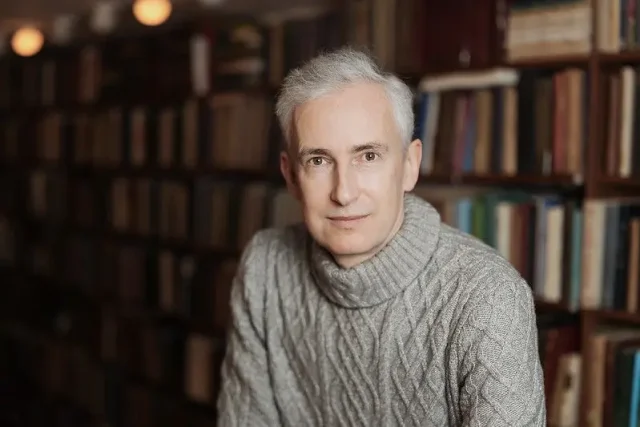
Sergii Gurbych, a researcher at Vilnius University in Lithuania, has launched a project called VILNISH that uses AI-enabled software to translate and catalog handwritten texts in Yiddish and Hebrew, helping descendants of Jews who lived in Eastern Europe uncover their family histories.
The project recently helped 75-year-old Felicita Trueblood of San Diego, California, finally read 50 pages of letters written by her great-grandfather, Pavel Malisoff, a rabbi in Konotop, Ukraine, to his son Solomon between 1927 and 1934.
Trueblood’s great-uncle Solomon emigrated to the United States during that period, and his father wrote the letters in Yiddish using Hebrew script. Trueblood was unable to read them, but hiring translators would have cost more than she could afford.
Solomon changed his name to Malis after arriving in America and later moved to California during the Great Depression. He died in 1985, and the letters from his father remained in a closet in one of his children’s homes until 2013, when they were discovered and the family began searching for a way to translate them.
“I was raised outside the Jewish community, with no day-to-day connection,” Trueblood told the Jewish Telegraphic Agency. “But I was always fascinated.”
Trueblood later came across a Facebook post about VILNISH, which was launched late last year by Gurbych, a researcher at Vilnius University’s Center for the Study of East European Jewish History.
Trained as an electrical engineer, Gurbych also studied Hebrew and Yiddish before joining the university faculty, where he developed digital approaches to analyzing archival Jewish texts. His primary interest is the period between WWI and WW2, both for personal reasons and because of its significance to many others seeking to understand their family histories.
“I want to know more about the world where my grandfather lived,” Gurbych said. “He died in 2001, and I just feel that I didn’t speak with him about this time enough. He was a person who lived in the Soviet Union, so he was just closed, and didn’t very much like to talk about his Jewish background and about life in interwar Poland.”
The National Library of Lithuania has preserved large numbers of diaries, personal letters, articles and other documents from Jewish communities during the interwar period. has preserved large numbers of diaries, personal letters, articles and other documents from Jewish communities during the interwar period. Many were handwritten in Yiddish and Hebrew, providing Gurbych with material to train an AI language model to read and translate similar documents, including Trueblood’s letters.
In May, Trueblood began sending the letters to Gurbych, and she soon received English translations of the entire collection, which she and her extended family could read.
The letters depicted a difficult period for Jewish communities in the region, marked by poverty and hardship. All 11 of Malisoff’s children eventually moved to other parts of the Soviet Union, Canada or the United States.
The late 1920s and early 1930s were a period of severe hardship across the Soviet Union. In Konotop, the forced collectivization of agriculture under Soviet leader Joseph Stalin contributed to famine and widespread unemployment.
In his letters to his son, Malisoff described “people walking half naked, hungry, with only a few coins in their pockets, without a piece of bread, without proper clothing, silently, without work and without money.”
He also wrote about the deterioration of the cultural and religious infrastructure that sustained Jewish life, including the loss of access to kosher food, the inability to observe the Sabbath and Jewish holidays, and the closure of religious schools.
Trueblood said the letters brought her great comfort. She hopes other Jewish families with similar handwritten materials will contact Gurbych, allowing VILNISH to expand and contribute to knowledge about Jewish life during this period.
“These letters are all over the world,” she said. “There are thousands of them out there that haven’t been translated.”
Other Jewish institutions have also expressed interest in using VILNISH to help establish documentation for families seeking restitution from governments in Eastern and Central Europe for crimes committed against their ancestors during the World Wars and the Soviet era.
The technology could also potentially help establish eligibility for making aliyah (immigrating) to Israel.
You might also like to read this: