After losing his wife, son and leg on Oct 7, survivor Avida Bachar chooses to rebuild


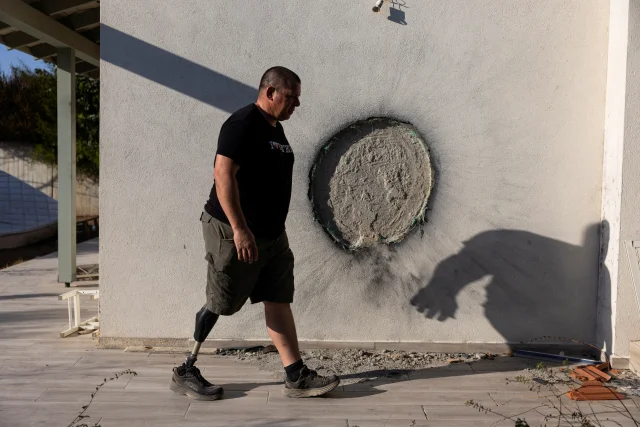
KIBBUTZ BE'ERI, Israel—“Be'eri is 95% heaven and 5% hell,” Avida Bachar said of the kibbutz he called home his whole life.
“The 5% came in 12 hours on Oct. 7.”
Following the Hamas invasion into southern Israel communities on Oct. 7, 2023, Kibbutz Be’eri became a household name. The verdant farming kibbutz became infamous for absorbing the brunt of the attacks. Hundreds of terrorists breached the fences, subjecting residents to hours of carnage that left 102 killed, including 11 children, 30 kidnapped and 130 buildings destroyed.
And yet, after their evacuation to other towns and cities across Israel since Oct. 7, 2023, many residents plan to return to face these memories while still living in eyeshot of the Gaza Strip.
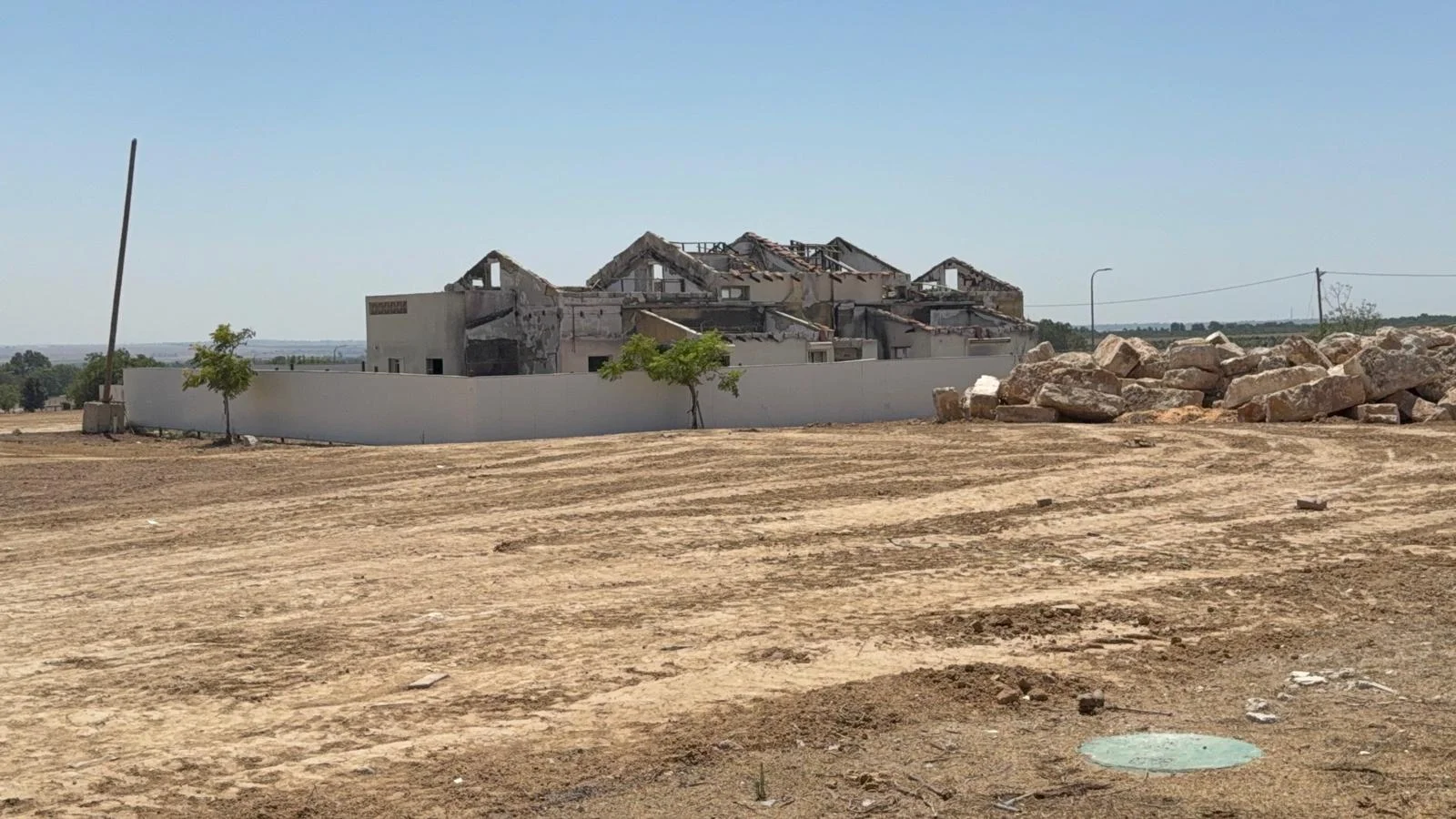
Three years later, the kibbutzim in Israel’s Gaza Envelope find themselves in various stages of restoration with each approaching it differently. Kibbutz Be’eri members voted to completely demolish homes damaged on Oct. 7 – except for one that will stand as a memorial to the day’s horrors.
They don’t want the specter of death and defeat to dictate their lives, Bachar explained.
“We decided we have to demolish everything. I’ll tell you why: All the time, if you see things like that, we can say to ourselves, ‘Look what happened to us,’” he said. “I want to build everything again, I want to make Be’eri stronger.”
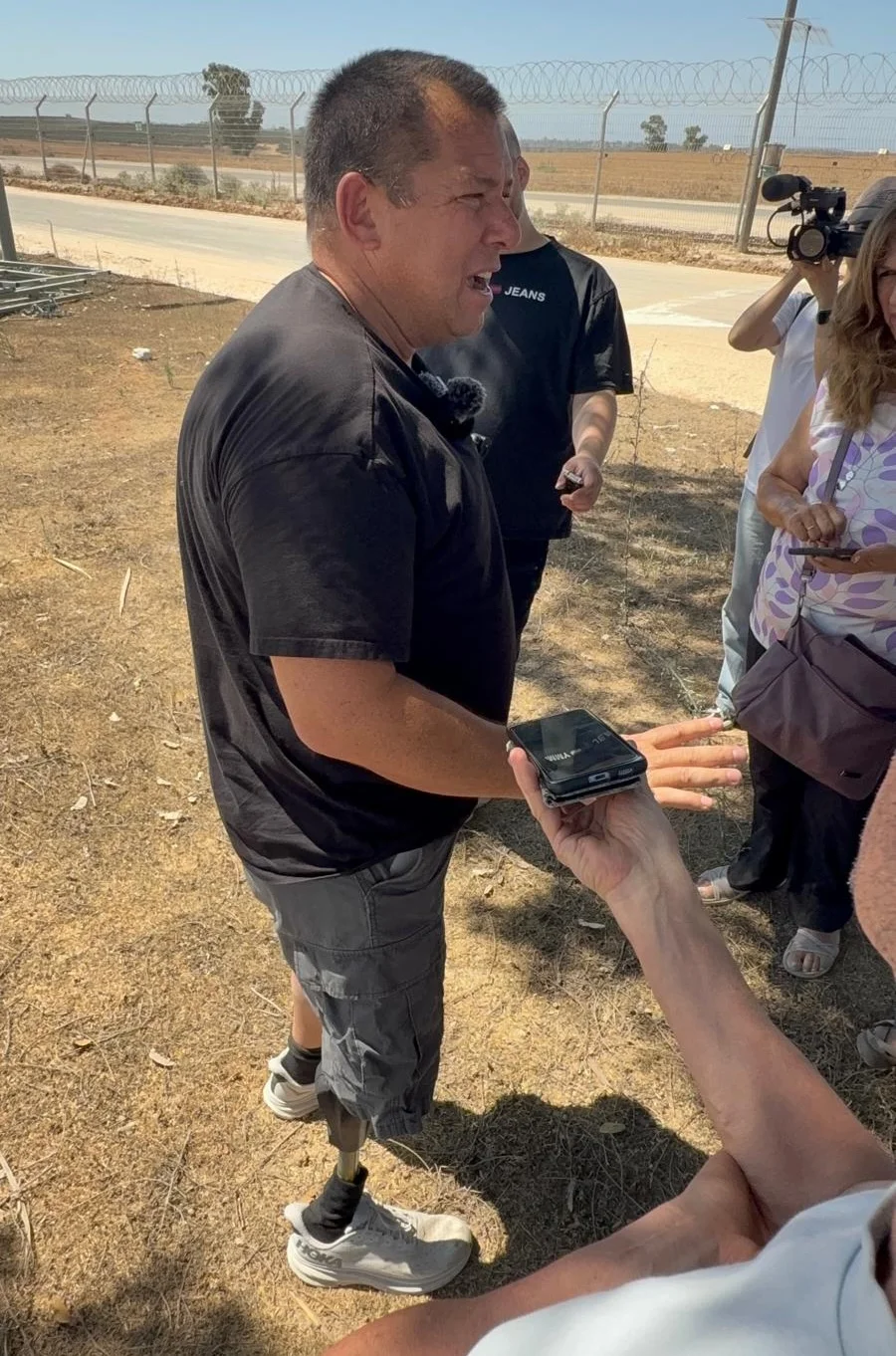
Bachar, Be’eri’s agriculture manager, met with reporters on a plot where more than 70 homes once made a vibrant neighborhood. Two new neighborhoods of 36 and 42 homes will be built in this area. When the building project is completed next summer, some 800 residents plan to return compared to 1,100 who lived there before the attacks.
He isn’t giving up on Be’eri despite the horrors that occurred to his own family on Oct. 7 three years ago. For Bachar, “It’s not about the houses—we care about home.”
“Everything collapsed”
Bachar and his family spent 10 distressing and gut-wrenching hours laced with terror and, ultimately, death in their home that day. While the neighborhood was being pillaged and burned around them, the Bachars like most families there, were trying to keep hordes of terrorists out of their safe room.
“A beautiful perfect family, a beautiful and perfect community. We had everything. But everything collapsed on Oct. 7,” he said.
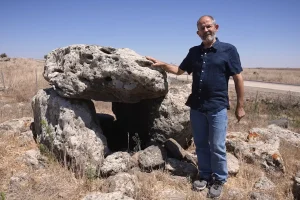
“In my house, it was right here, a two-family house; we were four persons,” he said, pointing from his vantage point on the kibbutz’s perimeter road. “I have four children, but one was in India and one was in the West Bank," serving in the military.
When the terrorists broke into their home, Avida was with his wife Dana while he and his 15-year-old son Carmel held the door of the safe room closed and his then 13-year-old daughter, Hadar, hid under a suitcase.
When the terrorists realized they couldn’t open the door, they shot at it. First hit was Carmel whose arm was blown off at his shoulder. Then bullets tore at Avida’s legs. Still holding the door handle, he watched the blood pool on the floor and took a bullet to the arm before collapsing into the safe room.
However, instead of breaking into the room, the terrorists set fire to the house in an attempt to smoke out the family.
“The system was shoot you, then burn you, then shoot you,” if you try to escape, Bachar said.
“I can’t breathe anymore”
As heavy smoke poured into the safe room, the family survived in the safe room by soaking towels in blood and urine and placing them over their mouths in order to breathe. But when they saw that the family didn’t jump outside, the terrorists tried to explode the window. However, it jammed and prevented them from getting in.
Instead, the terrorists lobbed a grenade through the window.
“Dana took that grenade and threw it out,” Bachar recounted. “But after that we got three grenades.”
Miraculously, the grenades exploded in grooves created during the upheaval in the room, the shrapnel presumably shooting upward.
“So I’m looking around and we are still alive,” Bachar said. “Then Hadar says, ‘It’s not a real grenade.’”
“How do you know what is a real grenade? You are 13,” Bachar asked her.
“Because I’m taking all the screws out of my leg,” she replied.
When that didn’t force the family out, terrorists shot through a gap in the window. With little blood and no warning, Dana said, “I can’t breathe anymore.” As the family wondered what happened, Dana told them, “It’s done,” and died.
“No one knew. It was so quick,” Bachar said.
Later, the paramedic who retrieved her body told Bachar that a bullet penetrated Dana’s ribs, causing internal injuries with very little blood or external marks on her body.
“Don’t leave me alone!”
With his wife of 32 years gone, Bachar told Hadar, “We have one mission: to keep Carmel alive.”
They tightened the tourniquet, but around 4:30 that afternoon, Carmel turned to his father with a last wish: “When you bury me, do it with my surfboard,” Bachar recalled.
With her mother and brother now killed in front of her eyes, Hadar pleaded with her father, “Don’t leave me alone!”
Hadar had been actively calling police and communicating with family and neighbors during the entire ordeal. Now, Bachar’s situation deteriorated. With severe blood loss, smoke inhalation and a mangled leg, he barely survived until early evening when soldiers began evacuating survivors from Be’eri.
First responders had a difficult time maneuvering Bachar out of the broken window because of injuries to his legs. By around 7 p.m., he was in an ambulance and underwent surgery later that night.
The next day, a doctor determined that Bachar needed to have his right leg amputated.
It took more days to piece together the events of Oct. 7 that unfolded beyond their own safe room to Be’eri and the war that ensued.
“I know all the people who were murdered,” Bachar said in an interview tinged with both sorrow and optimism.
“I am coming back to build my home”
Now, Bachar has a new and complicated outlook on life – one of living life to the fullest, resettling Be’eri and speaking to groups while coping with grief and walking with a prosthetic leg.
The tragedies have also shaped Bachar’s perspective. While he clings to hope and lives in the moment with his remaining family members, he also bristles at the idea that Palestinians are still in Gaza.
“They cannot stay there. If we are not going to push them out, we are going to die,” he insisted. “I want them to live great lives, just not here.”
As an agriculture manager, Bachar once employed Gazans on the kibbutz’s farms.
“I was the bridge of peace for them,” he said. However, on Oct. 7, “they explained to me exactly what they think of me. I don’t care about them—they want to kill me.”
He believes the issue is land, not religion, because some of the Oct. 7 victims, including his neighbor’s – former hostage Eli Sharabi’s wife and daughters who were murdered – were Christian.
“They don’t want to live with us, they want to take our land,” he said.
Though his political opinions are his own, most of the residents of Be’eri seem to be in agreement on one thing: moving back.
“This is my home,” Bachar said. “I am coming back to build my home again.”
You might also like to read this: