Turkish president's party set up Washington HQ, met with US influencers critical of Trump, Israel
Israeli researcher says FARA filings show Turkey running influence operations similar to those of Qatar




A recent investigation into U.S. Foreign Agents Registration Act (FARA) records is raising questions over Turkish lobbying efforts involving several media personalities, including former CIA officer John Kiriakou and the CEO of the Tucker Carlson Network.
The investigation by journalist and open-source intelligence (OSINT) researcher Eitan Fischberger, based on FARA records, draws attention to meetings between these media personalities and the Justice and Development Party (AKP) of Turkish President Recep Tayyip Erdoğan.
The AKP spent millions of dollars in 2024 to acquire the former French Embassy, turning it into a headquarters for its U.S. influence operations in Washington, D.C.
According to Fischberger’s research from the FARA filings, the AKP has invested millions of dollars to establish and run its Washington headquarters.
FARA filings since that time show the party has attended meetings with various think tank fellows and arranged dozens of meetings with other media and policy influencers, including Kiriakou and Neil Patel, who co-founded the Daily Caller with Tucker Carlson and is a co-founder and current CEO of the Tucker Carlson Network.
The AKP headquarters in Washington is run by Halil Mutlu, President Erdoğan’s cousin.
While lobbying and influence operations are a part of normal Washington politics, the FARA filings provide a record of meetings and contacts between the AKP and several influential American personalities, many of whom recently adopted anti-Trump and anti-Israel stances.
Few details are available from the FARA filings about the meetings, which are described in broad terms, such as discussions of U.S.–Turkey relations. However, a few entries draw attention due to the people involved, including Muslim journalist Mehdi Hasan, Kiriakou, and Patel.
John Kiriakou, a former CIA officer who has made several appearances on Russian state media and multiple appearances on U.S. podcasts and YouTube channels where he has been highly critical of U.S. foreign policy, met with AKP representatives on two occasions. Kiriakou initially denied meeting with AKP representatives, calling claims about the meetings “more LIES perpetrated by the Zionist smear machine.”
However, after screenshots of the FARA filings were released, he said the meetings were only with two AKP-affiliated American citizens “who wanted to talk about foreign policy.”
“There was nothing more to it,” he wrote.
However, the chronology of several of those meetings raised some concerns among those following the Tucker Carlson Network’s increasingly anti-Israel stances.
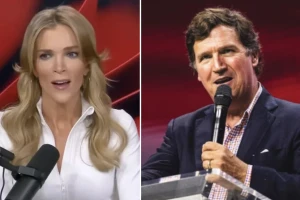
In March 2026, Mutlu reportedly met with Kiriakou and, the following day, held an online meeting with Neil Patel. A few weeks later, Kiriakou appeared on Tucker Carlson’s podcast. The Tucker Carlson Network has also been involved in plans to publish an upcoming book by Kiriakou.
While these meetings do not establish that Turkey influenced TCN’s decision to feature Kiriakou on the podcast or collaborate with him on his book, they do reveal overlapping circles of political, lobbying and media activity.
Fischberger’s research on the FARA filings raises questions about how foreign political organizations seek access to influential figures in U.S. politics and popular media, even as the Turkish government has taken several adversarial positions toward the U.S. regarding issues of Middle East policy.
The filings also show that Turkey is apparently following in Qatar's footsteps. No longer content to engage in traditional lobbying and think tank meetings, the Turkish government appears to be seeking to influence popular alternative media channels and personalities.
In a recent interview with i24 News, Fischberger said the filings demonstrate the similarities between Turkey and Qatar in their recent U.S. influence operations. He said that Turkey is playing an “inside-out game,” with the country “very much tied economically, diplomatically, defensively to Europe and to the United States.”
However, at the same time, Turkey is “pursuing a very clear expansionist Muslim Brotherhood agenda.”
“The best way to pursue that agenda is to act like you're a friend of the West. So it's very similar to Qatar in that sense,” he stated.
Conservative media personality Laura Loomer has also drawn attention to contacts between Tucker Carlson and other figures from his network, and the governments of Qatar and Turkey, implying that there could be business arrangements as part of influence operations on behalf of the two countries.
In March 2026, Loomer claimed a CIA source told her that the agency had “hard evidence” about Turkish government funding “for podcasters to undermine the Trump administration’s Middle East agenda.”
She claimed the CIA had evidence of funding for “at least one female podcaster and at least one male podcaster.”
Loomer described Turkey as the world’s largest funder of the Muslim Brotherhood, a claim she has also made about the Qatari government.
Importantly, the AKP’s operations in the U.S. are not illegal. The AKP has formally registered under FARA, and publicly lists Halil Mutlu as the head of its Washington office.
Fischberger’s research indicates the importance of the FARA records. Under the Foreign Agents Registration Act (FARA), entities and individuals attempting to influence U.S. policy or opinion on behalf of foreign entities are obligated to report any associations, actions, or financial dealings with U.S. citizens.
These filings allow some level of awareness about who the AKP is attempting to use for influence. However, FARA filings do not disclose the content of any such meetings, which means that apart from the fact of the meetings, it is virtually impossible to know what happened in the meetings with Hasan, Kiriakou, or Patel.
Speaking to i24 News, Fischberger said that, as a researcher, the lack of detailed information means “you kind of have to use your critical thinking and additional research skills and try to figure out, you know, what's actually going on and then sort of piece things together.”
You might also like to read this: