Hamas seeks to rebuild military infrastructure, expand use of Gaza hospitals
Terror group faces growing pressure from IDF strikes, Israel-backed militias, armed clans
Despite multiple setbacks since the start of the Oct. 7 Gaza War, the Hamas terrorist organization continues efforts to retain power in parts of the Gaza Strip and rebuild its forces for future operations against Israel, according to Hebrew media reports.
The Israeli security establishment has identified two main components of this strategy: Increased use of hospitals and medical facilities for military, intelligence, and governance purposes, and the restoration of underground infrastructure damaged during the war.
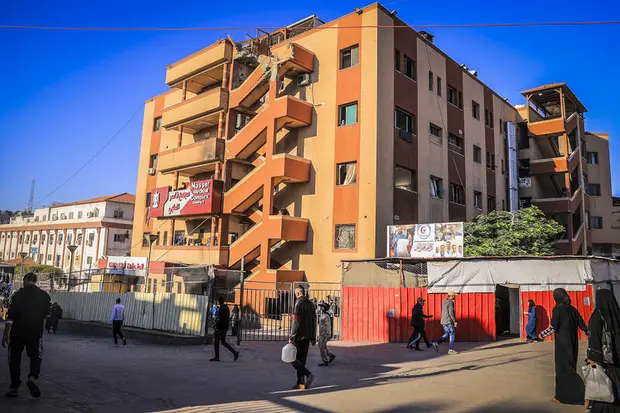
Security officials have again identified a pattern of Hamas activity at several medical facilities across the Gaza Strip, including Shifa, Kamal Adwan, Nasser, and Al-Shuhada hospitals. Hamas fighters have been observed inside multiple hospitals throughout the war, including in recent weeks.
According to Ynet News, senior Hamas officials have also begun bringing their families to stay in hospital compounds, apparently seeking to protect them from Israeli strikes.
Following the IDF strike on Hamas operatives at Nasser Hospital: Hamas & PIJ themselves admit that 110 healthcare workers were really combatants including many at Nasser Hospital. Thread documents every single one.
— Aizenberg (@Aizenberg55) November 12, 2026
These actions make it more difficult for the IDF to distinguish legitimate medical activities from the use of these facilities for military or terrorist purposes.
Hamas has a documented history of using hospitals, ambulances, schools and mosques to shield its fighters and maintain operational freedom, taking advantage of the protections afforded to such facilities under international law. However, these protections can be lost if the facilities are used for military purposes, subject to the conditions set out under international humanitarian law.
‼️🔎 EXPOSED: THE TRUTH BEHIND GAZA’S HOSPITALS Intelligence documents seized by IDF troops reveal new details about Hamas and Islamic Jihad’s exploitation of medical facilities. 📄 A 2019 Hamas document, written by the Deputy Commander of Hamas’ Khan Younis Brigade and found near the safe house of the Deputy Commander of Hamas’ Eastern Khan Younis Battalion, outlines a protocol for handling suspects taken for interrogation. It identifies Nasser Hospital, the Red Crescent Hospital & the European Hospital as interrogation locations. 📄 A 2020 document, found near Shifa Hospital, details Islamic Jihad’s exploitation of Shifa, Al-Rantisi & Kamal Adwan hospitals to position mortar shells, document rocket launches, take over offices & establish an operations room.
— Israel Defense Forces (@IDF) November 13, 2026
At the same time, the IDF is trying to maintain that protected status and allow medical facilities to function as normally as possible. In the days leading up to the recent strike on Nasser Hospital, an IDF officer called Gaza health officials, warning them that the continued use of medical facilities by Hamas could lead to a strike on those sites.
Both the IDF and Palestinian activists have documented multiple instances of Hamas using Nasser Hospital to host command-and-control rooms and interrogate Gaza residents suspected of crimes, including collaborating with Israel or stealing from Hamas supplies.
Meanwhile, Hamas has also been working to restore underground facilities damaged during the war.
Hamas’s fascist militias attacked civilians in Khan Younis today, shooting, wounding, and kidnapping several, then retreated straight into the Nasser Hospital Medical Complex, where they’ve built torture rooms and interrogation chambers in full view of UN agencies and international NGOs. And still, the “pro‑Palestine” industrial complex won’t say a word. Not Hasan Piker, not the DSA, not SJP or AMP, not the activist mobs, influencers, journalists, Hollywood names, singers, members of Congress, or Senate candidates. None of them will touch the fact that Palestinians are being brutalized by Palestinian oppressors like Islamist terrorists such as Hamas, throughout Gaza and especially inside Gaza’s hospitals - because for them, Palestinian lives only seem to matter when Jewish Israelis are involved. Tell the truth - is that not the case? Am I wrong?
— Ahmed Fouad Alkhatib (@afalkhatib) September 4, 2026
During the war, the IDF demolished or damaged several sections of tunnels in the area now under Hamas control. However, after the October 2025 ceasefire, the IDF pulled back to a buffer zone inside the Yellow Line. The IDF continues to locate and destroy tunnels in the Israeli-controlled territory inside the Yellow Line, having demolished dozens of kilometers in recent weeks.
In Hamas-controlled areas, the terror group is working to restore damaged sections, ahead of a possible escalation. However, according to reports in Arab media, it is struggling to maintain control.
Saudi news site Asharq Al-Awsat reported that Hamas is facing increased pressure from Israel-supported militias in its territory, as well as clans in Gaza that seek greater independence.
At least two different militias supported by Israel are reportedly operating in the southern Gaza Strip, near Khan Younis and the Muwasi humanitarian zone. One of these militias recently carried out two operations, abducting several Palestinians suspected of being members of Hamas.
Asharq Al-Awsat reportedly said most of those abducted were released after being questioned by Israeli security forces. Israel currently controls more than 60% of the Gaza Strip, while Hamas retains control over about 20%, mostly around Gaza City, according to sources inside Gaza.
The report also described recent clashes between Hamas security forces and armed clan members following an attempted arrest by Hamas. Two Hamas police officers were reportedly killed.
Popular article:

interview Easter message of resurrection hope amid war at Jerusalem's Garden Tomb

biblical commentary Let my people go: a Passover message for today

4 IDF soldiers killed, 2 wounded in fighting in southern Lebanon, as Israel eliminates dozens of Hezbollah terrorists

Receive latest news & updates
A message from All Israel News
Help us educate Christians on a daily basis about what is happening in Israel & the Middle East and why it matters.
For as little as $10, you can support ALL ISRAEL NEWS, a non-profit media organization that is supported by readers like you.
Latest articles:
northern front IDF conducts rare strike on Hezbollah weapons shipment in Bekaa Valley as terror group ramps up rebuilding efforts

Jewish heirs seek to block $180 million Van Gogh auction over alleged Nazi forced sale

Angela Merkel says Israel ‘went too far’ in Gaza but defends Germany’s commitment to Jewish state
Toward a unity gov’t? Likud, Eisenkot’s Yashar party hold first meeting as Liberman doubles down on opposition

Last Righteous Among the Nations living in Israel, dies at 91