Thousands of ultra-Orthodox men march in Jerusalem to honor IDF draft evaders

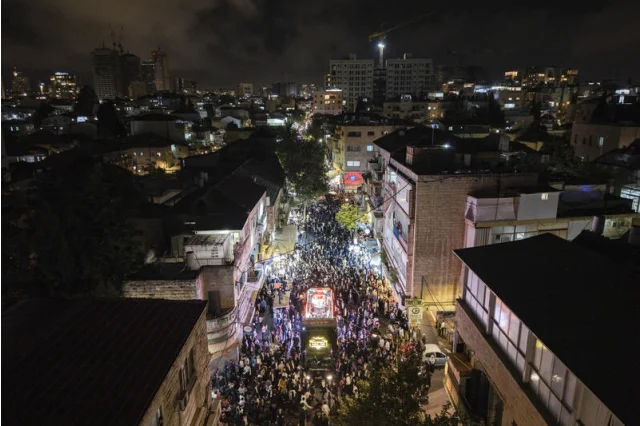
Thousands of ultra-Orthodox (haredi) men marched through Jerusalem on Tuesday evening in a demonstration honoring haredi men recently released from military prison after refusing to enlist in the Israel Defense Forces, with organizers reportedly promising cash payments to some of those who served time.
The demonstration highlighted the deepening dispute over haredi military service, which has become an increasingly contentious issue as Israel continues to fight a prolonged war and prepares for national elections on Oct. 27.
The march began in Jerusalem’s Geula neighborhood and grew to several thousand participants as it moved through the streets. Police closed several streets to vehicular traffic as large crowds gathered along the route.
According to Channel 12, organizers invited about 100 former military prisoners to participate and receive a cash payment of around NIS 1,000 ($310), reportedly funded by overseas donations. The report said approximately 50 accepted the invitation and received the payments. Other reports put the promised payments at several hundred shekels.
Children who attended the event were also reportedly given gift bags containing a message praising the draft evaders for “adhering to Judaism” by refusing to enlist in the IDF.
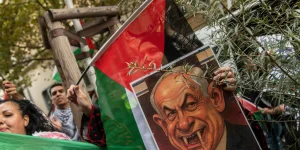
Demonstrators carried signs comparing haredi men imprisoned for refusing military service to Israeli hostages held by Hamas in Gaza. Other signs said the participants would never enlist in “the enemy army” and would never sacrifice their children “on the altar of Zionism.”
The Jerusalem Faction, a hardline anti-Zionist group within the haredi community, was among the organizers. The demonstration passed without violence or arrests, according to reports.
The march drew sharp criticism from opposition lawmakers, including Yashar party chairman Gadi Eisenkot, who said the haredi parties that are key members of Prime Minister Benjamin Netanyahu’s coalition support “draft evasion,” while a government led by him would not. Yashar’s platform calls for ensuring that every citizen performs military or national service as defined by law.
Eisenkot also argued that the current system, under which large numbers of haredi young men have historically received military-service deferments, is no longer sustainable.
Yisrael Beytenu leader Avigdor Liberman also criticized the demonstration, saying the celebratory reception given to draft evaders in predominantly haredi neighborhoods contrasted with the reception received by IDF soldiers returning from the front lines.
He also criticized Netanyahu for relying on haredi parties that oppose compulsory military service for haredi men.
Other opposition leaders made similar criticisms as the issue takes on greater political significance ahead of election day.
The dispute has become particularly contentious during the ongoing war, as tens of thousands of Israelis have served extended periods in the IDF reserves. The debate over haredi enlistment has intensified amid concerns over the size and readiness of the military and the burden of reserve duty on Israeli families and employers.
The Attorney General’s Office reported in August that members of the haredi community accounted for approximately 80% of all IDF draft evaders, despite haredim making up roughly 14% of Israel’s population. The office called for stronger enforcement measures, including renewed proactive arrests and expanded economic sanctions.
The issue has been the subject of legal battles for decades. In June 2024, Israel’s High Court of Justice ruled that the government lacked a legal basis for broadly exempting haredi yeshiva students from military service and ordered the state to enforce the existing draft law.
In April 2026, the High Court ruled that the government had not adequately implemented its 2024 decision and ordered additional steps to enforce conscription obligations, including economic measures and criminal proceedings against draft evaders.
The conflict over haredi military service therefore remains both a legal and political issue, with the Tuesday demonstration providing a highly visible example of the continued opposition within parts of the haredi community to IDF enlistment.
You might also like to read this: