The conflict the West refuses to read: Two scriptures, two civilizations





The West often misreads its deepest conflicts because it has forgotten how to read religion. It sees armies, borders, grievances, terrorism, diplomacy, and elections. It sees almost everything except the codes that generate civilizations.
Civilizations are not built by markets or armies alone. They are built by foundational texts and the worlds those texts create. Before laws are passed by parliaments, they are imagined in the moral and religious consciousness of a people. Before institutions take visible form, they are shaped by stories of origin, authority, justice, worship, and destiny.
Revealed scriptures are therefore not merely devotional books. They are operating systems. They define reality, order time, create identity, and tell a people who God is, what man is, what law demands, what evil is, what redemption means, and where history is going.
A note on method before going further. This essay compares the Bible and the Quran as texts – not as communities, not as believers, not as civilizations in their full sociological complexity. Scriptures are independent objects. They make claims and propose worlds whether or not any particular person lives by them. Distinguishing what a sacred text proposes from what its readers do is not a hedge. It is the precondition for thinking clearly. The analysis that follows is about two books and the worlds they generate. It is not a verdict on any believer in either of them.
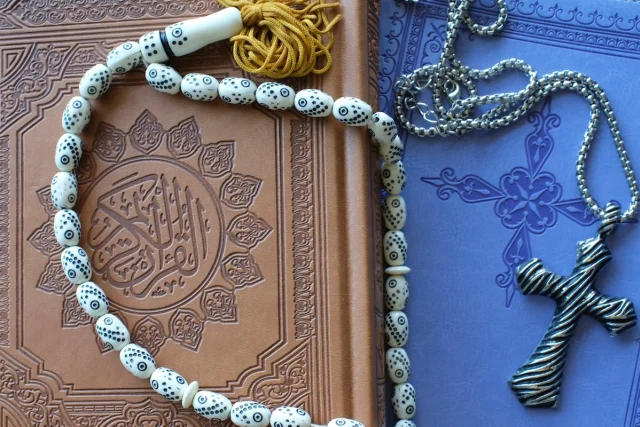
The Bible and the Quran are not simply two religious texts that share certain characters. They are rival civilizational architectures. Both speak of creation, revelation, prophets, law, judgment, worship, and human destiny. Both make universal claims. Yet they answer civilization's most basic questions differently: Who is God? What is man? What is law? What is redemption? Who is Jesus? Where is history going?
This is why the conflict between Islam and the West cannot be reduced to militancy, terrorism, poverty, colonialism, foreign policy, or modern extremism. Those factors matter. But they are not the root. They are symptoms of a deeper conflict between two sacred codes.
For 1,400 years, the biblical and Quranic worlds have been in recurring friction because they do not imagine reality in the same way. The modern West struggles to understand this. It treats religion as private belief and politics as the real arena of conflict. But for civilizations formed by revealed scripture, politics is downstream from theology. Sacred texts do not remain in the prayer room. They become law, memory, identity, community, territory, war, peace, and destiny.
The Bible, as the foundational code of the Western moral imagination, created a civilization built around covenant, conscience, moral accountability, and messianic hope. Its story begins with creation, moves through fall and promise, narrows through Abraham, Isaac, Jacob, and Israel, develops through Torah, kingdom, exile, and prophecy, and culminates in the Messiah and the restoration of all things.
At the heart of the biblical code is covenant. God binds Himself by promise. He enters history. He chooses. He commands. He judges. He redeems. He makes promises to Abraham, to Israel, to David, and through the prophets announces a new covenant. The biblical world is not merely a world of divine power. It is a world of divine faithfulness.
This matters enormously for civilization. If God is covenantal, authority is not arbitrary. Power is morally accountable. Kings can be judged by prophets. Empires can be weighed and found wanting. Law stands above rulers. The weak, the widow, the orphan, and the stranger become morally visible. Human beings are not merely subjects of power; they are creatures made in the image of God. From this imagination came many of the West's deepest assumptions: law above the state, accountable rulers, the dignity of conscience, the sanctity of the individual, and nations answerable before God.
The Quran proposes a different civilizational code. It is not a book of private spirituality. It gives a comprehensive vision of God, revelation, law, worship, community, and mankind's destiny. It presents Muhammad as the seal of the prophets and the Quran as the final revelation. It presents Islam as the restored and universal religion of submission to Allah. It forms the ummah – a transnational religious community with legal, social, moral, and civilizational implications that extend far beyond private devotion.
It is also, by its own internal logic, a polemical text. Arriving in the seventh century of the Christian era, the Quran does not enter a religious vacuum. It enters a world already shaped by the Hebrew Scriptures, the New Testament, and centuries of Jewish and Christian civilization. It addresses that world. It rewrites it. It claims that the earlier scriptures were misunderstood, altered, or superseded – and that its own revelation restores what was lost. This is not an accidental feature; it is structural. The Quran presents itself as the corrective to the biblical tradition. To compare these two codes is therefore not to compare two unrelated systems. It is to read a later text that explicitly defines itself against an earlier one.
The central organizing principle of Islam is not biblical covenant moving through Israel toward Messiah. It is submission to Allah through final revelation. The human problem is not covenantal alienation healed through the atoning work of the Messiah. It is mankind's failure to submit to Allah's guidance as revealed through His prophets and finally through Muhammad.
The Bible asks how God will fulfill His covenant promises through Messiah. The Quran asks whether humanity will submit to Allah's final revelation through Muhammad. These are not different paths to the same destination. They are different engines of civilization.
In the biblical code, the particular precedes the universal. God chooses Abraham. The promise passes through Isaac and Jacob. Israel is formed as a covenant people. The nations are blessed through Abraham's seed. The Messiah comes through Israel. Salvation goes out from Jerusalem to the nations.
In the Quranic code, the story is rearranged. Prophets are sent to peoples. Previous scriptures are treated as corrupted or superseded. Muhammad comes as the final prophet. The Quran comes as the final book. The result is not a continuation of the biblical story on its own terms. It is a rewriting of that story within another sacred framework.
This is why the shared names can be misleading. The Quran speaks of Adam, Noah, Abraham, Moses, David, Solomon, Mary, and Jesus. But these figures are relocated into another theological universe. Their meaning is reinterpreted by another code. What appears at first to be continuity is, on closer inspection, replacement.
Abraham is the clearest example. In the Bible, the covenantal line runs through Isaac, Jacob, Israel, and toward the Messiah. In Islam, Abraham is connected to Ishmael and to the sacred house of the Kaaba. This produces a different sacred geography and a different Abrahamic memory. Where the Bible orients history toward Zion, Jerusalem, the Temple, and the Davidic hope, Islam orients the body of the worshipper toward Mecca, the Kaaba, and the universal community of submission.
Sacred geography forms civilization. A people's holy places tell them where history is centered. One civilization looks to Zion as the covenantal and messianic center of history. The other turns toward Mecca as the center of submission. These are not aesthetic differences. They are different maps of what the world is ultimately about.
The clearest dividing line, however, is Jesus.
Islam does not ignore Jesus. It honors Him as a prophet and messenger, speaks of His birth from Mary, and gives Him an important place in sacred history. But it denies the central claims of the New Testament concerning Him. Not the divine Son. Not the incarnate Word. Not the crucified Redeemer. Not the atoning Lamb. Not the risen Lord at the center of salvation history.
The same name is retained, but the identity is changed. The Bible presents Jesus as the Word made flesh – the Son, the Lamb of God, the mediator of the new covenant, the crucified and risen Lord through whose blood God reconciles the world to Himself. The Quran honors Jesus and then dismantles this entirely. It denies divine Sonship. It does not present the crucifixion as atonement. In the Bible, redemption comes through the Messiah's blood. In Islam, guidance comes through Allah's final revelation. These are not minor variations on a shared theme. They are different answers to the question at the center of history.
This produces different understandings of God. Serious theologians have argued both that the two traditions describe the same God under different covenantal frameworks and that they describe genuinely different deities. This essay takes the latter position, on the basis of how the texts themselves frame divine identity. The God of the Bible enters covenant, binds Himself by promise, reveals Himself through Israel, comes in the person of the Son, redeems through blood, sends the Holy Spirit, and restores creation through Messiah. Allah, as revealed in Islam, commands, guides, sends prophets, gives final revelation through Muhammad, and does not redeem through atoning blood. These are not two descriptions of the same deity in different vocabularies. They are different accounts of who God is, what God does, and what God ultimately requires.
Law follows from theology. The biblical tradition produces a moral and legal imagination in which law stands above the ruler. Kings are not divine. Prophets can rebuke monarchs. Even Israel itself can be judged by the God who chose her. This is the seedbed for conscience, moral accountability, and limits on political authority.
Islamic law emerges from a different structure. Divine command is not merely moral inspiration; it becomes a comprehensive civilizational order – governing worship, family, inheritance, public morality, communal boundaries, and social life. Where Islam is taken in its full civilizational seriousness, it does not naturally confine itself to private belief. It seeks to order life under Allah.
The question is not the sociological diversity of those who read either text. It is what the sacred codes themselves propose when taken as comprehensive visions of life.
That is why "Islamism" is too shallow a category. The West speaks as though the problem is a political distortion of an otherwise private religion. But Islam was never merely private in the modern liberal sense. It was born with a comprehensive claim about worship, law, community, and public order. Islamism did not invent the civilizational tension between Islam and the West. It politicized, modernized, and militarized elements already present in the deeper sacred code.
The challenge facing the West today is therefore not only counterterrorism or integration policy. It is civilizational literacy. A secularized West that no longer understands its own biblical foundations is poorly equipped to understand a religious civilization that still takes its sacred code with absolute seriousness.
This is also why a civilization within a civilization can emerge inside post-Christian Western societies. The question is not immigration. It is whether a comprehensive sacred code can be permanently privatized inside a civilization that assumes religion is merely personal. Diversity of food, music, and custom is one thing. Diversity of ultimate law, sacred loyalty, and civilizational destiny is another. Where the sacred code proposes blasphemy norms enforced through communal pressure, parallel arbitration claiming jurisdiction over family law, and authority structures that override individual conscience on matters such as apostasy, the code is not adding to the diversity of a free society. It is proposing a different account of what a free society is – and whether it should exist at all.
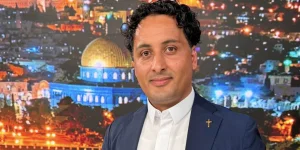
Nowhere does this become clearer than Jerusalem.
Jerusalem is not a political dispute. It is where rival sacred histories collide. In the Bible, Jerusalem is tied to Abrahamic promise, Davidic kingship, temple worship, sacrifice, prophetic hope, messianic expectation, and the final restoration of the nations. Zion is the place where theology becomes geography – where covenant becomes visible and the destiny of Israel and the nations is prophetically concentrated.
Islam absorbs Jerusalem into its own sacred map. It becomes part of Islamic memory, rule, and eschatological imagination. But it does not play the same role in Islam that it plays in the Bible. In the biblical code, Jerusalem is the covenantal and messianic center of history. In the Islamic code, Jerusalem is honored and claimed, but within a sacred order centered finally on Allah's revelation through Muhammad and oriented ritually toward Mecca.
This is why the conflict over Jerusalem cannot be resolved by treating it as a real estate dispute, a diplomatic puzzle, or an ethnic quarrel. The question underneath is far deeper. Which sacred code has the authority to define the city? Is Jerusalem the city of the God of Israel – the throne-city of David's promised Son, the place from which the knowledge of the Lord goes to the nations? Or is it to be reinterpreted within the sacred geography and destiny of Islam?
This is the eschatological flashpoint. Jerusalem is where the argument over history becomes concrete – where scripture becomes diplomacy, where theology becomes geography, and where rival visions of humanity's future meet in a single place.
None of this requires contempt for individual Muslims or simplistic moral judgments about every society formed by the Bible or the Quran. Christians have often betrayed the Bible. Muslims have lived in many different ways across history. Civilizations are never pure expressions of their scriptures.
But that does not erase the scriptures. Nor does it make the codes compatible.
The Bible and Quran do not tell the same story. They do not present the same God, the same Jesus, the same law, the same sacred geography, or the same destiny for humanity. They share names. They do not share meanings.
The West's great error is to assume that all religions are basically private, interchangeable, and compatible once stripped of extremism. That assumption is a product of secular liberalism, not of serious scriptural analysis. Sacred codes are not interchangeable. They are not ornamental. They generate civilizations – with all that civilizations entail.
The conflict now unfolding is therefore not between moderation and extremism, or peace and militancy. It is between rival accounts of God, man, law, revelation, redemption, sacred geography, and the end of history. Islamism is one modern expression of this deeper reality. The more fundamental issue is that the Bible and Quran are two distinct civilizational operating systems with incompatible visions of what humanity is for.
One is covenantal and messianic, moving from Abraham through Isaac, Jacob, Israel, David, and Messiah to the nations. The other is submission-based and prophetic, reordering Abraham, Jesus, and the nations around Muhammad, the Quran, and the ummah. One sees history as the unfolding of divine covenant. The other sees it as the progressive call to submission.
The question before the West is whether it can recover the ability to read civilization at the level of sacred code. Without that recovery, it will continue to misdiagnose the conflict – treating theological claims as political grievances, sacred geography as real estate, religious law as policy preference, and eschatology as extremism.
Until the West learns to read revealed texts as the civilizational codes they are, it will remain confused by the very forces shaping the age. Jerusalem – the city where covenant, prophecy, and the destiny of nations converge – will remain unintelligible to those who see only politics where the sacred texts see the end of history.
You might also like to read this: