











Stones from Munich synagogue destroyed by Nazis to go on public display
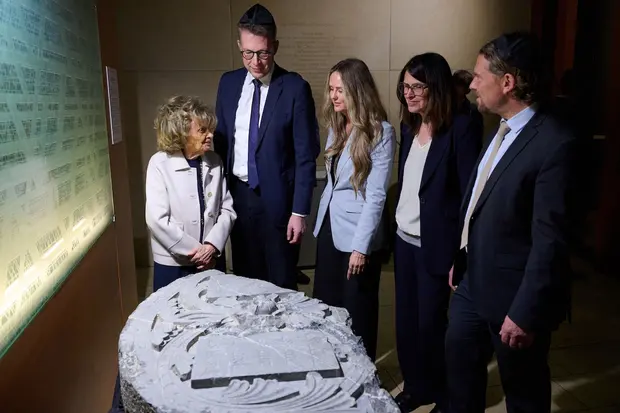
Fragments of Munich’s Main Synagogue, destroyed by the Nazis in 1938, have been recovered from the Isar River and are set to go on public display before being transferred to the city’s Jewish community.
Among the 109 recovered pieces is a marble fragment bearing the Ten Commandments in Hebrew. It once formed part of the ark that housed the Torah scrolls in the synagogue.
Bavarian public broadcaster BR24 reported that the fragments were identified after researchers sifted through around 600 tons of material removed from the Isar River in recent years as part of construction projects in the area.
The Main Synagogue, located on Herzog-Max-Straße, was inaugurated in 1887. Its demolition was carried out by the Leonhard Holl construction company in June 1938, nearly five months before the Kristallnacht pogroms swept across Germany and Austria.
Munich’s Jewish community was forced to pay the company to demolish its own synagogue. The site was subsequently used as a parking lot for several decades before the area was redeveloped.
“The rediscovery of fragments from the former main synagogue, almost a century after its demolition, was a historic moment for us,” Charlotte Knobloch, president of Munich’s Jewish community, who attended the synagogue as a child, told Ha’aretz newspaper.
She also expressed “a sense of sorrow and bitterness that these stones were simply thrown into the river as though they were construction waste.”
She said the public display would allow Munich residents to understand that “the Jewish community was, and still is, part of this city.”
The Jewish Museum Munich worked with a Berlin-based law firm specializing in researching and establishing legal claims to identify the stones and determine their ownership.
The findings established that the fragments legally belonged to the German state of Bavaria, which moved to transfer custody to the Jewish Community of Munich and Upper Bavaria. The community decided to make the pieces accessible to the public for educational purposes.
Munich officials have voiced strong support for the project, saying it offers an important opportunity to educate the public, particularly younger generations, about the dangers of political extremism and antisemitism.
Popular article:
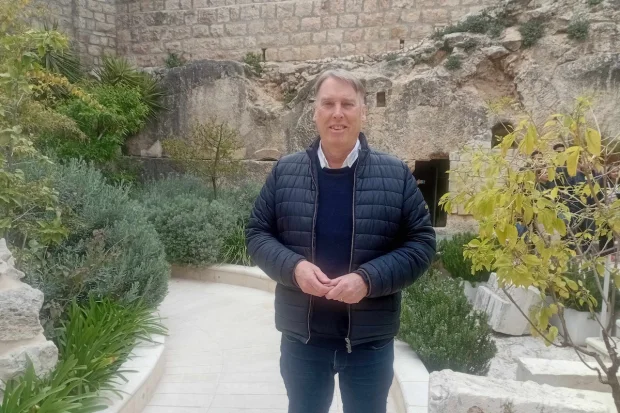
interview Easter message of resurrection hope amid war at Jerusalem's Garden Tomb

biblical commentary Let my people go: a Passover message for today

4 IDF soldiers killed, 2 wounded in fighting in southern Lebanon, as Israel eliminates dozens of Hezbollah terrorists

Receive latest news & updates
A message from All Israel News
Help us educate Christians on a daily basis about what is happening in Israel & the Middle East and why it matters.
For as little as $10, you can support ALL ISRAEL NEWS, a non-profit media organization that is supported by readers like you.
Latest articles:
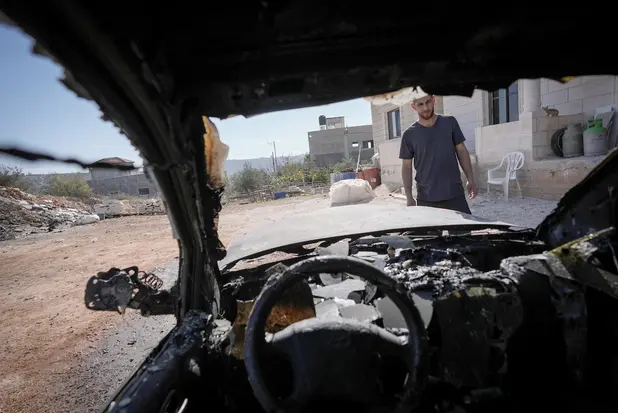
‘An assault on God himself’ - Israeli officials blast wave of Jewish violence in Judea and Samaria

Israeli shekel falls 8% against dollar since election amid political uncertainty

Waiting on Trump: Netanyahu fears delay in Iran strike decision could put key targets beyond reach
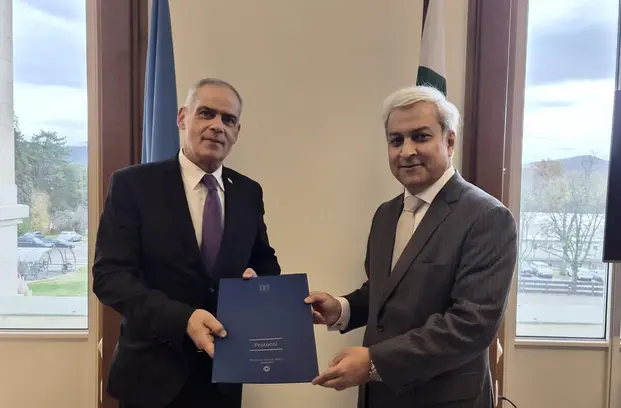
Speculation over significance of handshake between Israeli, Pakistani diplomats
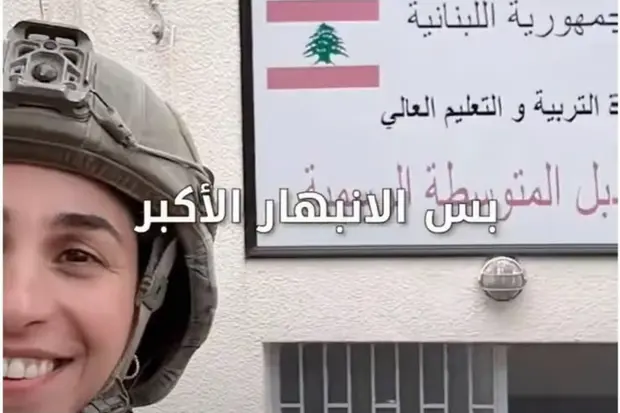
Outrage in Lebanon after IDF officer’s visit to Christian school, Lebanese PM claims Israel tries to ‘whitewash the occupation’