










Waiting on Trump: Netanyahu fears further delay in Iran strike decision could put Tehran’s threat beyond reach
Trump, weighing options, tells Fox News he’s inclined to strike, but prefers waiting till January
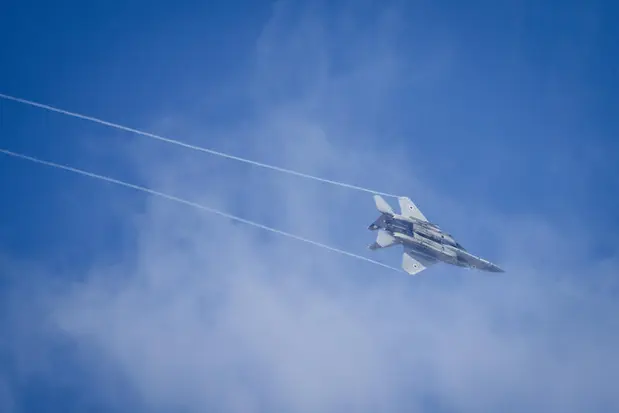
Amid reports of a possible resumption of joint U.S.-Israeli strikes on Iran, Israel’s security establishment assesses there is no urgent need for such action at the time, reports in Hebrew media over the weekend said.
Defense officials assess that there is currently no critical, existential threat facing the Jewish State from the use of chemical or nuclear weapons by the Iranian regime.
At the same time, there seems to be an agreement in both Jerusalem and Washington that any military operations against Iran would be most effective in the form of joint operations.
For that reason, despite the absence of immediate operations, U.S. Central Command chief Admiral Brad Cooper visited Israel last week, to coordinate intelligence and operational planning, in the even that the political leadership of both countries decide to renew strikes.
Meanwhile, reports in both U.S. and Israeli media indicate that discussions between Washington and Jerusalem are ongoing, not only to coordinate the nature of any renewed operations, but also the timing.
Speaking to Fox News’ Trey Yingst, President Donald Trump indicated that he is inclined to renew operations against the Islamic Republic of Iran, if no deal is reached, but favors waiting until the new year.
Trump made a similar comment to Israeli journalist Barak Ravid, saying, “I’m in no rush to make any decision regarding Iran. We’ll see what happens after the start of the new year.”
At the same time, following reports of a potential attempt by the regime break the U.S. naval blockade of the Persian Gulf, President Trump told Yingst that he hopes the regime does attempt such a move.
“I hope they do,” Yingst quoted the president as saying, “then they'll all be at the bottom of the sea like the rest of the navy.”
The reported blockade breaking attempt comes amid increased aggression by the regime, apparently firing at U.S. fighter jets over the Persian Gulf and attacking U.S. forces in Bahrain over the weekend.
Maritime monitoring agencies have identified as many as 50 Iranian cargo and oil vessels which could participate in an attempt to breach the blockade.
🚨 Iran says tankers anchored off Kharg Island will sail for the Gulf of Oman to break the U.S. blockade. But Iran does not need those tankers to challenge the blockade line. Windward MIOC counts 31 laden sanctioned tankers already past the Strait of Hormuz, most of them about a day’s sailing from the line. A convoy from Kharg remains possible. Windward multi-sensor data identified 16 tankers at anchor off the island on 17 November, and they would have to transit the Strait of Hormuz before reaching the blockade line, which runs from Ras al Hadd to Ras Jiwani. The 31 are already outside the Strait, all seen in position between 13 and 20 November. Four are crude tankers carrying an estimated 4.9 million barrels, each confirmed on satellite imagery. The closest is the Suezmax TOUR 2 (IMO 9364112), off Chabahar and about 3 to 6 hours from the line. The other 27 carry LPG or refined products, and 20 of them are at the Shinas and Sohar anchorages. Iran has used LPG tankers to test the line before. In September and October, Windward tracked 11 Iran-affiliated LPG tankers trying to cross it. The fastest way for Iran to challenge the blockade is with laden tankers already outside the Strait of Hormuz, and 31 are in place.
— Windward (@WindwardAI) November 20, 2026
Channel 12 News, citing an Israeli source, said that in recent weeks, on several occasions, the U.S. made preparations for large-scale strikes, but each time President Trump called them off or did not grant final authorization.
While often discussed in Israeli media, the option of an independent Israeli operation against Iran is still considered an extreme scenario, based on an immediate, existential threat from the regime.
An Israeli security official explained to Channel 12, “We cannot live with an existential threat,” adding, “we are not at that point yet.”
This assessment was reflected in the statement by IDF spokesman Brig. Gen. Efi Defrin over the weekend, announcing, “There is no change to the security guidelines.”
“We will, of course, inform you should any such changes occur,” Defrin continued, adding, “I emphasize: do not give credence to rumors. Act responsibly and rely solely on official announcements from the IDF.”
The statements come amid reports in Israeli media that Prime Minister Benjamin Netanyahu has continued to lead discussions with the defense establishment regarding possible Israeli options for striking Iran.
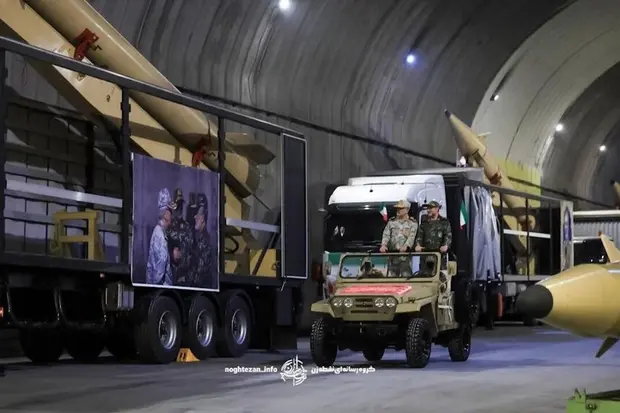
Netanyahu is reportedly concerned at how rapidly the Iranians are rebuilding their ballistic missile production capabilities, and the pace at which they are working to protect military and nuclear infrastructure by moving it to underground facilities.
He fears that too long of a delay in the decision to strike could grant the Iranian regime enough time to move much of their threatening infrastructure underground and out of reach of conventional munitions carried by Israeli and U.S. fighter planes.
According to reports in both U.S. and Israeli media, the prime minister favors a joint strike campaign lasting between 4-7 days, primarily targeting ballistic missile and nuclear infrastructure.
Channel 12 reported that last week, the IDF Intelligence Directorate warned that an independent Israeli strike on Iran could lead to the outbreak of fighting in other arenas – Hezbollah in Lebanon, the Houthis in Yemen, and possibly Syria and Gaza.
At the same time, a report in the Financial Times said that CENTCOM chief Admiral Cooper informed President Trump that prolonged buildup of military forces in the Middle East, without action, could harm military readiness.
In the meantime, both U.S. and Israeli forces maintain high alert levels, prepared for any escalation of the conflict.
Popular article:

interview Easter message of resurrection hope amid war at Jerusalem's Garden Tomb

biblical commentary Let my people go: a Passover message for today
4 IDF soldiers killed, 2 wounded in fighting in southern Lebanon, as Israel eliminates dozens of Hezbollah terrorists

Receive latest news & updates
A message from All Israel News
Help us educate Christians on a daily basis about what is happening in Israel & the Middle East and why it matters.
For as little as $10, you can support ALL ISRAEL NEWS, a non-profit media organization that is supported by readers like you.
Latest articles:

Outrage in Lebanon after IDF officer’s visit to Christian school, Lebanese PM claims Israel tries to ‘whitewash the occupation’

Pro-Israel German politician Karoline Preisler kicked to ground at pro-Palestinian protest in Berlin

Lebanese president condemns Iranian interference, calls for Hezbollah disarmament, withdrawal of Israeli forces

After 2 weeks of talks: No coalition deal in sight as Eisenkot negotiates with Likud, ultra-Orthodox, Arab parties

Israel watches as Turkey expands military presence in Horn of Africa