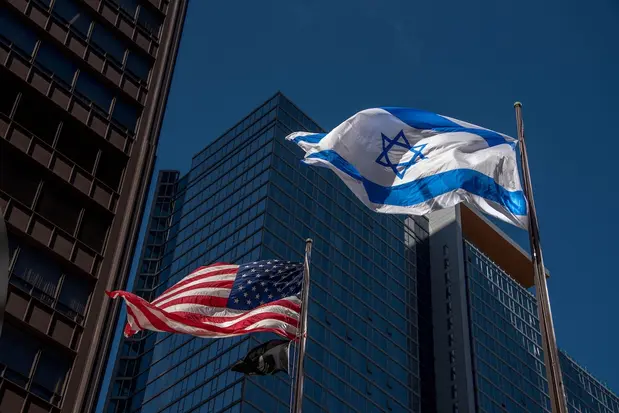











Amid heightened tensions, Iranian regime unveils ‘missile city,’ claims to damage U.S. higher jet
IDF says ‘no change to current instructions’ regarding Iran, amid rumors of renewed strikes
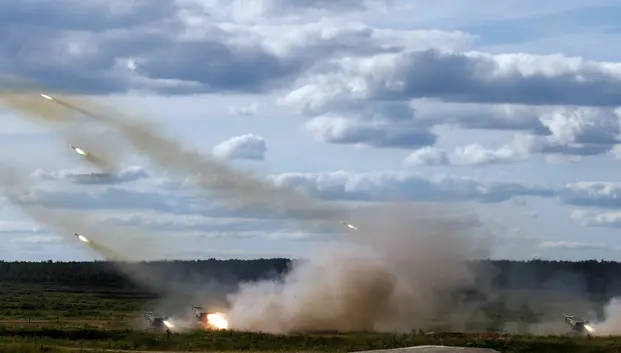
Over the weekend, the Iranian military claimed to have targeted and damaged a U.S. F-16 fighter jet flying over the Persian Gulf, causing the jet to return to U.S. facilities in the region for an emergency landing.
On Saturday evening, U.S. Central Command (CENTCOM) rejected the claim, saying that "all U.S. military fighter jets in the Middle East are safe and accounted for.”
Several open source intelligence accounts on social media noted that public flight tracking website flightradar24 showed a U.S. F-16 fighter jet making. Landing in the United ARab Emirates, while broadcasting a 7700 Squawk code, indicating an unspecified emergency.
@CENTCOM "Separately, flight-tracking accounts reported that an F-16 transmitted emergency code 7700 near the Strait of Hormuz on Friday. The reason for that reported emergency remains undetermined.":
— The Tectonic (@thetect0nic) November 21, 2026
On Saturday evening, the Islamic Revolutionary Guard Corps (IRGC) said it targeted two Patriot air defense radars along with other assets the Al-Riffa and Awali bases in Bahrain, “n response to continued aggression and violations of Iran’s airspace.”
The IRGC released a video which showed a person writing a slogan on the side a drone, before showing at least drone launches, reported to be from the attack on the Bahrain facilities.
تصاویری از پاسخ رزمندگان نیروی هوافضای سپاه به تداوم تجا،وز و نقض حریم هوایی ایران و حمله به رادار جزیره هنگام https://t.co/bNBAWajOIE
— خبرگزاری ایسنا (@isna_farsi) November 22, 2026
However, Bahrain’s interior ministry claimed the attacks hit a civilian industrial facility. On Sunday morning, the Bahraiin government said that two people were injured, one critically, in the attacks.
The Iranian attacks come as the regime government has taken a more aggressive stance towards the United States, amid stalled talks between the nations.
IRGC Commander-in-Chief Ahmad Vahidi was seen in a video released Saturday, touring an underground “missile city,” accompanied by IRGC Aerospace Force chief Majid Mousavi.
In the video, the two can be seen driving past lines of ballistic missiles and launchers in the underground facility, while a narrator describes the military’s new missile technologies, with increased range and enhanced targeting precision.
Iran’s IRGC Unveils DUAL-MISSILE Launcher and NEW Military Capabilities FULL VIDEO with English Subtitles, Chapters Major General Ahmad Vahidi inspected the IRGC’s missile arsenal as its Aerospace Force showcased upgraded missiles with improved range, precision, and independent guidance systems. The IRGC claims its capabilities have EXPANDED between the two wars, warning that it will respond to threats without hesitation. Video Chapters: 0:00 | Inside Iran’s Missile City 0:39 | Upgraded Missile Capabilities Revealed 1:05 | IRGC Declares Combat Readiness 1:43 | Dual-Missile Launcher Unveiled 2:25 | New Missile Capabilities 2:50 | Vahidi Discusses NATO’s Military Power 3:31 | IRGC Vows to Control the Battlefield 4:39 | Vahidi’s Final Warning
— Ryan Rozbiani (@RyanRozbiani) November 21, 2026
Mousavi is seen claiming that the IRGC Aerospace Force has increased both its number of missiles, as well as their capabilities, during the ceasefire period. This appears to confirm previous Israeli intelligence, indicating that the regime had been actively seeking to rehabilitate its missile stockpiles and production capabilities, following the April ceasefire announcement.
It is not clear if the facility is the same one the regime demonstrated in a video released a little over one week earlier, which also displayed dozens of ballistic and cruise missiles.
Exposed: Iran’s underground terror lair. The regime has proudly unveiled a subterranean “missile city” packed with ballistic and cruise weapons, openly boasting of its intent to obliterate Israel and the West. In their own words: “We will annihilate them.” The world must take these threats seriously and act before it is too late.
— Israel Foreign Ministry (@IsraelMFA) November 11, 2026
This more aggressive attitude was also seen in comments by Parliament Speaker Mohammad Bagher Ghalibaf, who on Sunday morning said the only way to avert the threat of war, and achieve a breakthrough in the current stalemate, is to achieve “sustainable deterrence.”
“If we do not want the current situation to continue, we must avert the threat to the country, and this goal can only be achieved by attaining sustainable deterrence,” Ghalibaf said in comments carried on Iranian media.
He also claimed that Iran had already demonstrated deterrence, which was preventing the U.S. from launching another military operation.
“Through the armed forces’ military actions, we have achieved deterrence, and the enemy cannot launch a war like the 40-day war,” Ghalibaf added.
At the same time, in support of the claims made in the IRGC video, Qasem Qureishi, deputy head of the Basij militia, told reporters in Tehran that the IRGC had increased the range of its missiles beyond 2,000 kilometers (around 1,240 miles).
“The range of our missiles has exceeded 2,000 kilometers,” Qureishi said, before noting that he could not disclose the exact distance publicly.
Later on Sunday morning, Iranian parliament member Ali Yazdikhah told Persian news site ICANA, that if the blockade on Iranian oil is not lifted, the regime will make sure that no one in the region can export oil.
“As a first step, the oil wells of the UAE, Kuwait, Bahrain and Saudi Arabia will be targeted, because either we must be able to export our oil, or no one should be able to export oil,” Yazdikhah said.
“If we are not allowed to export, no one can continue their normal activities under such circumstances,” he added.
He also indicated that Iran may attempt to break the blockade, warning that if the U.S. tries to prevent the ship from transiting the Strait of Hormuz, “we will once again settle the score with it on the battlefield.”
Ebrahim Rezaei, a member of Iran’s National Security Commission, told the Defa Press website on Sunday, that Iran could also target Israel.
Rezaei said that the regime would “confront threats at their source.”
“If an AWACS aircraft is stationed at an airport in Saudi Arabia and is a source of threats against the Islamic Republic, we will take action against it,” Rezaei explained. “The same rule applies to other locations, including Israel.”
A regime-affiliated newspaper ran an editorial claiming the IRGC-run government should abandon its defensive posture, adopting a “first strike” policy of preemptive attacks.
“Evidence indicates that war is certain and imminent,” the editorial in the Kayhan newspaper said. “Why should we sit idly by, wait for Washington to fire the first shot, and cede the initiative to strike first to the enemy?”
“Waiting for an American attack is a strategic mistake,” the editorial continued, saying the regime should move to “change the equation through initiative on the ground and deliver the first strike along several key lines, including ‘effectively breaking the blockade’ and ‘blocking the Bab el-Mandeb [Strait].’”
On Friday, IDF Spokesman Brig. Gen. Effie Defrin said the military has not changed its threat guidelines for the Israeli public.
In a post to his X account, Defrin wrote, “In light of the discourse and numerous media reports, I’d like to emphasize ahead of the start of Shabbat: The IDF is conducting ongoing situation assessments and is fully prepared for various scenarios, both defensive and offensive.”
Defrin added that there are “no change to the current instructions, and we will update you if any changes occur.” He also asked people not to share rumors regarding military actions.
The spokesman’s comments came as some political commentators in Israel were speculating that Prime Minister Benjamin Netanyahu could order new strikes on Iran in an attempt prevent a new coalition government from being formed.
Popular article:

interview Easter message of resurrection hope amid war at Jerusalem's Garden Tomb

biblical commentary Let my people go: a Passover message for today

4 IDF soldiers killed, 2 wounded in fighting in southern Lebanon, as Israel eliminates dozens of Hezbollah terrorists

Receive latest news & updates
A message from All Israel News
Help us educate Christians on a daily basis about what is happening in Israel & the Middle East and why it matters.
For as little as $10, you can support ALL ISRAEL NEWS, a non-profit media organization that is supported by readers like you.
Latest articles:

‘Friendship is no insurance policy’: Jewish leaders warn of rising antisemitism in Romania
Israeli budget airlines Israir, Arkia prepare to expand international routes

Following multiple attacks on Arab towns in Judea & Samaria, Eisenkot condemns 'Jewish terrorism’
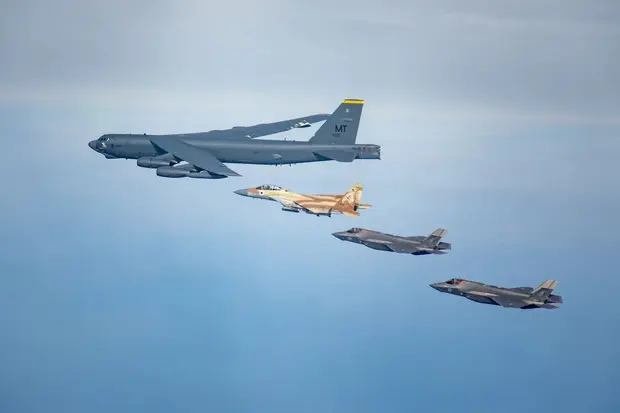
ANALYSIS Can Israel and the US finish the job if they attack Iran again?
interview ‘Antisemitism is eroding liberal democracy’: UK Lord Eric Pickles sounds alarm over growing Jew hatred