Security agencies ramp up efforts to secure Israeli elections as Oct. 7 continues to impact voting landscape
Oct 7 looms large in voting considerations for two-thirds of Israelis



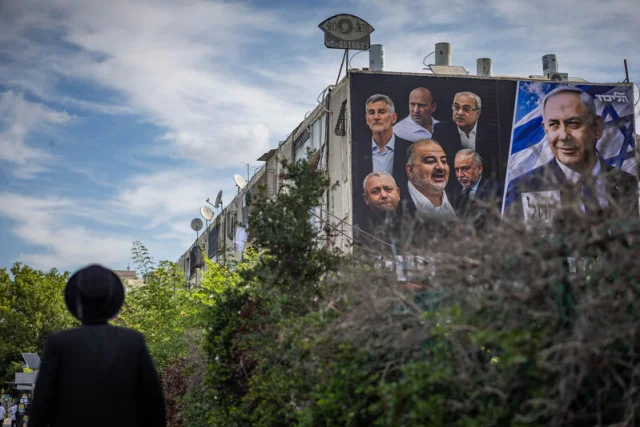
The three weeks left ahead of the Israeli elections are a “sensitive period” from a security standpoint, the Israel Defense Forces (IDF), Shin Bet domestic security and Israel Police warned in a joint statement on the third anniversary of Oct. 7, 2023, Hamas terror attack in southern Israel.
A poll conducted by the Israel Democracy Institute (IDI), published on Tuesday, found that the events of Oct. 7 are “very” or “fairly” central to the voting intentions of around two-thirds of Israeli citizens.
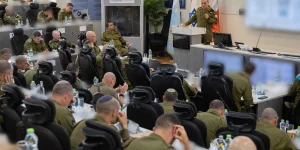
The top brass of the three major organizations tasked with maintaining internal security in Israel held a special meeting on Wednesday to discuss the variety of threats facing the country in the weeks leading up to the elections.
“The heads of the organizations agreed on a series of measures that will leverage the relative advantage of each of the organizations in order to ensure the orderly and safe conduct of the upcoming elections,” they said.
To what extent have the events of October 7 affected how you intend to vote? ⚫ Great extent: 56% 🔘 Medium extent: 12% ⚪ Small extent/not at all: 26% via Maagar Mochot/Chan16, Oct. 6
— Israel Elects (@israel_elects) October 6, 2026
The meeting was attended by IDF Chief of Staff Lt.-Gen. Eyal Zamir, Police Commissioner Chief Superintendent Danny Levy, and Shin Bet Director David Zini.
“As part of the situational assessment, the intelligence picture along the borders and in the domestic arena was presented, and efforts to improve and strengthen multi-arena defense, combat terrorist organizations, and address the phenomenon of nationalist crime were detailed.”
Separately, the National Security Council warned this week: “Terrorist organizations, led by Iran and its proxies, Hamas, and global jihadist elements, view this date [Oct. 7] as a significant milestone” and could plan to attack Israel, or Jews and Israelis, around that date.
Israeli Prime Minister Benjamin Netanyahu also warned on Tuesday that “precisely because Hamas is so weak, it will try to challenge us with the remainder of its forces ahead of the elections.”
To what extent is Netanyahu responsible for the October 7 failure? 🟤 Great extent: 65% 🟡 Small extent: 22% ⚪ Not at all: 6% via Midgam/Chan12, Oct. 5
— Israel Elects (@israel_elects) October 6, 2026
With only weeks to go before the elections, the parties are expected to ramp up their campaigns after the anniversary. According to IDI, the Oct. 7 incident is significant to voters across all political camps, except within the Arab community.
Channel 12 Knesset reporter Dafna Liel says the findings show that Netanyahu made a mistake by allowing the elections to take place in October, rather than moving them up.
“He did so because he thought that the events of the massacre were already ‘priced into’ his political stock. Three years had passed, everyone had formed their positions, and therefore, he thought, he could go to elections in October,” she said, adding that the recent polling suggests otherwise.
According to the Channel 12 poll, 65% of respondents believe Netanyahu bears direct responsibility for the massacre, while nearly 90% said he bears some responsibility. Liel noted that this represents a 7% increase since September in the number of respondents who hold him responsible.
Winter falls below the electoral threshold for the first time in a Midgam/Channel 12 poll. https://t.co/0bRlEUiMqi
— Israel Elects (@israel_elects) October 5, 2026
“The significance is that the public is still forming its position. The issue of responsibility for the failure is still a very significant issue in Israeli society, and it appears that even within the coalition they recognize some responsibility on the part of the prime minister for the failure,” Liel said.
According to the IDI, only around one-third of Arab respondents said that Oct. 7 is a very central or fairly central factor for their decision, as opposed to over two-thirds of Jews.
Among Jews, the political affiliation showed less differentiation than religious observance.
The political left and center place only slightly greater importance on Oct. 7 than the right – 76.5%, 74% and 66% – respectively. However, among the ultra-Orthodox (Haredi) community, only 26% said Oct. 7 was a central factor. In general, the Haredi community follows the voting guidance of its rabbis.
By contrast, among secular and traditional non-religious Jews, over three-quarters considered the events of Oct. 7 to be a central factor in their voting decisions, as well as some two-thirds of the traditional religious and more than half of the national religious.
🔴Opposition Bloc: 54 🔵Netanyahu Bloc: 49 (-1) 🟢Arab Parties: 13 (+1) 🟣Reservists-Economic: 4
— Israel Elects (@israel_elects) October 5, 2026
Meanwhile, polls this week continued to project that none of the major blocs is projected to reach a majority. However, there is now a noticeable downward trend for smaller parties, which could be highly significant if they fall below the election threshold, effectively “wasting” the votes cast for them.
According to the poll, the People of Israel (Amcha Israel) party, led by Ofer Winter, failed to cross the threshold, and the Netanyahu-led bloc only received 49 mandates.
On the other side, the Eisenkot-led bloc received 54 seats. However, the Reservists/Economic Party of Yoaz Hendel and Yaron Zelekha, which is expected to support this bloc, only narrowly cleared the threshold.
In addition, the Islamist Arab Ra’am party received five seats. It could either join the government outright or support it from outside.
Knesset Seat Poll 🔴Yashar: 23 (+1) 🔵Likud: 21 (+1) 🔴Together: 11 (-2) 🔴Democrats: 9 🔴Yisrael Beteinu: 9 (+1) 🔵Otzma: 7 (-1) 🟢Joint List: 7 🔵Shas: 7 🔵UTJ: 7 🔵RZP-Zehut: 6 🟢Ra'am: 5 🔵Winter: 4 🟣Reservists-Economic: 4 +/- Sep. 17 via Kantar/Kan, Sep. 27 https://t.co/S6BJNXIVpk
— Israel Elects (@israel_elects) September 27, 2026
However, the different Kan News poll showed both blocs at a deadlock with 52 seats each. In that poll, both People of Israel and the Reservists/Economic Party passed the threshold with four seats, while the Arab parties dropped to 12 overall.

Please take a moment to join believers worldwide praying for Israel right now. Add your light to the live prayer map—and show the world one more watchman praying for the peace of Jerusalem.
You might also like to read this: