Recent Eilat earthquake exposes Israel’s lack of preparedness for a major event
Despite risk, experts warn that hundreds of buildings are not earthquake compliant
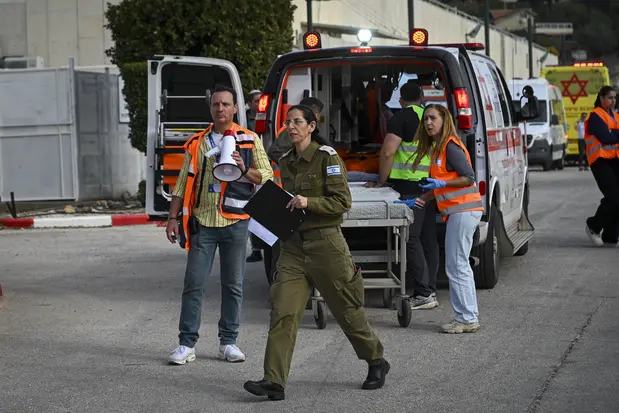
A recent earthquake in southern Israel, near Eilat, once again raised concerns about the country's preparation for a major earthquake.
Israel is located along the Dead Sea Transform fault system, which runs roughly 1,000 kilometers (620 miles) from the Red Sea, north to southern Turkey, near Kahramanmaraş.
The fault system has seen several major destructive earthquakes in both the recent and ancient past.
A pair of earthquakes at the northern end of this fault system led to tens of thousands of deaths in Turkey and Syria in early 2023. Those earthquakes were the strongest to strike Turkey since 1939.
At that time, and following several much milder earthquakes in Israel since, researchers have warned that Israel could face a major earthquake in the near future.
Israel’s last major earthquake happened in July 1927, when a 7.5 Richter scale earthquake struck the Holy Land, causing extensive damage and killing hundreds.
Seismologists have already noted a rough pattern in which the Levant appears to experience a significant earthquake around every 100 years. Medium earthquakes appear to occur roughly every 80 years, while minor earthquakes, which still cause some level of damage, occur around every 45 years.
Ramon Airport got evacuated after an earthquake alert was issued for Eilat, according to Israel Hayom. https://t.co/OiasWEb6Jj
— Open Source Intel (@Osint613) November 11, 2026
However, researchers emphasize that earthquakes do not occur in a regular, predictable cycle.
The biblical prophet Amos mentions a significant earthquake, which happened in the days of Uzziah, king of Judah. That earthquake was so significant, that Amos dates his prophecy by the earthquake, writing, “The words of Amos, who was among the sheep breeders in Tekoa, who had visions about Israel in the days of Uzziah, king of Judah, and in the days of Jeroboam the son of Joash, king of Israel, two years before the earthquake.” (Amos 1:1)
The earthquake in the time of Amos was so strong, that it has left evidence in the archaeological record.
Despite the risk testified to in Israel’s ancient and modern history, the state remains unprepared for a major earthquake, researchers say.
On This Day — July 14, 1927: When a natural disaster struck, the Jewish Yishuv rushed to help Arab neighbors — not just their own. A devastating earthquake had hit three days earlier on July 11, killing hundreds & injuring nearly 1,000. By July 14, authorities reported more than 400 bodies recovered, with the total death toll climbing toward 670 and around 3,000 injured. Nablus lay largely in ruins. Ramleh, Lod, and villages across the region were devastated. The Mosque of Omar on the Temple Mount and the Church of the Holy Sepulchre were badly damaged. Synagogues in Jerusalem and Tiberias had collapsed. Thousands slept in the open, fearing aftershocks. Yet in the midst of the suffering, something remarkable happened. The Jewish community didn’t turn inward. Tel Aviv “adopted” the hardest-hit Arab city of Nablus and sent truckloads of bread, medical teams, and supplies. American Jewish philanthropist Nathan Straus immediately cabled $20,000 to Hadassah for relief “regardless of race or creed.” Hadassah doctors and nurses treated the injured across the country. Zionist organizations launched appeals for funds to repair homes and help all victims — Jews and Arabs alike. The response was so striking that one Arab journalist publicly declared he would refrain from criticizing Jews — at least for that day. Surviving Arabs in Nablus gathered to express gratitude to the Jewish relief workers who brought aid when it was needed most. This was part of a broader pattern in the early years of Jewish return to the land: Jewish development, institutions, and initiative improved life for everyone in a region long neglected. When tragedy struck, the Yishuv saw neighbors in need — not enemies to ignore. Some responses to disaster reveal who people truly are. We remember July 14, 1927, not just for the destruction — but for the humanity shown in its aftermath.
— Captain Allen (@CptAllenHistory) July 14, 2026
A report published by the State Comptroller’s Office in 2023, following the devastating earthquakes in Turkey and Syria, bemoaned the “longstanding failure in state preparedness for earthquakes.”
Israel has an operational early warning system, called T’ruah, which can provide up to several seconds of warning in certain conditions. However, recent State Comptroller reports (such as those in 2018, 2023 and 2024) warn that preparedness for a major earthquake remains inadequate.
Those reports found that significant public infrastructure has not been prepared.
As of 2022, around 60% of Israeli hospitals were either not earthquake resistant, or their status was not known. Only around 90 public schools have had the necessary structural reinforcement, with around 1,600 still needing structural upgrades.
Last summer, State Comptroller Matanyahu Englman warned that around 80,000 residential buildings, with over 810,000 apartments, are not compliant with earthquake resistance standards.
Part of the problem lies in the fact that while researchers are often called to prepare reports for the government, or testify to the Knesset about the risk to public infrastructure by earthquakes, Israel has no regulatory body tasked with implementing a nation-wide earthquake preparedness program.
A position paper, submitted by the Forum for Urban Renewal to the Knesset last year, compared the situation to the lack of preparedness for the Oct. 7, 2023, Hamas infiltration of southern Israel, in which local security teams were unprepared to face large teams of Hamas terrorists.
The paper identified fragmented authority and lack of coordination among government agencies to address the issue, along with inadequate mapping and data of noncompliant buildings by local authorities.
The Forum also found that despite budgeting around NIS 3.5 billion (approximately $1.1 billion) for structural upgrades to schools and hospitals several years ago, little work has been completed.
The Forum called for the establishment of a National Earthquake Authority, reporting to the Prime Minister’s Office, and working together with the Home Front Command. It also recommended changes to building code enforcement, including the demolition and reconstruction of older, high-risk buildings.
According to the Forum, a repeat of the 1927 7.5 magnitude earthquake could result in over 16,000 deaths, several thousand wounded, hundreds of thousands of displaced residents and over NIS 150 billion (around $50 billion) in damages to public and private infrastructure.
Popular article:

interview Easter message of resurrection hope amid war at Jerusalem's Garden Tomb

biblical commentary Let my people go: a Passover message for today

4 IDF soldiers killed, 2 wounded in fighting in southern Lebanon, as Israel eliminates dozens of Hezbollah terrorists

Receive latest news & updates
A message from All Israel News
Help us educate Christians on a daily basis about what is happening in Israel & the Middle East and why it matters.
For as little as $10, you can support ALL ISRAEL NEWS, a non-profit media organization that is supported by readers like you.
Latest articles:

Iran has around 2,500 ballistic missiles, restocking for future conflict - report
Israel faces pressure to ease entry of winter supplies into Gaza

15 years of photos capture 'flesh and blood' of Jerusalem beyond its stones

Israeli study points to potential new treatment for type 1.5 diabetes

Jerusalem Botanical Gardens expands with new $3.8 million art gallery, sculpture trail