Netanyahu to hand-pick 8 candidates, solidifies control over Likud election slate



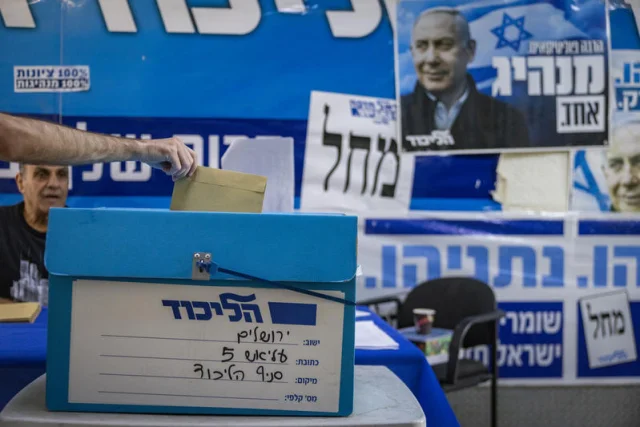
Israeli Prime Minister Benjamin Netanyahu secured significantly greater control over Likud's candidate list for the next Knesset election after the party's Central Committee voted Monday to approve a plan allowing him to hand-pick eight candidates for reserved spots near the top of the slate.
The decision marks the culmination of a months-long internal battle in which Netanyahu pushed to expand his influence over the party's list, despite resistance from fellow Likud lawmakers, party officials, rank-and-file members, and even the party's own internal courts.
Under the new system, Netanyahu will be able to personally select eight candidates for positions within the top 29 places on Likud's slate. Current polls project the party to win around 20 to 22 seats, although that number could change significantly before Israelis vote on Oct. 27.
The vote follows months of maneuvering by Netanyahu, including efforts to cancel the party's Aug. 17 primary and proposals to establish a special committee to select candidates.
Some of those efforts were blocked. On Sunday, Likud's internal court ruled that Netanyahu could not cancel the primary because of a potential "wartime situation."
Despite those setbacks, Netanyahu ultimately succeeded in securing most of the changes he sought.
MK David Bitan has emerged as the leading internal opponent of Netanyahu's plan, arguing that allowing the incumbent prime minister to hand-pick candidates would establish a precedent that future party leaders could exploit.
Bitan has also accused Likud Constitution Committee chairman and minister Haim Katz of supporting the changes for personal political gain, arguing that Katz is "building a faction within a faction."
He has further argued that several of the reserved slots are likely to go to politicians who are not longtime Likud members, including figures such as Foreign Minister Gideon Sa'ar, whose New Hope party merged with Likud last year.
According to Bitan, Netanyahu wants to strengthen his political camp by bringing additional non-Likud politicians into the party through the reserved positions.
Media reports have lent some support to that argument, with New Hope MKs Ze'ev Elkin and Michel Buskila among those mentioned as possible beneficiaries.
Assaf Shapira, a researcher at the Israel Democracy Institute, has also suggested Netanyahu could use the reserved slots to strengthen alliances with coalition partners such as Itamar Ben-Gvir's Otzma Yehudit and Bezalel Smotrich's Religious Zionist Party.
"Likud held one place for Ofir Sofer from Religious Zionism and ran as a joint list between Likud and Sofer's one-man faction, which was formed only for this purpose," Shapira said of the 2021 election.
"Immediately after the election, his 'party' split from Likud and Sofer joined Religious Zionism. It was part of a broader political deal intended to convince Smotrich to run on a joint list with Ben Gvir," he continued.
While Bitan led the internal opposition, Netanyahu's proposal received strong backing from several senior Likud figures.
Communications Minister Shlomo Karhi urged party members in a video to "stand behind the prime minister until victory," while Defense Minister Israel Katz, Transportation Minister Miri Regev, Knesset Speaker Amir Ohana, and coalition whip Ofir Katz issued similar appeals to supporters.
You might also like to read this: