Nearly 40% of young Jewish Americans report scaling back Jewish engagement – survey



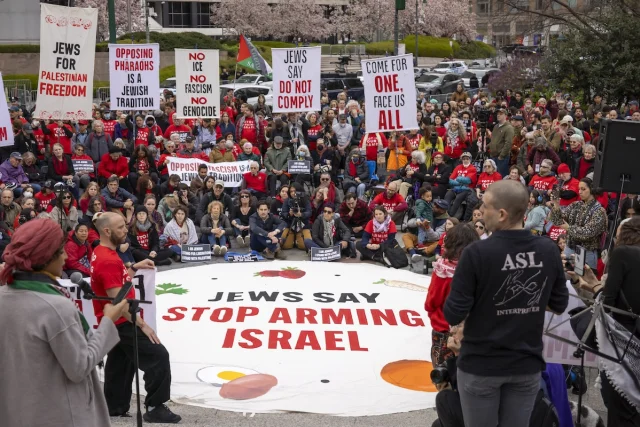
Nearly 40% of young American Jews report scaling back their participation in “events affecting Jewish people,” according to a new survey conducted by Sense Worldwide and commissioned by the Jim Joseph Foundation. The study found that some young U.S. Jews are increasingly distancing themselves from Jewish events because of concerns about how Israel, Zionism and the war in the Middle East are discussed.
Among respondents who had reduced or stopped attending Jewish events, 42% said they did so because “views don’t align with how Israel/Palestine is discussed, and I don’t feel there’s room for nuance.” Furthermore, 40% responded they are less engaged because they did not want to experience “biased, one-sided messaging.” In addition, almost half (48%) of the respondents explained that they scaled back because “conversations often feel hostile, toxic, or unproductive.”
The study found that 30% of young Jewish Americans are more interested in cultural than religious Jewish experiences. Israel and Zionism also emerged as contentious issues within this demographic. More than one in four respondents (26%) said they wanted “spaces where non-Zionist and anti-Zionist views can be expressed without being labelled antisemitic.”
These views differ from mainstream Jewish perspectives and the International Holocaust Remembrance Alliance (IHRA) working definition of antisemitism, which includes some forms of anti-Zionism and opposition to Israel’s existence.
While the study raises concerns about the engagement of some young Jews, it also found that three-quarters of young American Jews regularly participate in Jewish activities. However, many are connecting with their peers outside synagogues and traditional Jewish institutions. Fewer than one in three (30%) said they regularly participate in institutional activities or programs.
Four percent of respondents said they were disillusioned with Israel and Zionism and how they were presented in Jewish schools and communities.
“A negative legacy I have been reflecting on is what I now understand to be a biased education/perspective on Israel,” one respondent said.
The study also found a gap in how young Jewish Americans experience Jewish connection. More than half (55%) identified family as an important source of Jewish connection, while 44% cited Jewish friends.
By comparison, 19% identified Jewish community organizations, 16% political causes and 13% Israel and issues related to Israel as important sources of Jewish connection.
Stacie Cherner, director of research and learning at the Jim Joseph Foundation, said the study provides a fuller picture of how young Jewish Americans engage with their Jewish identity.
“The research gives us a much fuller and accurate understanding of where, how, and why Jewish young adults seek out and experience Jewish life,” Cherner said. “Now, importantly, we can begin to translate these insights to action.”
The study also identified challenges among those who reported being disengaged from Jewish life. Among them, 52% said they “don’t feel a strong connection to Jewish life,” while 36% said it “doesn’t feel relevant to my life right now.”
Meanwhile, antisemitism in the U.S. has increased since the Hamas-led Oct. 7, 2023, attack, including on college campuses. The rise in antisemitism has reportedly led some American Jews to conceal their Jewish identity in public.
You might also like to read this: