Morocco deploys Israeli Barak air defense system amid rising tensions with Algeria



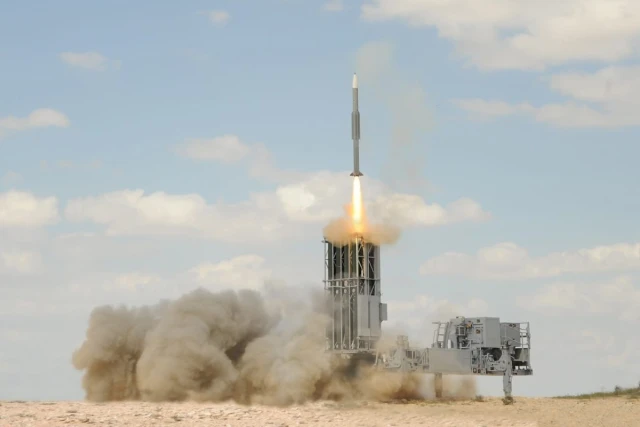
The Moroccan military has deployed the Israeli-developed Barak MX medium-range aerial defense system amid continued tensions with the neighboring country, Algeria, according to a Military Africa report. The aerial defense system has reportedly been deployed to the newly built Moroccan air defense base close to Sidi Yahya El Gharb, which is located about 37 miles from the capital city of Rabat.
This development follows Morocco’s 2022 signing of a $US500 million agreement with Israel Aerospace Industries (IAI), one of Israel’s largest defense technology companies. Morocco faces growing security challenges from non-state actors employing unmanned aerial vehicles (UAVs), as well as from regional rival, Algeria.
Algeria and various militant groups oppose Morocco’s control of the disputed Western Sahara region, which the United States and Israel have recognized as belonging to Morocco. The Israeli-made Barak aerial defense system has already been deployed by the Israeli Navy and by several countries worldwide, including India, Slovenia, Thailand, Cyprus, and Azerbaijan.
Before choosing the Israeli-developed aerial defense system, Morocco had explored alternative systems from other countries including the American Patriot system, the Chinese North Industries Group Corporation Limited (NORINCO)’s Sky Dragon 50 medium-range surface-to-air missiles and the French short-range VL Milka missile defense system.
What makes the Barak system stand out is its multi-layered, multi-mission design, which enables it to automatically select the optimal engagement method based on operational needs. The system can reportedly fire three types of missiles from the same vertical launcher: short-to-medium-range interceptors with a range of up to 35 kilometers (about 22 miles); a second missile with a range of up to 70 kilometers (44 miles); and the Barak ER missile, capable of intercepting aerial targets at distances of up to 150 kilometers (roughly 93 miles).
The IAI has assessed that this unconventional design feature doesn’t only optimize battlefield efficiency but also reduces operational costs.
Morocco and Israel have enjoyed close covert ties for decades. In 2020, the two countries officially established diplomatic relations as part of the American-brokered Abraham Accords during the first Trump presidency.
Morocco and Israel quickly developed close security and intelligence ties. In November 2021 the two countries signed a historic defense agreement that greenlighted intelligence sharing and joint military exercises. Israel’s then-Defense Minister Benny Gantz stressed at the time the importance of the defense agreement with Morocco.
“We have just signed a defense cooperation MOU with Morocco. It is a very significant development, which will enable us to work on joint projects and promote industrial cooperation,” Gantz explained. He added that “relations between Israel and Morocco should be expanded and enhanced.”
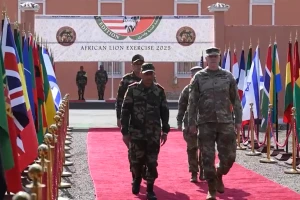
In 2023, Israeli troops participated for the first time in the “African Lion” multinational military exercises held in Morocco alongside troops from Morocco, the United States and other nations.
Morocco has reportedly also signaled interest in acquiring Israel’s Iron Dome aerial defense system to further boost its aerial defenses.
In February 2025, Morocco further strengthened its military ties with the Jewish state by acquiring 36 Atmos 2000 self-propelled artillery systems from the Israeli military technology company Elbit Systems for $US200 million. The French news outlet La Tribune revealed at the time that Morocco’s decision to choose the Israeli military system came after growing tensions with its former French main arms supplier KNDS due to technical failures.
“Morocco quickly complained to the French group about recurring problems with the artillery systems that were supplied,” the paper reported.
You might also like to read this: