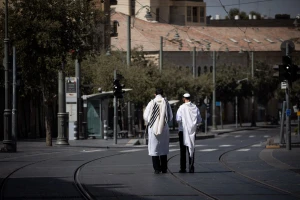
Majority of Jewish Israelis continue to observe High Holy Days in traditional ways




Most Jewish Israelis plan to observe Yom Kippur in traditional ways this year, with 61% saying they intend to fast and 96% planning to stay off the roads, according to a new survey by the Tzohar Index for Judaism and Tradition in cooperation with the Mashav channel.
The findings suggest that even among secular Israelis, Yom Kippur remains a significant day of rest and reflection, with many planning to avoid driving, fast, spend time with family, read the Bible or otherwise mark the day despite not necessarily attending synagogue.
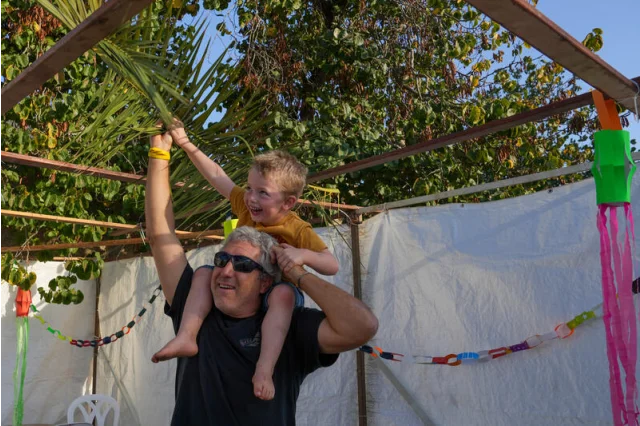
Ahead of Yom Kippur and Sukkot (Feast of Tabernacles), the survey found that 46% of Jewish Israelis plan to attend a synagogue service on Yom Kippur, while 51% said they intend to donate to charity in honor of the occasion.
The survey also revealed significant differences between Sephardic and Ashkenazi respondents. While 68% of Sephardic Jews said they plan to observe a full fast on Yom Kippur, approximately 48% of Ashkenazi respondents said they plan to do so.
Some of the more notable findings came from Israel’s secular community. Among secular car owners, 92% said they would not drive on Yom Kippur, leaving roads and streets largely available for children to ride bicycles, scooters and inline skates — a uniquely Israeli tradition.
Among secular Israelis, 34% said they plan to fast from food, while 14% said they plan to attend a synagogue service, potentially making Yom Kippur the only time they attend synagogue during the year.
At the same time, 51% of all respondents said they do not feel comfortable in a synagogue, while 5% said they would be more likely to attend a public prayer event in a park or community center rather than a traditional synagogue.
Even among secular respondents, many said they plan to quietly observe Yom Kippur at home by resting, reading the Bible or contemplating their relationship with God.
Others said they would use the day to play board games, relax with family and friends, and largely avoid work and even household chores.
The findings indicate that for many secular Israelis, Yom Kippur is not treated like an ordinary day but rather as an opportunity to pause, rest, reflect and reconnect with family, community and God.
Alon K., a secular Israeli man who lives in Jerusalem’s Talpiot neighborhood, told ALL ISRAEL NEWS that he and his wife will fast from food but not liquids on Yom Kippur. They also plan to sleep as late as possible to make the fast easier.
“Of course, we will not drive or play music or anything like that,” he said.
Alon said part of that decision is about respecting his religious neighbors.
“We have religious people living in this building and we want to be respectful of them. This is a mixed building in a mixed neighborhood and we all get along with each other and no one wants that to change.”
Although Alon describes himself as agnostic, he said Yom Kippur also gives him an opportunity to return to the Bible he received when he joined the Israeli Air Force.
“I am agnostic but I still have the Bible they gave me when I got drafted into the Air Force and every year on Yom Kippur, and occasionally on Shabbat, I read some of the stories out of it.”
“My wife likes to hear me read out loud so that’s probably what we’ll do,” he continued.
For Alon, the quiet time with his family is meaningful regardless of his uncertainty about God.
“It’s good to have this quiet family time and if God is actually up there I’m sure He likes it too, and that’s all to the good. If He’s happy, I’m happy.”
The survey was conducted in late August 2026 among 1,330 Jewish Israeli adults aged 18 and over who use the internet. It has a margin of error of 2.7 percentage points at a 95% confidence level.
The survey may not be fully representative of Israel’s Jewish population because many Ultra-Orthodox (Haredi) Jews do not use the internet and therefore may not be represented in the poll.
You might also like to read this: