Israeli researchers unveil new method to reduce industrial emissions



Israeli scientists at the Hebrew University in Jerusalem and the Open University have developed a new method that reduces industrial emissions by rapidly accelerating carbon capture from a process that would normally take thousands of years to one that takes merely hours. Carbonate weathering is the name of nature’s process of dissolving carbon dioxide in rainwater. However, the natural process is considered far too slow in order to prevent modern climate changes.
Scientists Noga Morgan and Dr. Yonaton Goldsmith of the Hebrew University and Dr. Eyal Wargaft of the Open University developed an innovative method to address this challenge. They built a transparent reactor, filled with rocks and ran seawater and CO₂ through it.
“What if it were possible to take a very slow geological process and compress it into hours?” Noga Moran asked. “That is exactly what we set out to do,” she continued.
“The goal was to understand what’s really happening when carbonate rocks encounter high levels of carbon dioxide,” Moran explained. “Once we figured out the conditions that allowed the process to work efficiently, we could see how something natural and slow becomes a controlled process that can be measured and tuned."
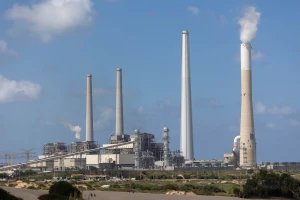
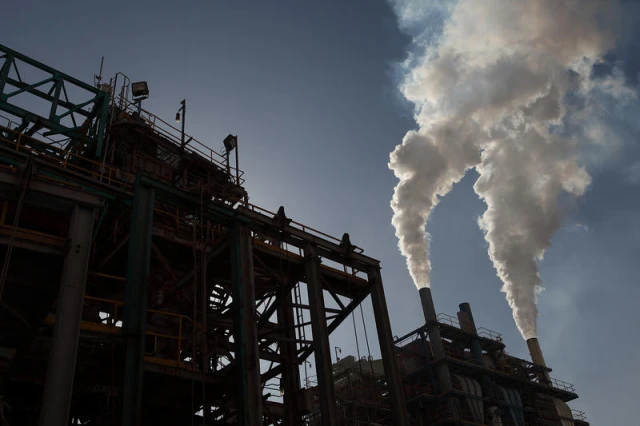
The findings of their innovative method, which was published in the journal Environmental Science & Technology, could potentially play a leading role in dramatically reducing global industrial emissions. Power plants worldwide are currently among the largest sources of carbon dioxide emissions.
If implemented on a global scale, the method could pave the path towards the installation of reactors where seawater and CO₂ is passed through limestone to convert some of the emissions into dissolved carbon. The result would be lower levels of CO₂ emissions reaching the atmosphere.
The innovative method is particularly relevant for steel, chemical and cement plants that produce large amounts of CO₂.
The method also offers a cost-effective solution as it relies on large quantities of largely inexpensive materials such as seawater and common rocks. The scientists therefore believe that the emission-reducing method could eventually be implemented across many industries and countries around the world.
Looking ahead, Moran articulates optimism about reducing global emissions in the future.
“This approach promises that it takes something Earth has done for millions of years and makes it work at human timescales,” Moran assessed. “It’s an exciting step toward practical, nature-based carbon capture."
Like other advanced economies, Israel is seeking to dramatically reduce its emissions in the future. In 2024, the Israeli Ministry of Energy set the ambitious goal of achieving net zero emissions by 2050. While attainable, the ambitious goal requires implementation of real changes across industries.
Israel’s former Environmental Protection Minister, Tamar Zandberg, assessed that "in order to achieve the strategic goal of a zero-emissions and competitive economy, we must accelerate the transition from using polluting fuels to generating electricity from renewable, clean and economic energy."
You might also like to read this: