Israeli elections 2026 kick off as first polling stations open in diplomatic missions across the world
Tens of thousands of Israelis expected to return home to vote



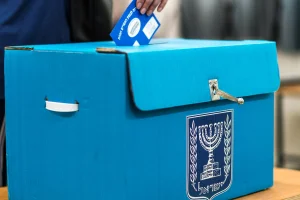
The voting period in Israel’s 2026 election began overnight, as Israeli diplomats in far-flung embassies and consulates cast their ballots at special polling stations, the first being the Israeli embassy in Wellington, New Zealand, late on Tuesday, Israeli time.
Israel’s election system generally does not allow for any absentee, mail or early voting, meaning almost all voters must physically arrive at one of tens of thousands of polling stations that are currently being set up in cities, towns, and neighborhoods across the country.
This is the reason that tens of thousands of Israelis living abroad have begun flying back home to be present for the October 27 election, some of them as part of a controversial initiative meant to encourage this phenomenon which has raised concerns among right-wing parties.
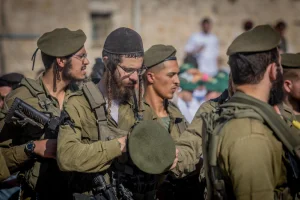
However, there are some exceptions, including Israel’s diplomatic staff. Another significant exception is the massive number of military personnel, which don’t vote at their usual hometown polling stations but at special stations in army bases or at mobile stations that drive to their outposts.
The first ballot has already been cast: Voting took place overnight at Israel’s new embassy in Fiji. https://t.co/r4mi4F1VdU
— Amit Segal (@AmitSegal) October 15, 2026
The exceptional security needs this year have given rise to the highly unusual situation where Israel will establish polling stations outside its own borders, in the security zones that IDF soldiers are maintaining in Lebanese, Syrian and Gazan territory.
According to the Times of Israel, the IDF has some 40 outposts in the Gaza Strip, dozens of army positions in Lebanon, and nine permanent outposts in Syria.
The diplomatic staff is the first group to start voting, as they require enough time to securely send the ballots back to Israel. Overall, some 4,800 eligible Israelis will cast their votes at 101 polling stations at 99 diplomatic missions.
After New Zealand, voting began in the newly opened embassy in the Pacific island nation of Fiji, while the Israeli consulates in San Francisco and Los Angeles will close out the voting period at 8 p.m. local time, or 6 a.m. Friday morning in Israel.
Today, I cast my vote at the Israeli Embassy in Brussels. Israel’s general election will take place on October 27, but diplomats serving overseas vote today. Democracy and free elections are cornerstones of the State of Israel. These principles are rooted in our Declaration of Independence, which affirms freedom, equal political rights, and elected national institutions. Our political views may differ, but as diplomats we all serve one country: Israel.
— David Saranga (@DavidSaranga) October 15, 2026
Yaki Lopez, Consul General to Southern China, wrote on X: “Happy Early Democracy Day Israel! On October 27th the people of Israel will be heading to the polls to elect a new Knesset (Israel's Parliament). For us diplomats in over 100 embassies and consulates around the world, elections come early, so as to allow for our ballots to arrive in Israel in time to be counted with the rest of the Israeli electorate - because every vote counts!”
The Israeli military will go to the polls next, with its voting period starting on the morning of October 20 but continuing until the regular voting day on October 27, to allow all soldiers, including those who might be on prolonged combat operations on land, in air or on the sea, an opportunity to vote.
Unlike the civilian Election Day where most Israeli receive the day off, the IDF will continue all its routine and operational activities.
The soldiers’ votes, known as the “double envelopes,” are usually counted a bit later than the general population, and in the past have significantly swung the election picture, shocking the country in the morning after most Israelis went to bed in the evening with initial TV projections.
The Israeli military is preparing for the October 27 national elections, with at least 850 polling stations set to be deployed next week at military bases and outposts across the country and beyond Israel's borders. Soldiers will begin voting early on the evening of October 20 due to "operational considerations." The polling stations will remain open through October 27, when the rest of the country votes. The IDF says it will operate at least 850 military polling stations, 25% of which will be fully mobile to allow soldiers -- both conscripts and reservists -- stationed in remote locations and inside enemy territory to vote. The IDF has some 40 outposts in the Gaza Strip, numerous army positions in Lebanon, and nine outposts in Syria. Soldiers may also vote at civilian polling stations on October 27. Double envelopes will be used to ensure that each soldier votes only once. The mobile polling stations will move between several units according to a predetermined schedule. Their staff will be accompanied by an armed officer responsible for security, and the ballot boxes will remain locked while in transit. Around 3,000 soldiers, mainly young conscripts, will serve as polling station staff, according to the military. The personnel will be trained by the Central Elections Committee, while the IDF's election process will be overseen by Col. Vered Ben Yehuda, who also heads the IDF Civilian Employees Employment Center. The military says it will conduct the elections while preserving its nonpartisan character and keeping political discourse out of the process. It says its role is to facilitate voting and ensure the integrity of the elections, without engaging in political content or voters' positions. (Photo from 2022 election)
— Emanuel (Mannie) Fabian (@manniefabian) October 12, 2026
In past years, the soldiers’ votes have leaned more right-wing and hawkish than the general population, though it remains to be seen whether this will stay constant after three years of war.
The IDF will operate around 850 military polling stations, of which 25 percent will be mobile. They will move between various units, bases and outposts on a planned schedule while being accompanied by an armed officer tasked with keeping ballot boxes secure.
Polling stations will be staffed by some 3,000 soldiers, mostly young conscripts, who will be specially trained by the Central Elections Committee. During the last election, the military saw a voter turnout of just over 73%.
The thousands of Israelis who want to fly back home for the election will have to cast their votes on Election Day itself.
The issue caused considerable uproar in recent weeks, when Prime Minister Benjamin Netanyahu’s Likud party filed a petition with the Central Elections Committee against Aid Coalition, a U.S.-based organization helping expatriates to travel to Israel for the vote.
The Likud alleged electoral bribery, though the parties reached a settlement that required the group to stop selling its flight packages while allowing previously sold packages to stay valid.
Its Fly & Vote program is meant to facilitate—but not finance—the travel and registration process for voters from abroad.
Expatriates are generally seen as leaning left, and several government politicians have criticized the initiative to bring back voters who, in their mind, “turned their back” on the country, only to now have them influence the fate of a country in which they don’t even live.
You might also like to read this: