Israel continues Gaza strikes on Oct 7 terrorists despite opposition from US envoy Kushner
Huckabee repudiates reports of ‘confrontation’ between Netanyahu and Kushner





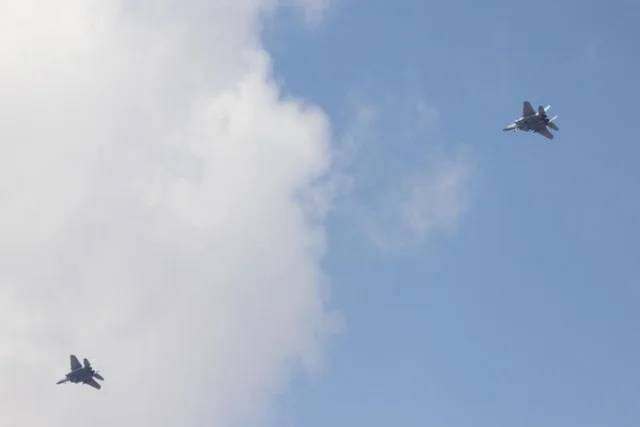
The Israeli military will continue its special mission to find and eliminate every Gazan terrorist involved in the Oct. 7, 2023 Hamas invasion of southern Israel, the Israeli government confirmed after the issue was a point of contention between Prime Minister Benjamin Netanyahu and the U.S. special envoy Jared Kushner during their meeting in Israel on Monday.
According to The Times of Israel (TOI), the main point of contention during the meeting was Netanyahu’s insistence that Israel continue striking Hamas operatives who took part in the Oct. 7 attack. Israel acknowledged earlier this month that it had established a special operation to hunt down those involved in the attack.
The meeting came after Netanyahu publicly rejected the 15-point proposal put forward by the Board of Peace (BoP), saying that “the IDF will not carry out any withdrawal until Hamas is disarmed.”
Israel had previously halted airstrikes as part of efforts to persuade Hamas to agree to disarmament.
During Monday’s meeting, Kushner reportedly told Netanyahu that the United States would not oppose Israeli strikes against terrorists who pose a genuine “imminent threat.” However, Netanyahu nevertheless insisted that the strikes against Hamas operatives involved in the Oct. 7 attack would continue, with no agreement having been reached on the issue, according to TOI.
The systematic mission to locate and eliminate terrorists from the Oct. 7 attacks was confirmed by the IDF and the Shin Bet earlier this month.
Officers from both organizations have worked to create a list of all terrorists involved in the attacks over the past three years. That list has involved the gathering of extensive photo and video evidence posted by the terrorists on Oct. 7, and the use of facial recognition software to find and kill those still alive and operating in the Gaza Strip.
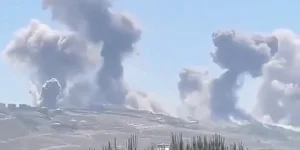
Just hours after the meeting between Kushner and Netanyahu, the IDF continued to launch a series of strikes against known terrorists involved in the Oct. 7 attack.
The military said it killed Tareq Anwar Khamis Ra’i, a Palestinian Islamic Jihad company commander who infiltrated Kibbutz Be’eri during the October 7 attacks. The IDF also said that Ra’i had “recently advanced terror attacks against IDF troops and Israeli civilians.”
🔴ELIMINATED: Tareq Anwar Khamis Ra’i, an Islamic Jihad company commander, who infiltrated Kibbutz Be’eri during the October 7 Massacre and took part in the abduction of an Israeli civilian.
— Israel Defense Forces (@IDF) August 18, 2026
He recently advanced terror attacks against IDF troops and Israeli civilians. pic.twitter.com/E0NsGseWBk
Following the strike, the military conducted several other strikes in the Gaza Strip, including one targeting a meeting of Nukhba Force commanders, which included a platoon commander, three squad commanders, and several additional terrorists, the IDF said.
According to the IDF statement, one of the terrorists in that meeting “infiltrated the territory of Israel in the October 7 massacre.”
Recognizing the issue of civilian casualties from the airstrikes, which are a major concern for both the Board of Peace and the United States, the IDF said that before the strikes, “steps were taken to minimize harm to non-combatants.”
The military said it had also conducted another strike targeting “commanders from the Hamas terror organization in the Shati area who planned to carry out terror attacks against IDF soldiers.”
The military reported that Israeli forces remain deployed in accordance with the ceasefire agreement. This may be an attempt to counter reports circulating on Israeli social media claiming that the military had withdrawn from the Yellow Line under U.S. pressure.
Those reports also claimed that Hamas activity near the Yellow Line was increasing.
“IDF forces under Southern Command are deployed in the area in accordance with the agreement and will continue to operate to remove any immediate threat,” the IDF statement said.
In a previous meeting with Kushner, Hamas leaders reportedly asked him to pressure Israel to uphold its commitments under the Gaza peace plan, including ending military strikes and withdrawing IDF forces from the Gaza Strip.
Reports following the meeting between Kushner and Netanyahu indicated that the United States had agreed with Israel that an IDF withdrawal from Gaza would not take place until Hamas has been fully disarmed.
U.S. Ambassador to Israel Mike Huckabee reiterated this position in an interview with Channel 12 News, saying, “Israel is not expected to move their boundaries as long as Hamas has still got arms and RPGs and grenades. That’s the whole point of the disarmament.”
However, there is concern that the Israeli mission to hunt down every terrorist involved in the Oct. 7 attacks could prevent the implementation of U.S. President Donald Trump’s 20-point plan for ending the Gaza War.
That plan, which Netanyahu agreed to last September, called for amnesty for any Hamas member willing to “commit to peaceful co-existence and to decommission their weapons.”
In his interview with Channel 12, Huckabee emphasized that “Israel signed on to the 20-point peace plan by the president, they’ve never backed away from that.”
Huckabee also affirmed that the U.S. continues to respect Israel’s “right to defend itself.”
The ambassador also rejected reports in the Israeli media describing a “confrontation” between Kushner and Netanyahu, saying that “there was an agreement…that we all want to see this move forward.” He also reiterated that President Trump is adamant that Hamas must disarm and “have no future in the governing of Gaza.”
While the current IDF mission appears to target terrorists still engaged in hostile activities against the State of Israel, there is concern that Hamas leaders could use the continued strikes to justify delaying the disarmament process.
Israel has also been careful to emphasize that the terrorists eliminated as part of the mission “posed an immediate threat” to IDF troops in the Gaza Strip, thereby justifying the strikes under the terms of the ceasefire agreement.
If Hamas begins handing over its weapons, the U.S. would likely pressure Israel to halt the mission, even if several participants of the Oct. 7 attacks remain alive at the time.
Please take a moment to join believers worldwide praying for Israel right now. Add your light to the live prayer map—and show the world one more watchman praying for the peace of Jerusalem.

You might also like to read this: