Israel confiscates thousands of antiquities in Jordan Valley anti-smuggling raid




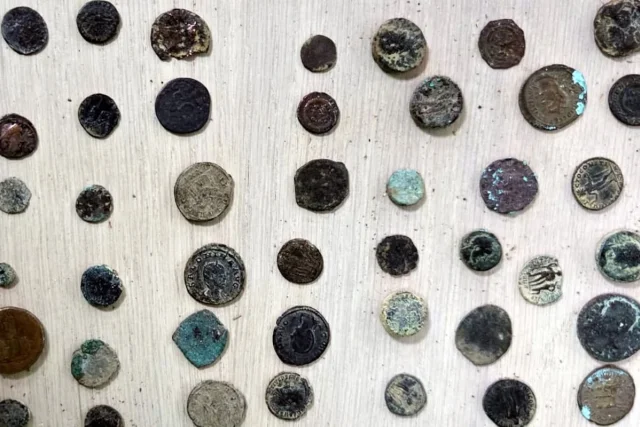
The Civil Administration’s Archaeology Unit announced on Monday that it had confiscated thousands of antiquities from suspected smugglers during a recent raid in the Jordan Valley, including more than 400 ancient coins along with pottery fragments, arrowheads, a dagger, and several seals and rings dating to the Persian, Hellenistic, Hasmonean and Byzantine periods.
The raid was part of an ongoing effort by Israeli authorities to combat the illegal excavation and trafficking of antiquities in Judea and Samaria, where organized smuggling networks target archaeological sites and sell artifacts on the international black market.
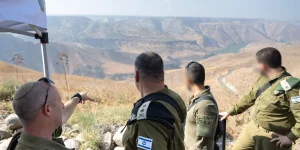
The Archaeology Unit carried out the operation in coordination with the Judea and Samaria Border Police, soldiers from the IDF's Jordan Valley Regional Brigade, and inspectors from the Nature and Parks Authority. Authorities also confiscated excavation equipment and metal detectors allegedly used to locate and remove the artifacts.
The main target of the raid was the home of a man suspected of leading a group responsible for numerous illegal excavations in Israeli-controlled Area C of the West Bank. The suspect had previously been arrested while in possession of metal detectors, excavation equipment and stolen artifacts.
The operation is the latest in a series of recent enforcement actions against antiquities traffickers. In recent months, authorities have arrested multiple suspects and seized large numbers of artifacts, including coins from the Second Temple period, the Great Jewish Revolt and the Bar Kochba Revolt.
Among the previously confiscated items were coins from the Second Temple Period, which included the First Advent of Jesus Christ, as well as coins from the Great Jewish Revolt in the late 60s to early 70s AD bearing ancient Hebrew inscriptions reading "Shekel of Israel" and "Jerusalem, the Holy."
Authorities also recovered bronze coins depicting the Four Species used during the holiday of Sukkot that were minted during the revolt's fourth year.
Other coins confiscated recently bore inscriptions from the Bar Kochba Revolt in 132–135 AD, with the name "Shimon (Bar Kochba)," on one side, and "Year two of the freedom of Israel" on the other.
Israel has strict laws governing the excavation, sale and transportation of antiquities in an effort to protect archaeological sites and discourage looting.
It is illegal to buy or sell antiquities without a permit, move them into or out of the country without authorization, or search for them using metal detectors without a permit.
Despite those restrictions, enforcement remains challenging because of strong demand among collectors and the lucrative international black market for ancient artifacts.
Archaeologists say an artifact's value often lies not only in the object itself but also in where it is found. The depth at which pottery fragments and other objects are buried helps researchers determine their age and understand the historical context of a site.
Removing artifacts without properly documenting their location can permanently erase valuable archaeological information. Even coins, which can often be dated by their inscriptions, are more useful to researchers when their original location is carefully recorded.
Archaeological work in Judea and Samaria is overseen by the Civil Administration’s Archaeology Unit, which operates under the Defense Ministry’s Coordinator of Government Activities in the Territories (COGAT).
You might also like to read this: