IDF warns Hamas is rebuilding by stealing aid, calls to limit truck deliveries ahead of Rafah crossing reopening
Hamas not afraid of new Gaza administration, IDF prepares for new ground operation to disarm terrorists




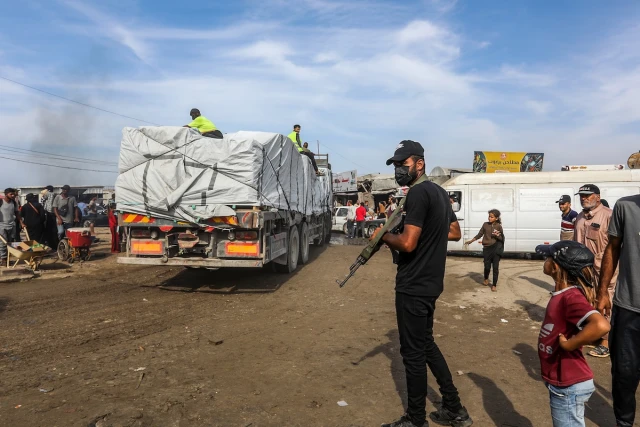
The Israel Defense Forces (IDF) on Wednesday sounded the alarm ahead of the planned reopening of the Rafah crossing, telling Israeli media outlets that it is calling to decrease the massive amount of aid trucks entering Gaza daily to clamp down on rampant smuggling.
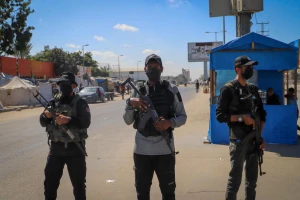
The amount of aid entering the enclave through border crossings as well as other smuggling routes has contributed to the significant economic strengthening of Hamas in recent months, the IDF warned. The military is also preparing for a new ground operation to eventually disarm the terror group, which has shown no intention of laying down its weapons.
IDF officials told the political leadership that it should insist that the Rafah crossing’s reopening, set for this Sunday, be limited only to pedestrians rather than the entry of goods, which would further exacerbate the smuggling problem.
“This would be a catastrophe,” Army Radio quoted an IDF official, who stressed that most of Hamas’ military equipment had entered through this crossing before the war.
Currently, the number of some 600 trucks entering Gaza every day is much higher than the UN’s minimal requirements of around 80,000 tons of food per month, which equals around 134 trucks per day. Half of the 112,000 aid trucks that arrived in Gaza since the start of the war entered the enclave since the ceasefire began last October.
This rapid jump in daily shipments was facilitated by the hostage deal and the ceasefire agreement, but also enabled Hamas to restore its economic base by raising taxes, selling smuggled luxury goods, and stolen surplus aid.
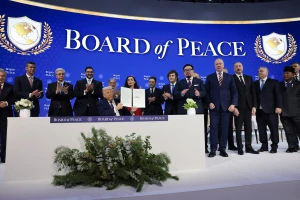
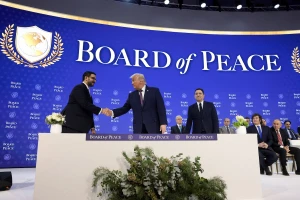
With its weapons arsenal intact and its economic situation steadily improving, Hamas is not afraid of the new National Committee for the Administration of Gaza (NCAG), which intends to take over the administration of the enclave, warned security officials.
Instead, they estimate Hamas will likely follow through with its claims and transfer control of Gaza to the NCAG, while keeping de facto security control – a scenario that has become known in Israel as the “Hezbollah model”.
In addition, most of the available and suitable government employees necessary for the NCAG’s new bureaucracy have been working for Hamas in recent decades, enabling Hamas to influence, if not outright control, the new apparatus.
The UN recycling false narratives for political and financial reasons once again. Even the latest IPC report, which was based on partial data has shown an improvment in the situation in the Gaza Strip.
— COGAT (@cogatonline) January 25, 2026
So how exactly do you explain claims of “80% of people facing hunger” when… https://t.co/ccFjiAiDCL
Hamas spokesman Hazem Qassem told Reuters it is prepared to hand over governance to the 15-member NCAG, while expressing optimism that current employees of the group’s civil government would find employment.
“We have full confidence that it will operate on the basis of benefiting from qualified personnel and not wasting the rights of anyone who worked during the previous period,” Qassem said.
The IDF seeks to replace at least the senior layer of officials, including posts like mayors, hospital directors, etc., but fears that even this will encounter difficulties.
Most of these considerations will continue to hinge on the disarmament of Hamas.
Stocked markets, winter supplies and blankets distributed.
— COGAT (@cogatonline) January 21, 2026
📹Watch: Gaza over the past week: pic.twitter.com/d2m5T6Bjnz
IDF sources told the Jerusalem Post that it is likely Hamas will eventually derail the disarmament process, forcing the IDF to launch a new ground operation, unless Israel is blocked by the Trump administration.
In recent months, the IDF has rejected ideas which have been reported by U.S. media, including a first step of collecting and storing Hamas’ “heavy” weapons, such as rockets and rocket-propelled grenades, at large warehouses in Gaza, guarded by neutral forces.
The IDF argued that this would essentially mean moving weapons from one place to another while Hamas keeps access over them as it continues to control the Gaza Strip.
In addition, the terrorists would have to relinquish their rifles and lighter weapons as well in order to completely lose their ability to fight the IDF or any other force in the enclave.
Doron Kadosh, Army Radio’s military correspondent, summed up the military’s briefings by saying that “the IDF (apparently with the support of the political leadership) is beginning to shape a narrative aimed at building legitimacy – both domestically and internationally – for the possibility of a return to fighting in Gaza, in order to achieve Hamas’s defeat and its disarmament.”
You might also like to read this: