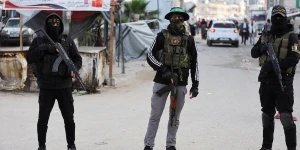
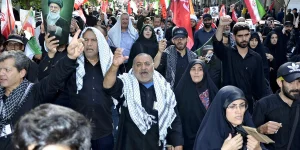
Hamas looking to incorporate its police and civil officials into new Gaza administration
As second phase moves forward, Israel may allow construction of residential camp in Rafah




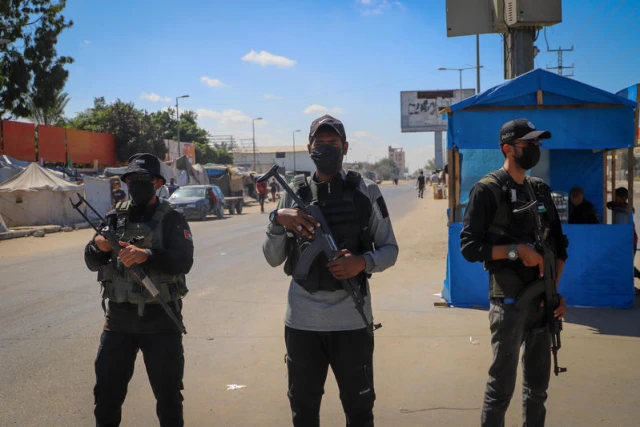
The Hamas terrorist organization is currently seeking a deal to allow its police officers and civil servants to be incorporated into the new administration of Gaza under the Gaza Executive Board, Reuters reported on Monday.
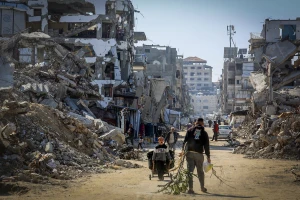
Hamas currently controls just under half of the Gaza Strip, based on the October 2025 ceasefire deal negotiated by the United States. The terror group’s police patrol areas under Hamas control, while territory beyond the Yellow Line, held by the IDF, is largely destroyed and abandoned.
According to the 20-point Gaza Peace Plan, now entering its second phase, Hamas should be disarmed and the administration of the area under its authority transferred to the technocratic National Committee for the Administration of Gaza (NCAG), which will govern the enclave under the Gaza Executive Board.
After Hamas is disarmed and the NCAG assumes administrative control, the IDF is set to begin withdrawing from the territory it holds.
However, Hamas has continued to refuse to lay down its weapons, and the formation of the International Stabilization Force (ISF) – originally intended to both disarm the group and provide security for the enclave – also appears to be stalled.
Reuters reported that Hamas leaders sent a letter to a large number of civil servants and police officials informing them of an effort to incorporate them into the NCAG administration.
The move is expected to face strong opposition from the Israeli government, which considers Hamas’ police force to be part of the group’s military structure and has targeted some of its members during the war. Israel has also said that any new administration in Gaza should not include members of Hamas.
Hamas spokesman Hazem Qassem told Reuters that it is prepared to hand over governance to the 15-member NCAG, while expressing optimism that current employees of the group’s civil government would find employment.
"We have full confidence that it will operate on the basis of benefiting from qualified personnel and not wasting the rights of anyone who worked during the previous period," Qassem said.
There has been recent speculation that a deal to disarm Hamas and grant amnesty to commanders willing to go into exile could help advance the next phase, allowing reconstruction efforts in the Strip to begin. Such a plan was reported in the Saudi news site Asharq al-Awsat, which also cited denials from several Hamas sources regarding any willingness by commanders to leave the enclave.
At the same time, U.S. President Donald Trump recently reiterated his stance that Hamas must be disarmed for the peace plan to move forward. In an interview with Axios earlier this week, Trump said, “Now we have to disarm Hamas like they promised.”
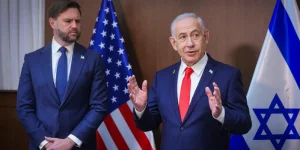
That position was echoed by Israeli Prime Minister Benjamin Netanyahu, who said that disarmament and the demilitarization of Gaza must precede reconstruction efforts.
“The next phase [in Gaza] is not reconstruction,” Netanyahu told the Knesset. “The next phase is disarming Hamas and the demilitarization of the Gaza Strip.”
On Tuesday, Hamas political bureau member Hussam Badran once again rejected the idea of disarmament, saying that “the right to resistance is internationally guaranteed and that its weapons are for self-defense against the Occupation.”
Badran said that the group's weapons are an internal Palestinian matter and not subject to external dictates.
Meanwhile, Israel may be planning to allow construction of a large temporary housing camp in Rafah for Palestinians from Gaza who have undergone security vetting, Reuters reported on Tuesday. The report cited retired IDF Brigadier-General Amir Avivi as saying the camp would be built in Rafah, in an area cleared of all Hamas infrastructure, including tunnels.
Avivi told Reuters that Israeli security would track entry and exit into the camp, and that the entrance may have facial recognition and other surveillance capabilities to prevent known terrorists from entering. The construction of the camp could coincide with the opening of the Rafah crossing.
You might also like to read this: