Former Israeli Air Force commander urges decision on military or diplomatic approach to Iran’s nuclear program



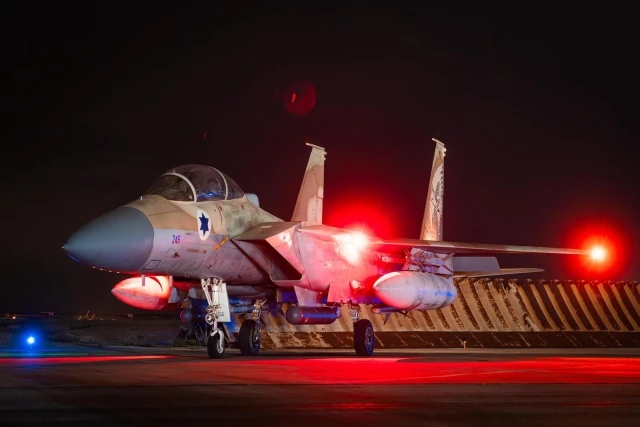
Former Israel Air Force commander Maj.-Gen. (res.) Eitan Ben Eliyahu warned on Thursday that the Israeli military Operation Rising Lion in June merely delayed but did not eliminate the Islamic Republic of Iran’s nuclear program.
“Maybe the weakness in our strike is that we did not eliminate the nuclear program, but we did delay it for many years,” Eliyahu assessed in an interview with the Israeli news outlet 103FM. While he believes that the immediate Iranian nuclear threat has been averted, the former air force chief warned that the Iranian regime is quickly evaluating and adapting following the Israeli and U.S. strikes on Tehran’s main nuclear facilities.
Looking ahead, he argued that Israel and the international community need to address the Iranian nuclear threat with either total war or a diplomatic path.
“Either you decide on total war with Iran, including a ground invasion and a long period of home-front strain and multi-front escalation, or you choose economic pressure alongside attempts to return to negotiations,” Eliyahu said.
He assessed that Iran has learned important lessons from the military confrontation with Israel in June including dispersing its vital assets, repositioning its launch arrays and optimizing the accuracy of its ballistic missiles. Iran fired some 550 missiles at Israel during the 12-day-war. Israel’s multilayered aerial defense system successfully intercepted the large majority of the incoming Iranian missiles.
However, some Iranian missiles succeeded in penetrating Israel's airspace, killing at least 24 Israeli civilians and causing significant material damage in several Israeli cities.
Defense Minister Israel Katz warned already in July that Iran’s degraded ballistic missile program remains a threat to Israel’s national security.
While Tehran’s nuclear program has attracted most attention, IDF Chief of Staff Lt.-Gen. Eyal Zamir warned in June that Iran’s rapidly expanding ballistic missile program had become a severe threat to Israel’s security.
“Iran possessed around 2,500 surface-to-surface missiles, with a high production rate, such that within approximately two years, they were expected to possess around 8,000 missiles,” Zamir stated at the time. Israeli military officials have assessed that Iran retained some 1,000 missiles at the end of the war and currently is seeking to expand its arsenal with Chinese assistance.
Eliyahu also assessed the existing threat from Hezbollah, Iran’s main terrorist proxy that has threatened Israel for decades from Lebanon.
“As long as Hezbollah does not disarm and evacuate the southern part of Lebanon, we are justified in acting as part of the agreement,” he explained.
“If we operate more broadly, we will collapse the agreement with our own hands,” he added.
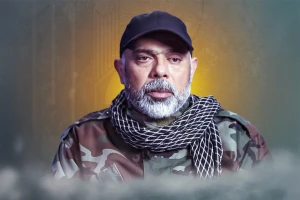
The former air force chief argued that Israel’s elimination of Hezbollah’s military chief Haytham Ali Tabatabai in November sent a signal to Lebanon to disarm the Iranian-backed terrorist militia or Israel would step in and do it. A senior U.S. official recently revealed that Iran had, during the past year, transferred around $1 billion in funds to Hezbollah despite international sanctions on Tehran.
Yet the former Israeli Air Force chief stressed that Iran – not Hezbollah – remains Israel’s primary strategic threat.
“The central issue is Iran,” Eliyahu concluded.
You might also like to read this: