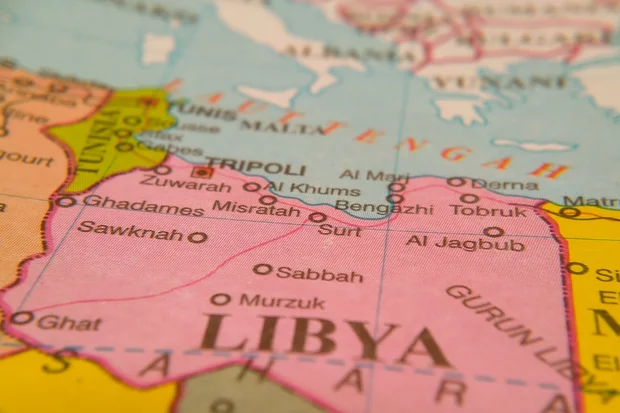









Syrian regime forces take control of Kurdish Aleppo neighborhoods after clashes with Kurdish-led SDF troops
Failure to integrate Kurdish forces and areas is a troubling sign for Israel
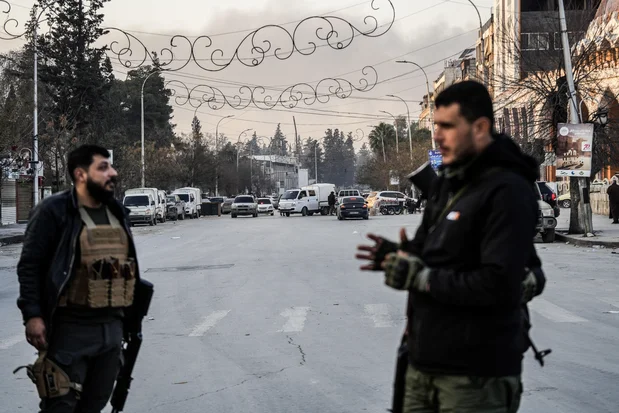
Syrian regime forces began taking control of two majority-Kurdish neighborhoods in the city of Aleppo on Sunday, following several days of clashes with Kurdish militias in the city.
The Syrian government said that it had started transferring fighters of the Kurdish-led Syrian Democratic Forces (SDF) out of the neighborhoods of Sheikh Maqsoud and Ashrafiyeh via buses, and transporting them to SDF-controlled areas in northeast Syria, as part of a ceasefire agreement that took effect on Saturday.
The French AFP reported that at least five buses with Kurdish fighters who had surrendered were departing the area, accompanied by regime security forces.
The two neighborhoods of Sheikh Maqsoud and Ashrafiyeh saw heavy clashes between regime forces and Kurdish troops after the latest efforts to integrate the Kurdish-run autonomous zone in northeastern Syria, and the SDF into the Syrian government fell through.
Forces from the SDF have largely controlled the two neighborhoods in Aleppo for the past ten years, due to their large Kurdish population. Kurdish leaders have been highly skeptical of the government of Ahmed al-Sharaa, whose forces have regularly engaged in attempted ethnic cleansing of minorities in the country over the past year.
After fighting erupted in Aleppo on Jan. 6, over 150,000 people fled the area, with some only now starting to return after the Syrian regime declared it was assuming control. The regime’s Information Ministry said it launched a “limited military operation” in Aleppo in response to SDF attacks on government-controlled sections of the city.
The SDF had accused the regime of attacking civilian areas of the city and imposing a “suffocating and complete siege” on the Kurdish areas of Aleppo. Photos and videos uploaded to social media have shown regime-affiliated fighters, many not native to Syria, engaged in attacks in the Kurdish areas.
Aleppo, and especially the Sheikh Maqsoud and Ashrafiyeh neighborhoods, are densely populated with a diverse population, including Kurds, Turkmen, Arabs, and Assyrians. That ethnic and religious diversity has led to concern within the city, as regime-affiliated militias have engaged in attacks on minorities in the past year.
Kurds in the neighborhoods allege that Turkish militias are often involved, and pictures of fighters wearing Turkish flags or patches related to the Turkish nationalist “Grey Wolves” movement were shared online. Many of these Turkish insurgent groups have a history of attacks on Kurdish forces and Kurdish areas of Syria.
🚨Documentation
— Judy Berxwedan (@Judy20255) January 11, 2026
Armed gangs that took civilians and Asayish (security) forces hostage were making the Grey Wolf sign with their hands raised; this clearly reveals the direct involvement of the Sultan Murad Shah Turkmen militia group, which is affiliated with the Turkish state… https://t.co/V0RO9vfPAp pic.twitter.com/jgiyMMWhT8
The Israeli government had complained about the military action in Aleppo, with Foreign Minister Gideon Sa’ar calling it “grave and dangerous.” Kurdish leaders called on Israel to do more than make statements.
The Kurdish Jewish community in Israel also released a statement expressing “full solidarity” with the Kurds, echoing the claim that military action was being carried out by “the Turkish state.”
The statement called on Prime Minister Benjamin Netanyahu and the Israeli government to intervene “using all necessary means” to stop the atrocities.
Statement from the Head of the Kurdish Jewish Community in Israel:
— Rojava Network (@RojavaNetwork) January 12, 2026
To our Kurdish brothers and sisters in Rojava, Aleppo, Rojhelat, and in the diaspora
On behalf of the Jewish community in Kurdistan, we express our full solidarity with our Kurdish brothers and sisters… pic.twitter.com/Ib1a1debfD
The Israeli government, despite conducting negotiations with the regime of al-Sharaa on a security agreement, does not trust the new Syrian government, citing the jihadi past of most of the members, including al-Sharaa himself.
Several of the militias that make up the Syrian security forces have engaged in threats to attack Israel following the extermination of the ethnic and religious minorities in Syria.
⚡️If you are Jewish, pay attention to this.
— Kurds on X (@kurdX_) January 11, 2026
This is a high-ranking figure in Syria’s new regime ( ISIS ), supported by Turkey, who is openly stating: once we bring the minorities under full control, our next step will be to wipe out the Israelis completely. pic.twitter.com/fBj8Y4KXG2
The intense violence of the past few days raises doubts about the ability of the regime to reach an agreement with the SDF regarding integration into the government, as well as the regime’s ability to restrain the various militias that comprise its security forces.
The fact that those same militias often make threatening statements regarding Israel means that the Israeli government will also be watching the developments in Syria carefully.
Popular article:
interview Easter message of resurrection hope amid war at Jerusalem's Garden Tomb
biblical commentary Let my people go: a Passover message for today
4 IDF soldiers killed, 2 wounded in fighting in southern Lebanon, as Israel eliminates dozens of Hezbollah terrorists

Receive latest news & updates
A message from All Israel News
Help us educate Christians on a daily basis about what is happening in Israel & the Middle East and why it matters.
For as little as $10, you can support ALL ISRAEL NEWS, a non-profit media organization that is supported by readers like you.
Latest articles:
North American Jewish organizations to recruit 100 professionals to combat antisemitism

‘No need’ for pre-election Iran strike, IDF chief says as gov’t, opposition trade blame for potential escalation – report
terror attack 2 Israeli soldiers killed, 2 terrorists eliminated in Hebron shooting; IDF says much larger attack was prevented
analysis A people dwelling securely? Israel’s strategic standing, 3 years after Oct 7
Hamas on wheels: What I found in Dearborn reveals a troubling history and a battle over Israel