Elections 2026 Israeli election primer: Who is who in the Eisenkot-led 'Change' bloc
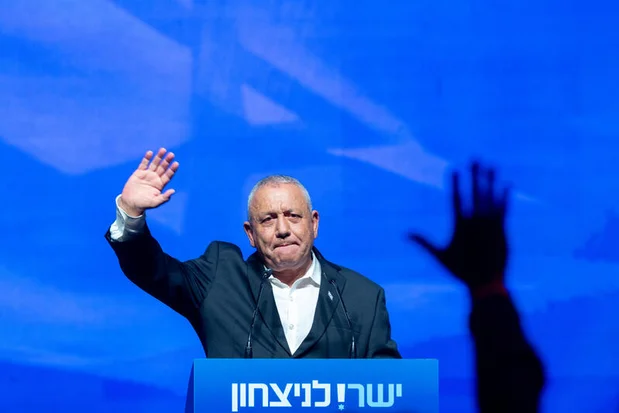
Like the parties backing Prime Minister Benjamin Netanyahu, another bloc of parties in the upcoming Israeli elections is also defined by its stance toward the prime minister. But while his allies seek to keep him in power, the unifying goal of these four parties is simple: replace Netanyahu.
Their leaders have vowed they will not join a coalition led by Netanyahu.
The self-declared “Change Bloc” consists of Gadi Eisenkot’s Yashar, Together (Beyachad) led by Naftali Bennett and Yair Lapid, Avigdor Liberman’s Yisrael Beitenu and the left-wing Democrats led by Yair Golan.
Three other parties – the Reservists/Economic Party, Ra’am and the Arab Joint List – could support the opposition bloc to varying degrees.
Nevertheless, the bloc has struggled to remain cohesive, as the leaders can't agree on who should be prime minister, though President Isaac Herzog will likely task Eisenkot, leader of the party polling highest, first with trying to form a government.
Neither the current government nor the opposition is projected to reach the necessary 61-seat majority. However, one or both of the Arab parties could boost Eisenkot’s bloc, helping it to establish a minority government.
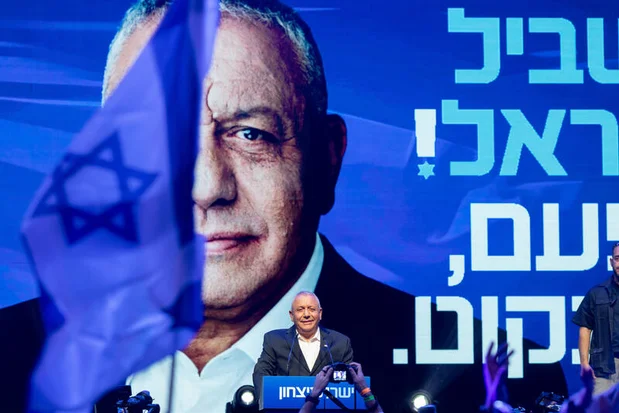
Yashar
Yashar means “straightforward” or “honest” in Hebrew, and this is a large part of what Eisenkot is trying to sell: a stark departure from what he characterizes as an incompetent current government and a return to the security-focused, moderate politics of Israel’s founding years.
The former general’s moving story – as the son of Moroccan Jewish parents, his meteoric rise to army chief and the death of his son and two nephews in the current war – has made up for his lack of charisma.
Eisenkot has assembled a formidable and diverse list of candidates including veteran politicians, senior security chiefs and other figures who rose to prominence during the current war. These include his No. 2, former Shin Bet chief Yoram Cohen; Zionist Home chairman Chili Tropper, who defected from The Reservists; former Blue and White lawmaker Matan Kahana; a Druze retired general; and Shira Shapira, the mother of murdered Oct.-7 hero Aner Shapira.
The party’s platform basically represents the opposition’s median positions on most important issues. Yashar wants universal military service, but has already hinted at potential compromises—rumors even suggesting direct contact with ultra-Orthodox parties about possible cooperation.
Eisenkot largely rules out joining a unity government with Netanyahu, blaming him for the failures of Oct. 7 and demanding a commission of inquiry into the failures of that day. Despite this, rumors persist that Eisenkot would be inclined to form a unity government with Netanyahu if that is the only option to prevent a repeat election.
Yashar has been polling highest, with 21 to 23 mandates. Like Likud in the final days of the campaign, it is trying to siphon votes from smaller parties to ensure a solid No. 1 finish.
Together
Ideologically, this is a somewhat surprising joint list. The party is led by Naftali Bennett, a religious former settlement leader, former chief of staff for Netanyahu, and leader of several national-religious right-wing parties, alongside Yair Lapid, the secular, charismatic long-time leader of the center party Yesh Atid.
The two have successfully run together in the past and even formed a government that ousted Netanyahu for one year. Bennett likely hoped the merger would propel him to lead the Change Bloc, enabling him to become prime minister a second time.
However, the party plummeted almost immediately after the merger and only recovered in recent weeks. Most recent polls put it as the third-largest party, behind Yashar and Likud, with 12 to 14 mandates.
Together is united by its desire to replace Netanyahu as well as its support for universal military service with harsh penalties for draft dodgers, and a state commission of inquiry for Oct. 7.
The party list includes Yesh Atid’s experienced roster of lawmakers and former ministers, as well as a few newcomers, including retired general and Oct. 7 hero Noam Tibon, and Bennett’s team of several former ministry director-generals and active reserve officers.
Yisrael Beitenu
Yisrael Beitenu, which has long been the main party for Israel’s Russian-speaking population, is led yet again by its founder and only leader, Avigdor Liberman.
During his political career, Liberman has served as defense and finance minister. While his policies haven’t changed, his detractors point to his flexibility on joining a coalition.
Yisrael Beitenu is hawkish when it comes to the Palestinians and terrorism, yet is stringently secular and believes in free-market economics. Last month, Liberman suggested that Jordan take some responsibility for administering Palestinians in Areas A and B of Judea and Samaria, making him one of the only major politicians campaigning on a major policy change in that area.
Like other parties, Yisrael Beitenu has filled out its list of veteran lawmakers with political newcomers who were impacted by the aftermath of Oct. 7, for example, the new No. 2, Rafi Ben Shitrit, a former Likud member and former mayor of Beit Shean, whose son was killed fighting Hamas at the Nahal Oz outpost.
Other notable new members include Sharon Sharabi, whose brother Yossi was murdered in Hamas captivity, while the third brother, Eli Sharabi, survived captivity. The party is also joined by Dan Illouz, who quit the Likud over the IDF Draft Law debate.
While he is a core member of the Change Bloc, the ambitious Liberman is widely suspected of offering himself as a compromise candidate for a cross-bloc government. Likud has accused him of plotting with People of Israel leader Ofer Winter.
Recent polls predict that Yisrael Beitenu may gain one to two more seats than it currently has.
Democrats
The Democrats party is the left edge of the “Zionist” political spectrum in Israel, a merger of the center-left Labor and the far-left Meretz. It is led by former Meretz chairman and Maj.-Gen. (ret.) Yair Golan.
Much of the Democrats’ campaign has emphasized its position as the only ideologically left-wing party in the “Change Bloc.”
Golan has wooed voters by ruling out cooperation with any party in the current government and promises to investigate and prosecute Netanyahu and his ministers for their roles in the Oct. 7 failures.
He has recently accused Netanyahu of trying to foment a new round of war in order to influence or postpone the Israeli elections.
The Democrats have pledged to halt the current government’s judicial reforms, strengthen the judiciary, enforce universal military conscription, reinforce Israel’s democratic character alongside its Jewish identity and crack down on settler violence.
The party’s candidate list was reinforced with several social activists and prominent leaders of the anti-Netanyahu and anti-Judicial Reform protest movements, including Yaya Fink and Moshe Radman.
Currently represented by four lawmakers, polls project the Democrats to jump to 8 to 10 mandates.
Reservists/Economic Party
The wildcard in the opposition is the Reservists/Economic Party, led by veteran politician and active reserve-duty officer Yoaz Hendel and free-market economist Yaron Zelekha. They are joined by Einat Wilf, a former lawmaker for the Labor Party whose views have shifted rightward and who has become a popular advocate for Israel over the past several years.
The party’s main issue is universal military service. To that end, it has officially ruled out joining a coalition with the ultra-Orthodox, effectively ruling out joining the Netanyahu bloc.
This party is seen as likely to join Eisenkot, though it has generally not been counted as part of the Change Bloc due to its calls for a unity government.
Netanyahu has tried to discourage right-wingers from voting for the party and has particularly targeted Zelekha, claiming he concealed his former support for the far-left Meretz party (now part of the Democrats) and highlighting his participation in anti-Netanyahu protests and his past opposition to several of his free-market reforms.
Like People of Israel, the Reservists/Economic Party’s performance will significantly influence the overall bloc. It has also hovered around the threshold in most recent polls, faring somewhat better than People of Israel by consistently gaining four mandates.
Arab parties – Joint List and Ra’am
Three of Israel’s four Arab parties are running together in the upcoming election: the communist Hadash, the nationalist Balad and the secular Ta’al comprise the Joint List.
Ra’am, the Islamist party, will run separately.
The Joint List successfully fought a disqualification attempt to remain in the race, though its No. 3, Sami Abu Shehadeh, was disqualified for expressing support for an armed struggle against Israel.
While the Arab parties traditionally do not join a governing coalition, they are potentially kingmakers who could help either side form a majority. Ra’am, which joined the government in 2021, would do so again, while Joint List leader Yousef Jabareen implied that his party might provide a “safety net” for a Change Bloc government, given several conditions.
Ra’am occupies a unique position among the Arab parties as an explicitly religious and socially conservative party. Its main base is the Bedouin tribes in the Galilee and the Negev. Under its leader Mansour Abbas, the party broke the decades-old Arab party consensus, joined the government and used its standing to benefit its constituents.
In another first, Ra’am recruited a Jewish lawmaker, Yoav Segalovitz, formerly of Yesh Atid, in the hopes that the former senior police commander can tackle organized crime in the Arab community.
However, the party’s roots in the Muslim Brotherhood-influenced Islamic Movement continue to raise questions about some of its members’ support for armed struggle against Israel.
The Joint List merger and effort to disqualify the party appear to have mobilized Arab voters, whose turnout varies significantly from one election to the next. Recent polls show the Joint List winning around 8 to 9 seats, and Ra’am 5 to 7 seats.
With a combined 14 to 16 seats, Arab parties could significantly influence coalition negotiations, enabling them to extract notable achievements for Arab communities in exchange for supporting a Change Bloc government.
Popular article:

interview Easter message of resurrection hope amid war at Jerusalem's Garden Tomb

biblical commentary Let my people go: a Passover message for today

4 IDF soldiers killed, 2 wounded in fighting in southern Lebanon, as Israel eliminates dozens of Hezbollah terrorists

Receive latest news & updates
A message from All Israel News
Help us educate Christians on a daily basis about what is happening in Israel & the Middle East and why it matters.
For as little as $10, you can support ALL ISRAEL NEWS, a non-profit media organization that is supported by readers like you.
Latest articles:
Elections 2026 Want to know what's at stake in Israeli elections? Join us LIVE
Elections 2026 Israel Police prepared to ‘safeguard Israeli democracy’ commissioner says ahead of election day
Elections 2026 24 hours before Israeli polls open: Eisenkot strives to become largest party, Netanyahu launches last-minute blitz

Elections 2026 Netanyahu secures second Trump endorsement one day before contentious elections

Elections 2026 Israeli security forces on high alert ahead of Tuesday’s elections