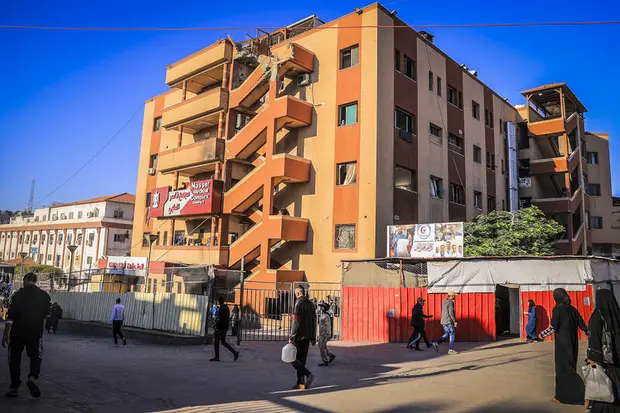
Egypt’s army chief makes surprise visit to Gaza border amid tensions with Israel over Philadelphi Corridor
Egypt-Israel relations deteriorating over Cairo's refusal of IDF presence on border

The chief of staff of the Egyptian army, Lt.-Gen. Ahmed Fathy Khalifa made a surprise visit to Egypt’s border with the Gaza Strip on Thursday, Egyptian media reported.
The visit comes amid rising tensions with Israel, as Prime Minister Benjamin Netanyahu remains firm on maintaining an IDF presence in the Philadelphi Corridor, which runs along the Gaza side of the border with Egypt.
The Egyptian government rejects this, and the issue has been the main sticking point in negotiations over a hostage release and truce deal with Hamas, in which Egypt has so far played a role as a mediating party.
The Egyptian army chief's visit is widely seen as the culmination of several highly critical comments made by Egyptian officials against Israel following public comments by Netanyahu and Strategic Affairs Minister Ron Dermer, who both highlighted Egypt's failure to stop Hamas’ weapons smuggling.
In a recent interview, Dermer even mentioned Egyptian President Abdel Fatah el-Sisi by name, while emphasizing he wasn’t “questioning the intentions of the Egyptians” but rather “the results.”
Army Radio’s military correspondent Doron Kadosh noted that the Egyptians released many images from the visit, including footage of the large number of tanks and armored vehicles on the Egyptian side of Rafah.
The Lebanese newspaper Al-Akhbar, citing an Egyptian source, reported that the visit was intended as a message to Israel but had been coordinated in advance.
The source further explained that the visit was intended to maintain security and reduce tensions at a time when “there are Israeli weapons that threaten Egyptian security.”
Regarding the ongoing negotiations, the source said the latest changes to the outline would see Israel reduce its presence to several surveillance points along the Philadelphi.
Egypt sees this “very positively,” provided the U.S. can force Israel to agree, according to the report.
Following Netanyahu’s press conference on Monday, Egypt's Foreign Ministry said the Israeli prime minister “tried to use our name to distract Israeli public opinion and block the ceasefire agreement.”
“Egypt holds the Israel government responsible for the consequences of such statements, which further aggravate the situation and aim to justify aggressive and inciting policies that lead to further escalation in the region,” the ministry stated.
On Tuesday evening, a senior Egyptian official blasted the prime minister, saying: “Netanyahu blatantly lied about the Philadelphi route.”
Before Netanyahu’s rare press briefing, he had informed the Egyptian government of his intention to discuss a permanent solution to the Philadelphi conundrum during a second stage of a potential hostage deal.
However, Cairo clarified that nothing less than a full withdrawal would be acceptable to Egypt, according to the Qatar-based Al-Araby Al-Jadeed news site.
Popular article:

interview Easter message of resurrection hope amid war at Jerusalem's Garden Tomb

biblical commentary Let my people go: a Passover message for today

4 IDF soldiers killed, 2 wounded in fighting in southern Lebanon, as Israel eliminates dozens of Hezbollah terrorists

Receive latest news & updates
A message from All Israel News
Help us educate Christians on a daily basis about what is happening in Israel & the Middle East and why it matters.
For as little as $10, you can support ALL ISRAEL NEWS, a non-profit media organization that is supported by readers like you.
Latest articles:

Mossad abducted 2 Iranian generals, killed one in decades-long search for missing Israeli navigator Ron Arad – report
Israel Police investigates whether Netanyahu’s office orchestrated Ra'am vote-buying probe to delegitimize election

UN delegation tours Hamas tunnel, visits kibbutz devastated on Oct. 7

Israeli food-tech company partners with UK farming giant to reduce strawberry waste

northern front IDF conducts rare strike on Hezbollah weapons shipment in Lebanon's Bekaa Valley as terrorists ramp up rebuilding efforts