Despite projected deadlock, opposition bloc prepares measures to take control of Israeli gov’t after elections
Cooperation with Arab, Haredi parties could produce Eisenkot-led minority or caretaker gov’t


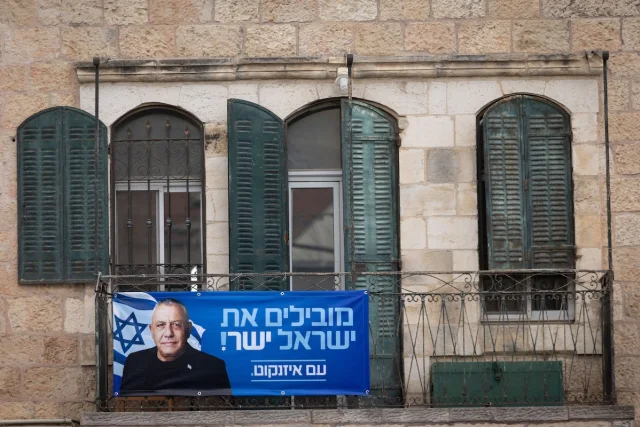
With most polls continuing to project both of Israel’s major party blocs to miss out on a majority and reach around 52-54 out of 120 Knesset seats in the upcoming elections, the opposition bloc led by Yashar party leader Gadi Eisenkot is preparing alternative options.
If the elections fail to produce a bloc with a clear majority, the current coalition will continue as a caretaker government until a new coalition is formed, or a new election is declared.
However, there are ways for the current opposition to gain control, either through taking over the caretaker Knesset, or the formation of a minority government—which would necessitate the support either of the Arab parties, or potentially the ultra-Orthodox parties, as a recent report suggests.
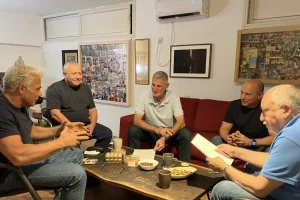
Less than one month before the elections, the leaders of the self-styled “Change Bloc” met over the weekend to coordinate their strategies for the home stretch of their campaigns.
These included Yair Lapid, representing Yesh Atid and his ally Naftali Bennet, head of their joint Together party; Gadi Eisenkot, of Yashar; Avigdor Lieberman, of Yisrael Beitenu; and Yair Golan, of The Democrats.
🔵Netanyahu Bloc: 52
— Israel Elects (@israel_elects) September 27, 2026
🔴Opposition Bloc: 52
🟢Arab Parties: 12
🟣Reservists-Economic: 4 https://t.co/5WndDTPuOm
On Monday, the four parties said they had established joint working teams that will work on particular topics, including one team that will work on formulating “basic principles of the next government and the action plan for the first 100 days.”
Notably, the statement didn’t mention whether the leaders had agreed on a joint candidate for the premiership after the elections, despite reports suggesting the issue was discussed.
According to reports, Liberman, who has expressed his desire for the post, advocated to focus on running together and leave the question of the leadership until after the election, while Eisenkot argued that the leader of the bloc’s largest party should be nominated.
The Likud party has accused Liberman of working with Ofer Winter, the leader of the new People of Israel party, in an effort to “betray” the right-wing bloc and set up a cross-bloc government under his leadership.
The last major poll published by Kan News on Sunday predicted 52 seats each for the two blocs. But four seats went to the Reservists/Economic party, whose leaders, Yoaz Hendel and Yaron Zelekha, were not invited to the opposition leaders’ meeting, though they are widely seen as leaning toward the Change Bloc.
In a development that is worrying for Prime Minsiter Benjamin Netanyahu’s coalition but could open a path to power for Eisenkot, Channel 12 News reported Monday that the ultra-Orthodox United Torah Judaism (UTJ) party could help create a minority government led by Eisenkot.
Senior officials in the Agudat Yisrael, one of the two factions comprising UTJ, said their faction leader Yitzhak Goldknopf will not oppose a minority government, adding that they expect the whole of UTJ to eventually support such a move.
While a minority government has never been established following elections, Israel has seen several such governments after parties ditched coalitions mid-term.
Preference for Prime Minister - Opp. Bloc Supporters, by Party
— Israel Elects (@israel_elects) September 28, 2026
Yashar
🟥Eisenkot: 88%
🟥Bennett: 9%
Together
🟥Bennett: 78%
🟥Lapid: 10%
🟥Eisenkot: 8%
Democrats
🟥Eisenkot: 60%
🟥Bennett: 16%
Yisrael Beteinu
🟥Lieberman: 75%
🟥Eisenkot: 8%
🟥Bennett: 6%
via Lazar/Maariv,…
Relations between Netanyahu and the ultra-Orthodox leaders have been strained for a long time. The report noted that the Gur Hasidic dynasty, one of the most influential Rabbinic courts in Agudat Yisrael and the Haredi community overall, wants a final break with Netanyahu, and also expects political compensation from Eisenkot.
While the demand for a universal military draft has been among the central themes for the opposition, Eisenkot has signaled that he could be ready for some compromises with the Haredi parties.
The Yashar leader has emphasized he only wants to work with Zionist parties, which would ostensibly rule out the Haredi as well as the Arab parties.
The Likud party has been hammering Eisenkot and his allies for weeks, accusing them of planning to bring down the right-wing government with the help of the Arab parties, Joint List and Ra’am.
But despite Eisenkot’s repeated pledge not to bring them into the government, Democrats chairman Yair Golan contradicted him right after the opposition leaders’ meeting on Sunday.
“We believe that an Arab party can be part of the government. It is natural, right, appropriate and democratic,” Golan told Kan News, adding that this would be a “genuine change after years of incitement.”
Last week, Ahmad Tibi, the leader of Ta’al which is running as part of the Arab Joint List, told Channel 12 that the Arab parties would work with Eisenkot’s bloc to take control of the Knesset after the elections, in an effort to prevent the current government from keeping control amid the lengthy negotiations and possible preparations for new elections.
The plan hinges on replacing the Knesset Speaker, currently Amir Ohana of Likud, which can be accomplished immediately upon the swearing-in of the new Knesset with a 61-vote majority, even before a new government is created.
This would allow the Change Bloc to set the legislative agenda, and, for example, try to pass a law establishing a state commission of inquiry into the events of October 7. Another option is for the Change Bloc to take control of the caretaker Knesset committees with the help of the Arab parties.
However, the current government does retain some legal and procedural means to block these moves, potentially setting up an ugly legal struggle after the elections, against the background of intense negotiations to set up a new governing coalition.
You might also like to read this: