Columbia University to open Tel Aviv Global Center despite campus opposition
Global Center will expand the university's research collaborations and academic partnerships



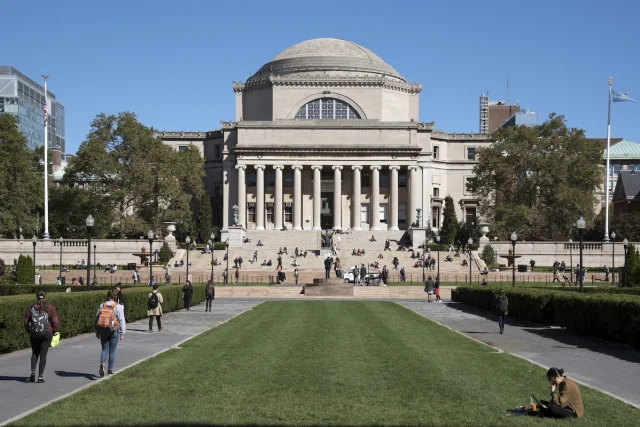
Columbia University in New York announced on Friday that it plans to open a new Global Center in Tel Aviv later this summer, expanding its international academic network despite previous opposition from anti-Israel student activists.
"Columbia Global is pleased to roll out programming for the Tel Aviv Global Center," the university said in a statement.
The Tel Aviv Global Center will serve as Columbia's 11th international hub. While it will not function as a branch campus, it is intended to expand the university's research collaborations and academic partnerships in Israel. According to Columbia, its initial focus areas will include technology and entrepreneurship, science, medicine, public health, and climate change.
The planned center was discussed earlier this week by Israeli journalist and Columbia School of International and Public Affairs adjunct professor Nadav Eyal during an appearance on the "Call Me Back" podcast hosted by Dan Senor, co-author of "Start-Up Nation."
"As far as I know, there isn't any other Ivy League [university] that has this global center," Eyal said, describing the initiative as "history in the making."
Eyal also noted that the announcement comes after Columbia became one of the focal points of pro-Palestinian and anti-Israel campus protests following Hamas' Oct. 7 attack on Israel, in which approximately 1,200 people were killed and 251 were taken hostage.
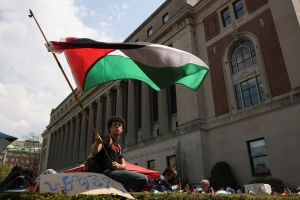
The decision to establish the Tel Aviv center comes despite calls from some student groups to end the university's academic ties with Israel. In 2024, the Columbia University Apartheid Divest coalition urged the university to cancel the project and successfully backed a Columbia College student vote opposing the planned center.
A December 2025 report by an antisemitism task force found that Columbia's Middle East faculty has fully adopted an anti-Zionist ideology and concluded, “Columbia lacks full-time tenure line faculty expertise in Middle East history, politics, political economy and policy that is not explicitly anti-Zionist.”
Many anti-Zionist activists deny that their views are antisemitic. However, the International Holocaust Remembrance Alliance working definition of antisemitism includes certain forms of delegitimization and demonization of Israel.
After Oct. 7, some pro-Hamas demonstrators at Columbia publicly praised the assault, while other campus activists called for "globalizing the Intifada," a slogan that many Jewish organizations and critics interpreted as advocating or inciting violence against Jews and supporters of Israel.
In 2025, Columbia disciplined dozens of students over campus protests and agreed to pay $220 million to resolve federal investigations related to allegations of antisemitism and civil rights violations. The agreement followed the Trump administration's threat to withhold $400 million in federal funding unless the university addressed concerns about campus antisemitism.
While the Tel Aviv Global Center will focus on scientific research and academic cooperation, it remains unclear whether it will affect Israel Studies at Columbia University. Supporters of the field have argued that Israel-focused academic programs have faced increasing challenges on U.S. campuses amid a broader rise in anti-Zionist activism.
A 2025 report by the Jewish People Policy Institute warned that Israel Studies programs in the United States were "at the brink of extinction."
"The academic endeavor of Israel Studies is at a crossroads and seems unsustainable in the contemporary campus climate," the report concluded.
You might also like to read this: