









Building belonging through language: Israeli Jew teaches Hebrew, learns Arabic at Bedouin school
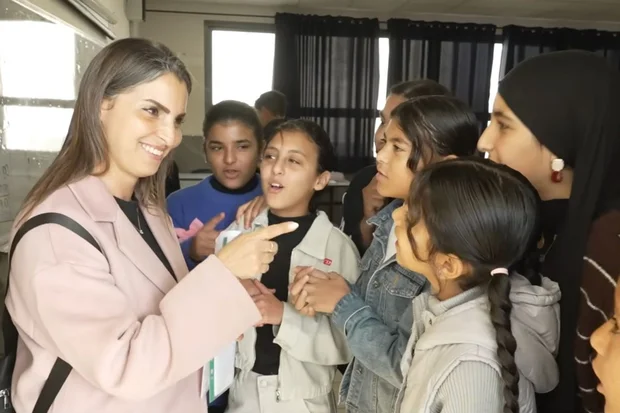
When Efrat Taher, an Israeli Jewish woman with a gift for teaching Hebrew, first told her friends she was going to teach in a Bedouin village, their reactions were skeptical. “What’s missing in your life? Come teach here in Be’er Sheva, in Ofakim, in Netivot” – all Jewish areas. “Why teach in a Bedouin village?” Yet Efrat chose an unconventional path, becoming the only Jewish teacher in the Bedouin village of Ar’ara. “I felt that here they needed me the most,” she told KAN News.
The name of the school seems indicative of the experience she would have: Al-Hayat, meaning “life.” It has proven to be a school of life not only for Efrat’s students but for herself. When asked what it feels like to be the only Jewish teacher in a staffroom of Bedouin teachers, she replies, “At first it was a bit strange. Now, it’s the most special.”
Before teaching schoolchildren, she taught at a prison in Be’er Sheva seven years ago, where she first encountered the Bedouin community. “When you say the word ‘Bedouin’ in Be’er Sheva,” where Taher is from, “people are afraid of Bedouins.”
When asked whether she herself was afraid, she begins to say, “I was never…” then pauses and corrects herself. “That’s not true. Yes, I was afraid. When I started working at the prison and connected with them, I stopped being afraid.”
Taher doesn’t deny that there were cultural differences, but learning how the community lives allowed her to gain the perspective she needed. Her students, who now know everything about her, have often been curious about whether she has grandchildren. “At first I was a bit offended by that question,” she admits, “but later I understood that here, asking a 39-year-old woman if she has grandchildren is a normal thing.”
Having learned Arabic through her students, Taher knows firsthand that “interaction is the best way to learn a language.” In her journey, language turned fear into trust, doubt into connection, and otherness into belonging. That same mission now drives her teaching.
Reflecting on the importance of language for her students’ futures, she says, “A Bedouin who doesn’t know Hebrew won’t succeed in integrating. Many students finish 12th grade and don’t speak Hebrew. Someone who doesn’t speak Hebrew can’t find a job. How many jobs are there here in the village?” By learning Hebrew, her students are creating opportunities for themselves, strengthening their place in Israeli society, and building a future without limits.
The village of Ar’ara is prone to power outages, weak internet, and fluctuating school attendance. Although the challenges her students face in continuing their education are greater than those of the average student in Israel, their excitement in mastering Hebrew is evident. “Who speaks with Jews?” Taher asks her students. “Me, me!” multiple students rush to answer. “When we go to Dimona,” one of them shares, “we speak Hebrew, not…” and she proceeds to mimic stuttering, as if unable to speak the language.
It is easy to see the love and admiration that both teacher and students have for one another. “If there were no Teacher Efrat at school,” another student says, “there would be no Hebrew language at all.”
Taher's story shows how investing in human connection through language can build trust across cultures and create belonging.
Popular article:
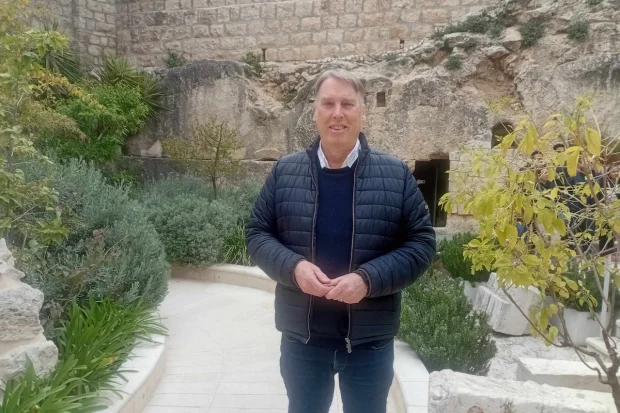
interview Easter message of resurrection hope amid war at Jerusalem's Garden Tomb

biblical commentary Let my people go: a Passover message for today

4 IDF soldiers killed, 2 wounded in fighting in southern Lebanon, as Israel eliminates dozens of Hezbollah terrorists
Receive latest news & updates
A message from All Israel News
Help us educate Christians on a daily basis about what is happening in Israel & the Middle East and why it matters.
For as little as $10, you can support ALL ISRAEL NEWS, a non-profit media organization that is supported by readers like you.
Latest articles:
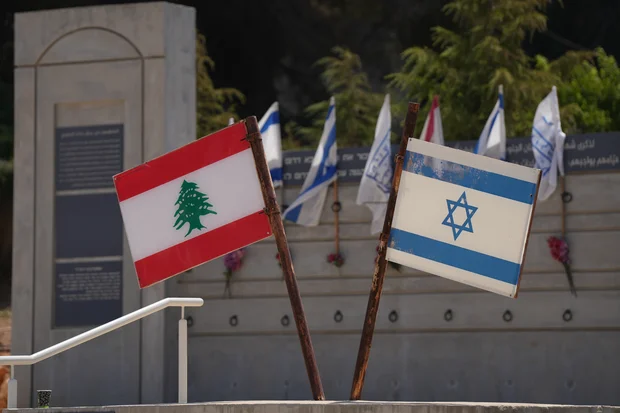
'Peaceful dialogue is not a crime:' Petition urges Lebanon to abolish its Israel Boycott Law

Israeli defense companies expand global reach with new deals in Cyprus, Germany and Canada

Netflix’s ‘The Diplomat’ appears to pay tribute to slain Israeli hostage Hersh Goldberg-Polin

IDF kills Hamas terrorists involved in abduction of German-Israeli Shani Louk on Oct 7

Hungary reaffirms ties with Israel during Herzog visit, condemns antisemitism