opinion The British-Israeli relationship – It’s complicated
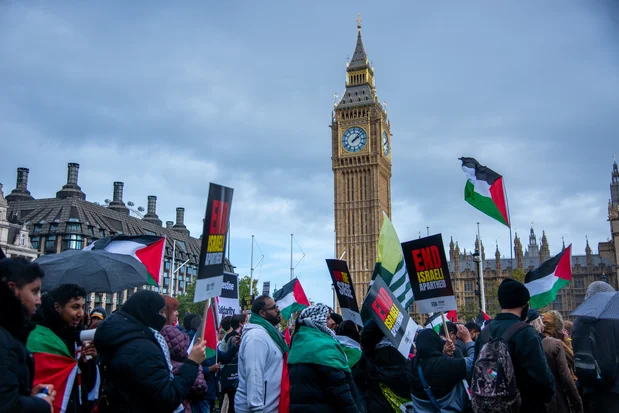
The British-Israeli relationship has always been complicated, rooted in imperial history, biblical theology, and shifting modern politics. Pastor Regan King of the Angel Church in London and a presenter for Revelation TV has his hand on the pulse of all these. The conversation began over coffee along Jaffa Street (down the street from King George!), ranged from the Balfour Declaration to contemporary British policy, while underscoring why Christians should stand with Israel on scriptural grounds.
King is the author of forthcoming book “The Jewish Questions,” has become a prominent voice against rising antisemitism in the United Kingdom. He recently initiated “A Christian Declaration Against Kairos 2,” a petition now garnering several thousand signatories among clergy, nonprofit leaders, and laypeople. “Kairos 2,” produced by a group of Palestinian Arab Christians from Orthodox, Lutheran, Anglican, and Catholic backgrounds, rewrites biblical covenants and presents Israel in harshly negative terms. King and colleagues, including Tim Gutman of Christians Against Antisemitism, viewed the document as dishonest and antisemitic. Rather than simply discuss it on air, King drafted a point-by-point response and launched the website www.declaration-against-kairos.com so that true Christian voices could be publicly counted.
This initiative sits within a broader theological argument. Drawing on Romans, King stresses that the gifts and calling of God are irrevocable with respect to ethnic Israel. Paul warns gentile believers against arrogance toward the Jewish people. Hatred, King notes, “is incompatible with the Holy Spirit;” even if one were to treat Israel as an enemy, “the New Testament command is to love one’s enemy.” More fundamentally, he argues, Christian faith is grafted onto the same root as God’s original covenant with the Jewish people. Every major covenant in the Hebrew Bible involves, expands, or fulfills God’s purposes for Israel. Severing that root impoverishes Christian understanding and disconnects Christian believers from the Jewishness of Jesus, the apostles, and the entire New Testament. King recounts encounters in which critics insist Jesus was simply “a Christian,” ignoring Second Temple Judaism and the destruction of the Temple in 70 CE. For him, such claims reveal a failure to treat Scripture as authoritative and sufficient.
The same scriptural framework illuminates the British-Israeli relationship. The Balfour Declaration, issued November 2, 1917, and the subsequent British Mandate of Palestine reflected both imperial interests and a recognition of historic Jewish connection to the Land. That connection, King maintains, is not primarily political but theological: God promised a people a place. Citing U.S. Ambassador Mike Huckabee’s outline, King describes Israel as a person, a people, a place, and a promise. Jacob becomes Israel; his sons become the tribes; covenants repeatedly affirm the Land.
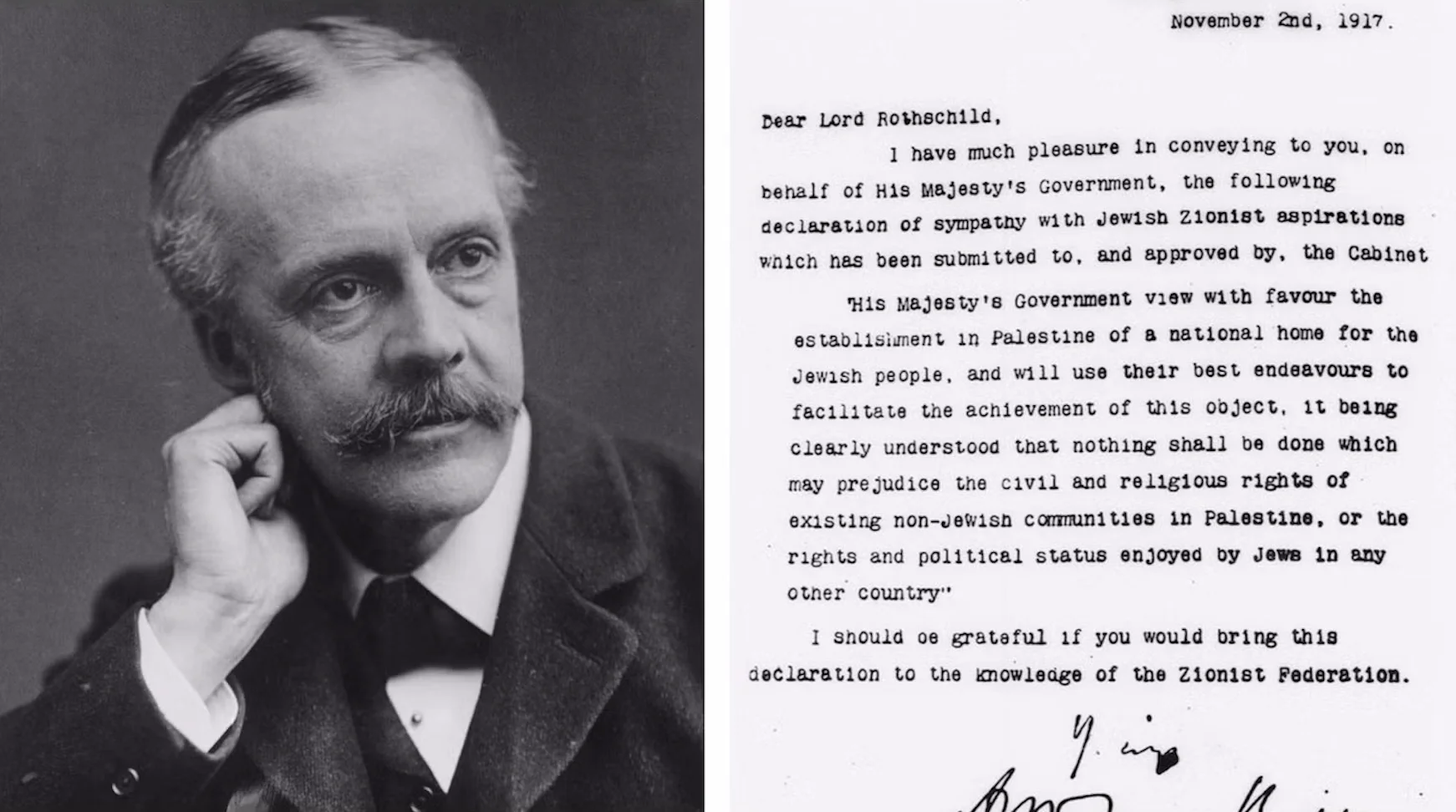
While the Balfour Declaration established the British imperative to establish a Jewish state in what was then British Mandatory Palestine, even after doing so British policy shifted, limiting Jewish immigration under pressure (and due to Britian’s other interests in the Arab world) to a mere 15,000 per year exactly at a time when tens if not hundreds of thousands of Jews could have been saved from the Nazi genocide across Europe. While Britian failed the Jewish people then geopolitically, and eventually divided and subdivided all of what was then known as “Palestine” into manufactured Arab state today known as Jordan, King is clear to note that modern Jewish statehood is therefore less the birth of a new nation than the regeneration of an ancient one. British involvement, for all its complexities and later withdrawal, operated within this longer story.
Recent British policy, however, has strained the relationship. King discussed London’s response to Israeli plans for the E1 corridor, a stretch of roughly four square miles of largely barren land between Jerusalem and Ma’ale Adumim to the east. British officials including its Jewish Foreign Secretary Ed Miliband framed the project as a threat to a two-state solution. King counters that the viability of such a solution was already destroyed by the Hamas massacre of October 7, 2023, and its aftermath. Before that attack, thousands of Gazan workers entered Israel daily under arrangements that some hoped signaled future coexistence. Many of those permits were abused to gather intelligence for the assault. Post-October 7, King argues, Palestinian Arab leadership has shown no genuine interest in two states; the slogan “from the river to the sea” remains the operative goal. This means the destruction of Israel, not a Palestinian Arab state living alongside it.
Media portrayals of “settler violence” further distort the picture. Official tallies of settler-related incidents sound alarming until broken down. Once instigation and context are examined, the number of clear cases of violence shrinks dramatically, often to a few hundred, and actual injuries or deaths remain far lower. This is not an excuse for actual instances of violence, but it can also not be used to falsify facts, and distort truth, as so much of the Palestinian Arab narrative does.
Regarding this phenomena, Western activists frequently provoke confrontations by filming Arab shepherds or others at close range, generating footage that feeds the narrative. Nearly all of these are devoid of context or how the incident being filmed is initiated and provoked. Meanwhile, rock-throwing, shootings, car rammings, and murders of Israeli civilians, including families on the roads, receive less sustained attention. Where they are reported, it is in the context of a justified Arab response to some other trigger, or just protesting Israel’s existence.
In Ramallah – the seat of the Palestinian Authority - for instance, King observed Hamas-branded posters and slogans celebrating violence. The culture he describes is one of self-imposed victimization rather than readiness for negotiated coexistence.
Another observation from the Judean hills adds dimension to the actual realities: Jewish communities are constrained precisely because private Palestinian Arab-owned land is respected, leaving orchards and vineyards intact. These tracts of land are often worth millions, sitting right in the middle of Jewish communities. Barren hills outside the security barrier, by contrast, were previously state land under successive rulers, Ottoman, British, and Jordanian, and never cultivated. E1 fits that pattern. Proper handling of illegal encampments does not equate to uprooting established communities.
King’s closing appeal is direct. Christians who remain undecided should open the Bible and read it as authoritative. God’s plans for Israel and its people are inescapable. Nations and individuals are fallible, yet the promise endures. In an era when antisemitism and anti-Western rhetoric have become more visible in the United Kingdom, King presents support for Israel not as optional politics but as fidelity to Scripture and recognition of shared roots.
The message is clear: the British-Israeli relationship may be complicated, but the biblical warrant for Christian solidarity with the Jewish people is not. Listen to the full conversation at Inspiration from Zion, or follow it on YouTube.
Popular article:

interview Easter message of resurrection hope amid war at Jerusalem's Garden Tomb

biblical commentary Let my people go: a Passover message for today

4 IDF soldiers killed, 2 wounded in fighting in southern Lebanon, as Israel eliminates dozens of Hezbollah terrorists

Receive latest news & updates
A message from All Israel News
Help us educate Christians on a daily basis about what is happening in Israel & the Middle East and why it matters.
For as little as $10, you can support ALL ISRAEL NEWS, a non-profit media organization that is supported by readers like you.
Latest articles:

Eisenkot slams Likud for ‘malicious attempt to deny election results’ amid foreign interference probe

Maronite community forgives vandals who targeted historic church in Nahariya

‘Change Bloc’ in disarray: Liberman refuses Eisenkot endorsement as Pres Herzog weighs first candidate to establish new gov’t

IDF expands academic benefits for reservists, career soldiers after years of wartime service
Israel grants ‘immunity’ to Hamas political officials, targeted strikes continue in Gaza