opinion The arrests made election-day headlines in Israel - So should the doubts
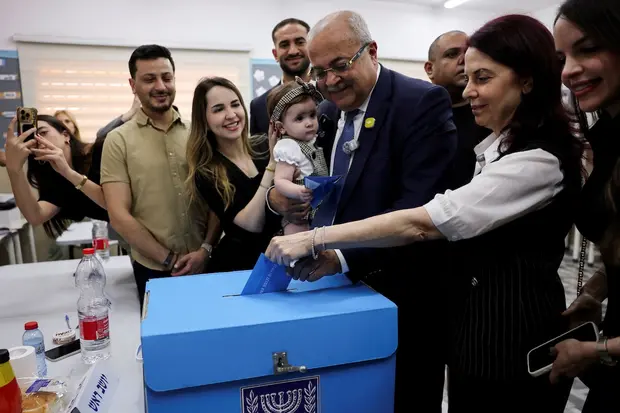
An election-day accusation has an advantage that a correction can never recover: it reaches people while they can still vote.
A photograph of cash circulates. Police announce arrests. A politician warns that the election is being stolen. By the time a judge asks whether the evidence supports the suspicion, voters have already cast their ballots, and many have stopped following the story.
But we need to keep following this one.
What began with the arrests of Ra’am activists before the polls opened has become a dispute over foreign interference, the questioning of Arab political leaders, and the use of national-security powers. Along the way, allegations against particular people have helped sustain a much broader insinuation: that the political strength Arab citizens achieved at the ballot box may itself be illegitimate.
There are serious allegations to investigate. There are also serious questions about how those allegations have been presented and pursued. Concern for Israel’s democracy requires us to examine both.
The sequence matters.
Before voting began on October 27, police arrested three Ra’am activists in the Negev. Their announcement described cash and party voting slips found during searches. Netanyahu and Likud used the arrests to allege an attempt to steal the election. Ynet subsequently reported, citing Channel 12, that the information behind the operation had been passed to police by Ido Norden, the prime minister’s acting chief of staff. Police acknowledged in court that the searches had been conducted without warrants.
A tip from a political official is not automatically false. Police should examine credible information regardless of who provides it. But when the source works for a candidate, the targets are associated with a competing party, and the operation becomes campaign material before voters reach the polls, independent verification becomes especially important.
Otherwise, the public can mistake the existence of an investigation for confirmation of the accusation that prompted it.
Two investigations, one narrative
A separate investigation into suspected foreign influence then raised the stakes further.
Ynet’s November 1 account distinguished the Negev arrests from the inquiry concerning alleged Qatari and Turkish involvement, reporting that no connection between the two affairs had been established.
That separation is essential. Place cash seized from local activists beside allegations involving foreign governments, and the reader can easily come away believing that the cash came from those governments. Yet that connection must be demonstrated. One unresolved suspicion cannot supply the missing evidence for another.
There are several different questions here. Was anyone offered money in exchange for a vote? Did foreign actors unlawfully finance political activity? Did any candidate or party knowingly participate? Were ballots falsified? Was any proven misconduct extensive enough to affect an electoral result?
Evidence answering one question does not automatically answer the others.
On October 30 opinion piece in this publication, the author raised concerns about possible foreign interference and the Arab party’s electoral gains. She acknowledged that the accusations remained unproven, but also presented the unexpectedly strong result as grounds for suspicion and raised the possibility of a broader Islamist effort to acquire power.
The concern about foreign interference deserves a serious answer. Israel has every right to investigate attempts by foreign governments to influence its elections unlawfully. Arab citizens have as much reason as Jewish citizens to oppose anyone purchasing political influence in their name.
But an unexpected result cannot do the evidentiary work that an investigation has yet to do.
Surprise tells us something about our expectations. Before treating a community’s increased political participation as suspicious, we should consider whether our understanding of that community was inadequate.
The new dispute is about evidence and state power
The latest reporting makes these distinctions more urgent.
According to Ynet’s November 3–4 report, Shin Bet chief David Zini sought to question Arab party leaders Mansour Abbas, Ahmad Tibi and Sami Abu Shehadeh under caution. Attorney General Gali Baharav-Miara demanded an evidentiary basis before approving their questioning. Crucially, the report distinguished their cases from that of another, unnamed Arab lawmaker against whom significant evidence reportedly existed.
That detail cuts both ways. It would be wrong to claim the entire inquiry has no foundation. It would be equally wrong to treat reported evidence against one person as grounds for questioning other people merely because they belong to the same broad political community.
The attorney general’s public position was that anyone whose questioning was justified by evidence would be questioned. She also alleged that the Shin Bet had delayed handing material to the joint investigative team for two days. Likud, in response, accused her of obstructing the investigation. These are competing claims about the investigation’s handling, not settled findings about anyone’s motives.
Demanding that evidence reach the officials responsible for evaluating it is a reasonable requirement. The public need not see every confidential intelligence document. The institutions authorizing investigative action do need a basis on which to act.
A further dispute concerned the powers investigators would use. Ynet reported that Zini sought to classify the affair broadly as suspected security offenses, enabling more intrusive investigative measures, including restrictions on access to a lawyer. Baharav-Miara objected to applying that classification in advance without the necessary evidence, while indicating that appropriate powers could be authorized if security offenses were substantiated.
This is a consequential disagreement. The classification of a case helps determine what the state can do to the people caught up in it. It therefore cannot be treated merely as a stronger description for a disturbing allegation.
Foreign involvement may establish a genuine security dimension. If so, investigators must demonstrate the basis for it through the proper process. The seriousness of an allegation is a reason to investigate carefully, not permission to assume the conclusion.
Israel needs effective security institutions. Their effectiveness also depends on public confidence that extraordinary powers are being used for demonstrable security needs. When an investigation concerns elected politicians immediately after a contested election, that confidence requires particular care.
Arab voters have an interest in a clean investigation
I write this as an Arab Israeli Christian who wants Israel to succeed and wants Arab citizens to see a future within it.
I have no interest in protecting a politician who accepts unlawful foreign funding or an activist who purchases votes. If those offenses occurred, the people responsible should face the consequences. Arab citizens are among those harmed when someone claims to represent them while selling influence or exploiting their poverty.
Ynet’s original reporting included an unnamed local source alleging that financial assistance was offered in exchange for political support. That allegation deserves scrutiny too.
But accountability requires identifying who did what. It cannot mean making an entire electorate answer for allegations against a handful of people.
Imagine being a citizen who went to the polls because you wanted safer streets, better services or different leadership. You made a political choice through the mechanism the state provides. Now you hear your community’s increased influence discussed as evidence that something sinister must have happened.
What lesson are you supposed to take from that?
In my previous article, I argued that Arab participation offers Israel an opportunity. That opportunity depends on participation being allowed to have consequences. Encouraging people to vote means accepting that they may organize effectively, strengthen parties we oppose, and alter the coalition arithmetic.
Nobody is entitled to a place in government simply because they voted. Everyone is entitled to have a lawful vote counted without being asked to prove that its political consequences are acceptable.
For those of us who advocate Arab integration into Israeli society, this matters enormously. We cannot credibly tell people that democratic participation is the path to influence if we remain silent when their influence is treated as suspicious before wrongdoing has been established.
We do not know that this happened here. We should know what safeguards prevented it.
What information reached investigators, and when? What corroboration existed before the searches? What grounds did police rely on to proceed without warrants? Who authorized the public announcement, and did its wording accurately convey the preliminary state of the evidence?
These are questions an independent examination should answer. If an arrest is significant enough to support a warning about a stolen election, a court’s doubts are significant enough to revisit that warning. Otherwise, the accusation becomes effectively immune to evidence: an arrest confirms it, while a release changes nothing.
Likud voters should want answers about this affair too. They deserve reliable information about election fraud, particularly when their own leaders invoke it. An unsupported accusation does not become a service to voters because it was made by the party they trust.
We do not yet know enough to conclude that the case was knowingly fabricated. We do know enough to insist that the investigation’s weaknesses receive attention proportionate to the certainty with which its opening was presented.
The people arrested were required to account for the money in their homes.
The officials whose decisions helped turn those arrests into an election-day spectacle should now account for their own conduct.
Popular article:

interview Easter message of resurrection hope amid war at Jerusalem's Garden Tomb

biblical commentary Let my people go: a Passover message for today

4 IDF soldiers killed, 2 wounded in fighting in southern Lebanon, as Israel eliminates dozens of Hezbollah terrorists

Receive latest news & updates
A message from All Israel News
Help us educate Christians on a daily basis about what is happening in Israel & the Middle East and why it matters.
For as little as $10, you can support ALL ISRAEL NEWS, a non-profit media organization that is supported by readers like you.
Latest articles:
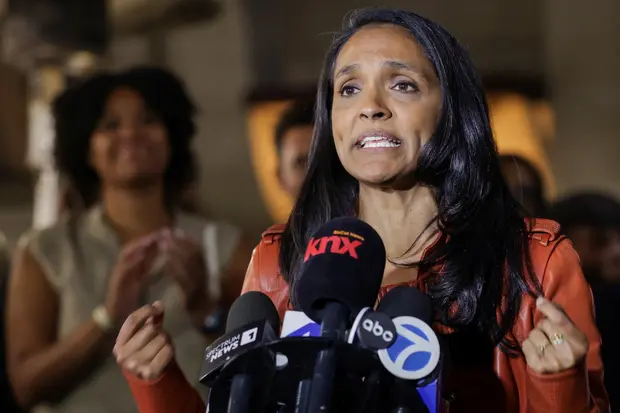
Democratic Socialist Nithya Raman wins Los Angeles mayor race, alarming some Jewish voters over Israel stance
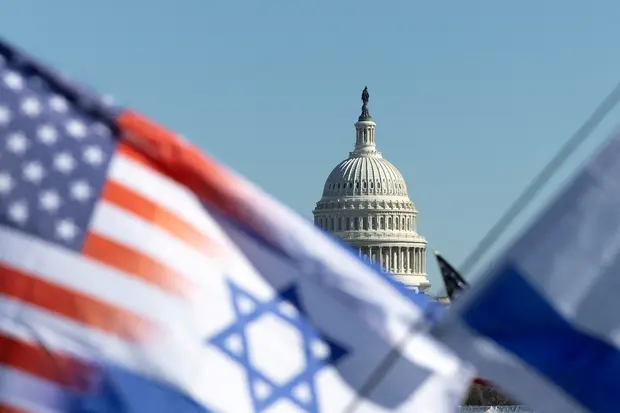
What is 'Blue Tsunami’s' next target? Israel braces for a Democratic Congress as US Jews face new political reality
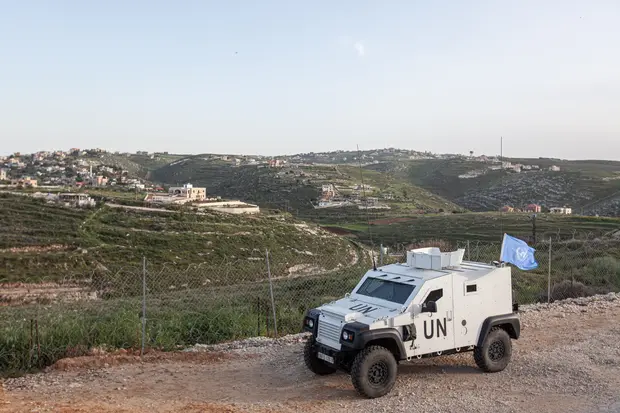
UNIFIL to begin withdrawal from southern Lebanon as UN mandate ends Dec. 31
Paving way to surprise coalition? Liberman announces support for gov’t with ultra-Orthodox party, Eisenkot bloc

Jerusalem launches forum to address harassment of Christians; mayor vows 'zero tolerance'